


Introduction
Shipping a heavy truck overseas is a big step in any export deal. The truck is built, inspected, and paid for. What happens next decides whether it arrives on time, in good condition, and within budget.
Two methods dominate the market: Ro-Ro and container shipping. Each one has loyal supporters. Each one also has hidden costs that catch first-time buyers off guard.
Ro-Ro stands for roll-on roll-off. The truck drives onto a vessel through a ramp and parks on deck. Container shipping loads the truck into a steel box and moves it as standard cargo.
This guide compares both methods in plain language. You will learn how they work, what they cost, and which one fits your order. If you want to review export truck models first, visit our truck product category page.
How Ro-Ro Shipping Works
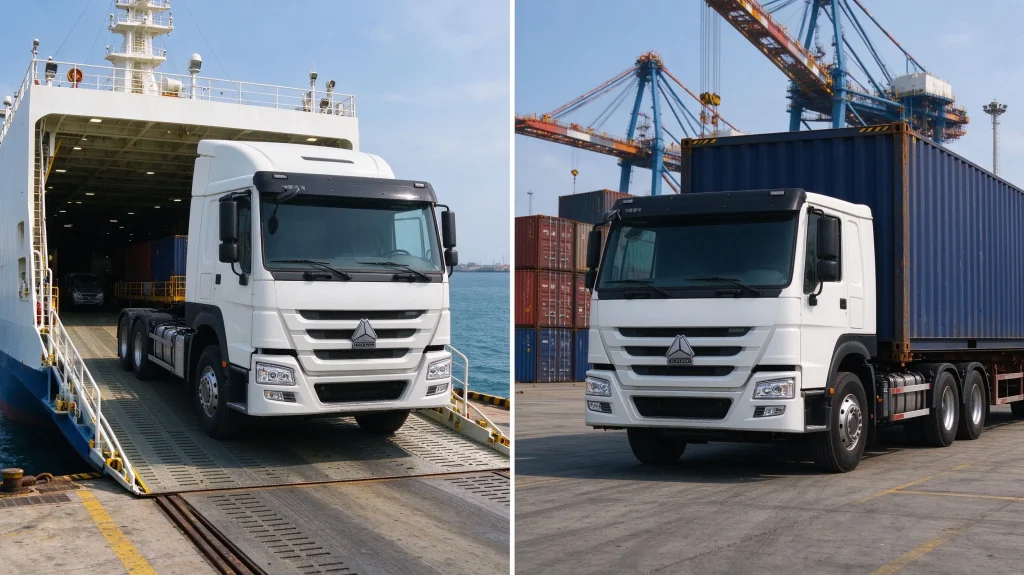
Ro-Ro shipping treats your truck as a wheeled unit. The vessel has internal ramps and decks built for vehicles.
The truck drives or is towed onto the ship at the port of loading. It is lashed down on deck or in a cargo hold. At the destination, it drives off again.
Ro-Ro vessels move thousands of vehicles every week. Car carriers, truck makers, and equipment exporters all use this method.
The key advantage is speed of handling. Loading and unloading take hours, not days. There is no container stuffing or unstuffing involved.
Ro-Ro is especially common for trucks because they are road-ready units. The same driver or a terminal operator can move them onboard.
In practice, Ro-Ro works best when you ship one truck or a full fleet of complete vehicles.
How Container Shipping Works
Container shipping packs your truck into a steel box. The box then moves on a standard container vessel.
The truck must fit inside a container. A 20-foot or 40-foot container can hold smaller trucks. Larger trucks may need a flat rack or open-top container.
Before loading, the truck is prepared for the box. Mirrors may be removed, fuel drained, and the vehicle secured inside with lashings.
At the destination, the container is unpacked and the truck is driven out. The container returns to the shipping line’s pool.
Container shipping is flexible. It can combine your truck with other cargo in the same shipment, which helps small orders.
However, the extra handling steps add time and labor cost compared with Ro-Ro.
Ro-Ro vs Container: The Core Differences
Both methods move the same truck, but they do it in different ways. Here is a quick comparison of the main points.
| Feature | Ro-Ro Shipping | Container Shipping |
|---|---|---|
| Loading method | Drives on / drives off | Loaded into steel box |
| Handling time | Fast | Slower, more steps |
| Typical cost | Lower per unit | Higher per unit |
| Damage risk | Moderate, exposed | Lower, protected |
| Fleet orders | Ideal | Possible but costly |
| Single unit | Possible | Practical |
| Custom cargo | Limited | Flexible |
| Tracking | Vessel level | Container level |
As the table shows, Ro-Ro wins on cost and speed. Container shipping wins on protection and flexibility.
The right choice depends on your truck size, order volume, and destination port.
Cost Comparison
Freight cost is usually the first number buyers compare. The gap between the two methods can be significant.
Ro-Ro charges per unit, based on the truck’s size and weight. For a standard heavy truck, this is often the cheaper option.
Container shipping charges per container plus any excess dimensions. Large trucks that need flat racks carry surcharges.
For a single truck, container shipping can cost more than Ro-Ro. The container rental and the special equipment add up.
For a fleet of trucks, Ro-Ro is clearly cheaper. One vessel slot moves several trucks with minimal handling.
However, total cost includes more than freight. Insurance, port charges, customs, and inland delivery all matter.
In many cases, buyers discover that the cheapest freight quote hides higher costs at the destination.
Transit Time Comparison
Time is money in truck export. Delays cost your customer revenue and your reputation.
Ro-Ro vessels follow regular schedules on major routes. Loading and unloading are quick because the trucks roll on and off.
Container shipping often has more schedule options. However, stuffing, unstuffing, and container repositioning add days at each end.
On the same route, Ro-Ro usually delivers faster door-to-door for complete trucks.
Container shipping can be faster when the truck is small enough to share a container with other cargo on a frequent service.
In practice, the difference is usually a few days to a week. For time-sensitive projects, that can matter.
Damage Risk and Protection
Protection is the main reason buyers choose containers. A steel box shields the truck from weather and handling.
Ro-Ro trucks sit on open decks or in ventilated holds. They face salt spray, sun, and vibration during the voyage.
Container shipping keeps the truck dry and enclosed. The risk of cosmetic damage is lower for high-value finishes.
However, container loading requires the truck to be squeezed into a tight box. Scratches can happen during stuffing if the crew is careless.
Ro-Ro damage usually comes from lashing failure or collision on deck, not from weather alone.
For a brand-new truck with a painted cab, many buyers prefer the extra protection of a container.
For work trucks that will be painted or modified on arrival, Ro-Ro’s risk is often acceptable.
Truck Size and Fit
Truck dimensions decide which method is even possible. Not every truck fits into a standard container.
A standard 40-foot container has limited internal height and width. Smaller trucks, vans, and pickups fit well.
Heavy-duty trucks and dump trucks usually exceed container height and width. They need a flat rack or open-top unit.
Flat racks add cost and limit stacking. They also expose the truck more than an enclosed container.
Ro-Ro has no such size problem. Any road-legal truck can drive onboard, including tall dump trucks and wide mixers.
For oversized equipment, Ro-Ro is often the only practical option.
So the size of your truck may already decide the method for you.
Fleet Shipments vs Single Units
Order volume changes the math completely. The best method for one truck is not the best for twenty.
A single truck fits neatly into one container. The container protects it and simplifies customs at both ends.
A fleet of trucks in containers means many containers, many bookings, and high cost. Ro-Ro handles the whole fleet in one vessel slot.
Fleet buyers almost always use Ro-Ro. It is faster, cheaper, and simpler for volume.
Single-unit buyers can use either. The choice then comes down to protection versus cost.
Many dealers use containers for retail units and Ro-Ro for bulk orders. That split is common in the industry.
Think about your order pattern before choosing a long-term shipping partner.
Customs and Documentation
Customs procedures differ between the two methods. The paperwork affects how smoothly the truck clears.
Ro-Ro trucks are cleared as vehicles. The bill of lading, invoice, and certificate of origin are the core documents.
Container trucks are cleared as cargo inside a container. The container number and seal become part of the clearance process.
Some ports treat Ro-Ro vehicles differently at customs. Vehicle registration rules apply to the chassis, not the box.
Container shipments may require a detailed cargo manifest, especially if other goods share the container.
For single trucks, container shipping can simplify the import process in some countries because the cargo is fully enclosed.
For fleets, Ro-Ro paperwork is straightforward and well understood by port agents worldwide.
Port Infrastructure and Access
Not every port can handle both methods. Your destination port decides what is practical.
Ro-Ro needs a dedicated ramp and vehicle handling area. Major ports have them. Smaller ports may not.
Container ports are more common. Almost every trade port handles containers, even small ones.
If your destination has no Ro-Ro terminal, container shipping is the only option.
Inland delivery also differs. A container can travel by rail or truck to an inland depot. A Ro-Ro truck arrives at the port and must be driven away.
For buyers far from the port, container shipping can reduce inland logistics costs.
Check the port facilities before you choose. The cheapest ocean route is useless if the destination cannot handle the cargo.
Insurance Considerations
Insurance is part of every shipment. The method affects the premium and the claims process.
Ro-Ro cargo is more exposed. Insurers sometimes charge a higher premium for open-deck transport.
Container cargo is enclosed and generally rated lower. The protection reduces the perceived risk.
Claims differ too. A container seal intact at arrival suggests the cargo was untouched. That simplifies a dispute.
Ro-Ro claims often involve lashing marks or deck damage. Photos at loading help your case.
Whatever method you choose, take photos before loading and document the truck’s condition.
Good documentation protects you regardless of which vessel carries the truck.
Vehicle Preparation Differences
Each method requires different preparation. Getting it wrong causes delays or damage.
Ro-Ro trucks need minimal prep. Fuel may be topped or drained depending on the line. The truck just needs to run or roll.
Container trucks need more work. Mirrors, antennas, and loose parts are removed or secured. The battery may be disconnected.
For tall trucks, tires may be partially deflated to reduce height. This affects the suspension and requires reinflation after arrival.
Ro-Ro loading is gentler on the truck. It drives under its own power and parks normally.
Container stuffing involves lifting, winching, and tight maneuvering. The risk of minor damage is higher during this step.
Factor the preparation work into your total cost and timeline.
Loading and Unloading Procedures
The physical process at the ports is where delays and damage actually happen. Understanding it helps you plan.
At a Ro-Ro terminal, trucks queue and drive up the ramp. Lashing teams secure them to the deck with straps and chains.
Unloading is equally quick. The vessel opens, vehicles roll off, and the port agent processes each unit.
At a container terminal, the box is lifted by crane onto the vessel. At the destination, it is lifted off and moved to a yard.
Container unstuffing happens at a depot, not the quay. The truck is driven out, and the container is returned.
That extra yard step adds time and cost, especially if the depot is far from the port.
Ro-Ro turns the vehicle around faster at both ends. For buyers who need speed, this is a real advantage.
Which Method Suits Different Markets
Regional habits shape what buyers expect. Knowing the local norm helps you match the method.
African buyers often import trucks by Ro-Ro. Fleet orders arrive quickly, and port agents are familiar with vehicle clearance.
Middle East markets also favor Ro-Ro for construction fleets. The volume justifies direct vehicle shipping.
In Southeast Asia, container shipping is common for single units. The region’s ports are container-oriented.
South American buyers use both, with Ro-Ro popular for large fleets and containers for retail units.
European buyers prefer container for smaller orders and value the protection for new trucks.
In every region, the port facilities and import rules set the practical limit.
Chinese Export Shipping Practices
Chinese truck exporters ship to every continent. Their experience reveals what works in practice.
Major Chinese ports like Shanghai, Tianjin, and Qingdao have strong Ro-Ro facilities. Large exporters use them for fleet orders.
Container shipping from China is equally available. Rates vary by route and season, so timing matters.
Many Chinese suppliers offer delivery terms that include either method. The buyer chooses based on the order size.
For a single truck, suppliers often recommend a container for protection. For a fleet, Ro-Ro is the standard.
To understand how our factory structures export logistics, visit our about us page.
How to Compare Shipping Quotes
Freight quotes look simple, but hidden charges hide in the details. Compare them line by line.
Ask for the full door-to-door cost, not just ocean freight. Inland trucking, port handling, and customs fees add up.
Check what is included in the quote. Terminal handling charges and documentation fees are often extra.
Compare transit time honestly. A cheaper route with a longer voyage may cost more in lost revenue.
Verify the vessel schedule and whether it runs weekly or monthly. Irregular service causes delays.
Ask about demurrage and detention charges. These apply when cargo waits too long at the port.
For help structuring your export logistics, the customer service team can walk you through the process.
Trade Terms and Who Pays What
Trade terms decide who pays for the freight and who carries the risk. The shipping method works inside this bigger framework.
EXW means the buyer collects the truck from the factory. All shipping decisions belong to the buyer.
FOB puts the truck on board at the loading port. The seller handles the factory-to-port leg. The buyer books the vessel.
CIF covers freight and insurance to the destination port. The seller arranges the shipping, which gives them control over the method.
Each term changes who chooses Ro-Ro or container. If the seller ships under CIF, they pick the method. If the buyer arranges freight, they decide.
In practice, buyers should state the desired shipping method in the contract. Otherwise, the seller may choose the cheapest option, not the best one.
Clear terms prevent arguments later. Write the method, the port, and the responsibility split into the agreement.
How to Choose a Freight Forwarder
A freight forwarder handles the booking, the paperwork, and the coordination. A good one saves money and headaches.
Ask for forwarders with experience in vehicle shipping. Trucks have specific requirements that general cargo forwarders may miss.
Check their relationship with the shipping lines. Strong forwarders get better rates and priority space on busy routes.
Ask about their network at the destination. A local agent on the other end smooths customs and delivery.
Request references from other truck importers. Real experience with your type of cargo is worth more than a big office.
Compare quotes from two or three forwarders. The cheapest is not always the best when delays and damage are on the line.
A reliable forwarder also warns you about port congestion, seasonal rate spikes, and document issues before they become problems.
Seasonal Rate Fluctuations
Freight rates move with the season. Buyers who plan around the cycle save real money.
Rates typically rise before major holidays in Asia, when exporters rush to ship goods. December and January are often busy.
Summer and early autumn can see softer demand on some routes. That is when buyers with flexible timing can negotiate better rates.
Ro-Ro capacity is tighter in peak seasons because car manufacturers dominate the space. Truck exporters may face higher premiums.
Container rates swing with the global container market. Red Sea disruptions, port strikes, or equipment shortages change prices quickly.
Ask your forwarder about the current market direction. A few weeks of timing can change the freight cost by a meaningful margin.
For large fleets, consider booking space early. Confirming vessel space protects you from last-minute rate increases.
Environmental and Regulatory Rules
Shipping regulations are tightening. Both methods face new environmental requirements.
New international rules limit sulfur in marine fuel. Vessels must burn cleaner fuel or use scrubbers. This affects operating costs that lines pass to shippers.
Used trucks face stricter import rules in many markets. Age limits, emission standards, and inspection requirements apply before the vessel even sails.
Some ports require a pre-loading wash for used vehicles. Wash water handling rules add time at the terminal.
Battery-operated trucks need special handling. Lithium batteries have their own shipping regulations on both Ro-Ro and container vessels.
Check the environmental requirements at the destination before you book. A truck that is legal in the factory country may not be importable elsewhere.
Working with an experienced exporter who knows these rules reduces the risk of rejection at the border.
Special Equipment and Oversized Trucks
Not all trucks are standard. Mixers, cranes, and special bodies need extra planning.
A concrete mixer is tall and heavy. It exceeds standard container dimensions, so Ro-Ro is the practical choice.
Mobile cranes and boom trucks have protruding parts. Ro-Ro vessels can secure them on deck with custom lashing.
Very long trucks may need a multi-deck arrangement on a Ro-Ro vessel. The line calculates the deck height before accepting the cargo.
For container shipping, oversized equipment uses flat racks or open-tops. Both cost more and reduce stacking.
Special equipment also needs a detailed cargo survey. The survey documents dimensions and lifting points for safe handling.
If your truck has unusual dimensions, discuss it with the shipping line early. Last-minute surprises delay the booking.
Insurance Claims and Documentation
Claims are rare, but they happen. The right documents make the difference between a fast settlement and a long dispute.
Take photos and video at the loading point. Show the odometer, the condition of each side, and the cab interior.
Keep the bill of lading in a safe place. It is the proof of cargo receipt and the key to releasing the truck.
For container shipments, record the container number and seal. A broken seal at arrival is immediate evidence of interference.
For Ro-Ro shipments, note the lashing points and any deck markings in the photos.
Report damage within the time limit in the policy. Late reports are often rejected regardless of the damage itself.
Good documentation also helps at customs. A complete file speeds clearance and reduces the chance of a hold.
Inland Delivery After the Port
The ocean voyage is only half the journey. Getting the truck from the port to the buyer is often the overlooked part.
Ro-Ro trucks drive out of the terminal directly. They need a registered driver, insurance, and temporary plates for the inland leg.
Container trucks arrive at the container depot. The buyer must arrange unstuffing, which needs equipment and space.
Inland transport costs differ by country. Long distances to the buyer’s site can double the total logistics cost.
Some markets require an escort for oversized vehicles on public roads. That adds time and expense.
Inland customs inspection may open the truck at a bonded warehouse. This happens with both methods and affects delivery time.
Include the inland leg in your budget. Many buyers focus on the ocean freight and are surprised by the final bill.
Common Mistakes in Truck Shipping
Buyers repeat the same shipping mistakes. Most are easy to avoid once you know them.
Choosing the cheapest quote without checking the destination port facilities.
Ignoring vehicle preparation requirements until the truck is at the port.
Forgetting to drain fuel or disconnect the battery for container shipping.
Not taking photos before loading, which makes insurance claims harder.
Overlooking demurrage costs when the truck waits at the destination.
Choosing Ro-Ro when the destination has no Ro-Ro terminal.
Choosing a container when the truck is too tall to fit without expensive flat racks.
Planning the shipping method after the order is placed instead of before.
Frequently Asked Questions
Buyers ask the same questions about truck shipping. Here are clear answers to the most common ones.
Is Ro-Ro cheaper than container shipping for trucks? Usually yes for a complete truck, and much cheaper for fleets.
Can any truck fit in a container? No. Tall or wide trucks need flat racks, which add cost and reduce protection.
Which method is safer for a new truck? Container shipping offers more protection from weather and handling.
How long does Ro-Ro shipping take? It depends on the route, typically days to a few weeks across major lanes.
Do I need to prepare the truck differently? Yes. Container shipping needs mirrors removed, fuel handled, and the battery disconnected.
Can I track my truck during shipping? Ro-Ro offers vessel-level tracking. Containers offer container-level tracking.
Which method is better for a single truck? Container shipping protects it well. Ro-Ro is cheaper if the port supports it.
Are there restrictions on shipping used trucks? Many ports require a wash-down and inspection for used vehicles before loading.
Can a dump truck go in a container? Usually not in a standard box. Its height exceeds the limit, so Ro-Ro or a flat rack is needed.
Who arranges the shipping? It depends on the trade term. Under CIF the seller arranges it. Under FOB the buyer does.
Is Ro-Ro available from Chinese ports? Yes. Major Chinese ports have strong Ro-Ro facilities for vehicle exports.
Can I ship other cargo with the truck? In a container, yes, if the truck shares space. On Ro-Ro, no, because the deck carries vehicles only.
What is a flat rack? A container base without walls and a roof, used for oversized cargo such as tall trucks.
Do I need export paperwork from the factory? Yes. The invoice, packing list, certificate of origin, and export declaration are standard.
Real Export Shipping Examples
Real cases show how the choice plays out. Here are typical scenarios buyers face.
A dealer in East Africa ordered a fleet of dump trucks. Ro-Ro carried all units on one vessel, saving freight and speeding delivery.
A retail buyer in Southeast Asia purchased a single tractor head. A container protected the paintwork and simplified local customs.
A construction firm in the Middle East imported mixers by Ro-Ro. The volume justified the method and the port had strong facilities.
A small contractor in South America shipped one flatbed in a 40-foot container. The extra cost was acceptable for protection.
In each case, the order size and the destination port set the practical choice.
Decision Guide: Which Should You Choose?
Here is a practical path that covers most truck export shipments.
- Start with the truck size. If it exceeds container dimensions, Ro-Ro or flat rack is the answer.
- Check the destination port. No Ro-Ro terminal means container shipping.
- Count your units. Fleets point to Ro-Ro. Single units allow either.
- Compare door-to-door cost, not just ocean freight.
- Compare transit time and vessel frequency.
- Consider the truck’s value. New paintwork favors a container.
- Factor in inland delivery from the port.
- Confirm customs requirements at the destination.
Following these steps prevents most shipping surprises.
Working With Your Truck Supplier
Your truck supplier is often your best source of shipping advice. They have shipped hundreds of units to every continent.
Ask the supplier which method they recommend for your destination. Their experience with local ports and customs is valuable.
Check whether the supplier offers CIF delivery. Many exporters can arrange the full shipping process under one price.
Request the supplier’s standard export document list. It should include the invoice, packing list, certificate of origin, and export declaration.
Ask about the port of loading. Knowing the departure port helps you compare routes and costs with your forwarder.
Confirm who handles the inland transport at the destination. Some suppliers include this service for common routes.
A supplier who ships regularly will also flag problems before they happen, such as congestion at a specific port or new document rules.
For support on your export order, the customer service team can connect you with the right shipping arrangement.
Final Shipping Checklist
Before you book, run through this checklist. It covers the practical steps that protect your shipment.
- Confirm the truck dimensions and weight with the shipping line.
- Check that the destination port handles your chosen method.
- Compare door-to-door quotes from at least two forwarders.
- Book vessel space early for fleet orders.
- Prepare the truck according to the method, including fuel and battery.
- Take photos and video of the truck before loading.
- Confirm the bill of lading details match the cargo.
- Verify insurance covers the full value and the right voyage.
- Plan the inland delivery and customs clearance at the destination.
Following this list saves most buyers from the common surprises in truck export shipping.
Conclusion
Ro-Ro and container shipping both move trucks overseas, but they serve different needs.
Ro-Ro is faster and cheaper for complete vehicles and fleets. It works best when the destination port has a Ro-Ro terminal.
Container shipping protects the truck and works everywhere containers go. It suits single units and buyers far from major ports.
Match the method to your truck size, order volume, destination, and budget. The right choice saves money and avoids delays.
If you are ready to compare export models, start from our homepage. For a shipping quote on a specific order, use our contact page.
More logistics guides and market notes are on our blog page. Real project stories appear on our cooperative case page.
Technical articles about vehicles and export preparation live in our truck knowledge base.