





Foton commercial vehicles decoded: payload, running costs & reliability for fleet managers weighing smarter freight procurement.
Choosing the right commercial vehicle can define the profitability of an entire logistics operation. For fleet managers and freight operators weighing durability, payload, and running costs, the decision carries weight far beyond the initial purchase.
This guide takes a close, practical look at how Foton commercial vehicles fit into modern freight and distribution networks. It draws on real-world performance patterns, technical specifications, and ownership economics that matter to professionals on the ground.
Whether you run last-mile delivery vans or manage a long-haul heavy-duty fleet, the pages ahead offer structured, evidence-based intelligence to support smarter procurement. Let’s begin with why this manufacturer has earned a place in global freight conversations.
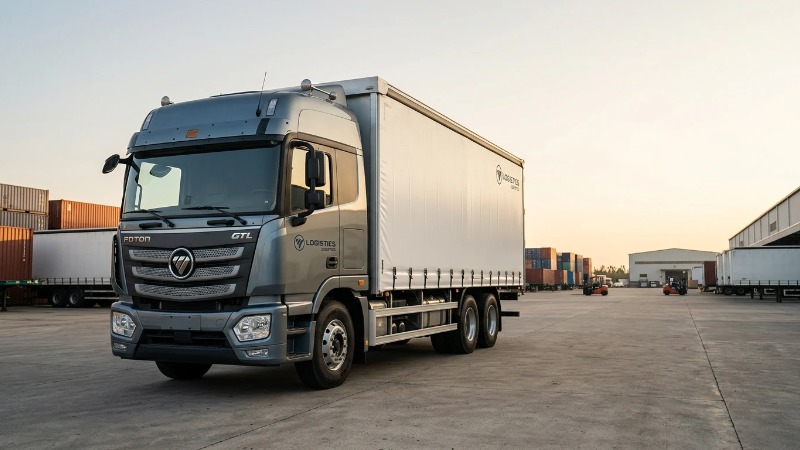
Why Foton Has Become a Global Force in Commercial Freight Transport
Few commercial vehicle brands have scaled as rapidly across international markets. Understanding that trajectory helps explain why so many logistics operators now shortlist these trucks during acquisition planning.
The company’s position is not built on price alone. It rests on production volume, engineering partnerships, and a steadily expanding service footprint that reassures buyers managing critical delivery schedules.
The Rise of Foton in the Commercial Vehicle Market
Founded in 1996, Foton Motor grew into one of the world’s largest commercial vehicle manufacturers by annual unit output. Its factories have produced millions of trucks, buses, and vans across multiple weight classes.
That scale translates into manufacturing maturity. High production volumes allow for refined assembly processes, tighter quality control, and competitive component sourcing that benefits the end operator.
Export reach reinforces the story. The brand now serves customers in more than 100 countries, spanning Southeast Asia, Latin America, Africa, the Middle East, and parts of Europe. This global presence supports parts availability and dealer coverage in ways smaller regional builders struggle to match.
Strategic partnerships have also shaped the product. Collaborations with established engine and component suppliers gave the lineup access to proven powertrains, closing the reliability gap that once separated emerging brands from legacy names. You can explore the full company background on the about us page.
Where Foton Cargo Trucks Fit in Modern Logistics
Logistics is not one market but many overlapping ones. The strength of this lineup lies in covering several of them under a single, familiar brand relationship.
In dense urban environments, light-duty models handle last-mile delivery, courier routes, and small-batch distribution. Their compact footprint and manageable payload suit tight streets and frequent stops.
Step up to regional freight, and medium-duty diesel cargo vehicles take over. These trucks balance load capacity with fuel discipline, ideal for hub-to-hub runs and multi-drop distribution across a province or state.
At the top end sit the heavy-duty tractors built for long-haul work. Here, high gross combination weights and powerful engines move full trailers across national corridors, where reliability and fuel economy directly shape margins.
Who This Guide Is For
This resource speaks to professionals who make or influence vehicle decisions. If you evaluate assets on total cost rather than sticker appeal, you are the intended reader.
- Fleet managers balancing uptime, maintenance budgets, and driver satisfaction.
- Owner-operators whose income depends on every kilometre and every service interval.
- Procurement teams comparing specifications, warranties, and lifecycle economics.
- Logistics decision-makers planning fleet expansion or replacement cycles.
Throughout, the focus stays practical. Expect specifications you can act on, cost frameworks you can apply, and maintenance intelligence that prevents costly surprises.
Understanding the Foton Cargo Truck Lineup
A confident buying decision starts with knowing the portfolio. The range spans from nimble city vehicles to formidable long-haul tractors, each engineered for a distinct duty cycle.
Rather than viewing the lineup as a single catalogue, it helps to think in tiers. Each tier answers a different freight question, and matching the tier to your operation is the foundation of value.
Light-Duty Foton Logistics Delivery Trucks
Light-duty models form the backbone of urban distribution. The Aumark and Ollin series are frequently deployed for commercial goods hauling in cities where agility outweighs raw capacity.
These trucks excel at frequent-stop routes. Their turning circles, cab visibility, and cargo-box flexibility make them well suited to parcel delivery, retail replenishment, and food distribution.
Operators value the low barrier to entry. Simpler drivetrains, modest fuel appetites, and straightforward servicing keep running costs contained for high-frequency, short-distance work.
For businesses building last-mile capacity, this class often delivers the fastest return. A well-specified light-duty unit can complete dozens of drops per shift with minimal downtime.
Medium-Duty Foton Diesel Cargo Vehicles
The medium-duty segment bridges city and highway. These diesel cargo vehicles carry meaningfully more payload while remaining maneuverable enough for mixed-route work.
Regional distribution is their natural home. Think of a warehouse feeding a network of retail outlets across a wider geography, where each truck runs longer legs than an urban van but shorter than a trunk-line tractor.
Buyers appreciate the versatility. With various wheelbase and body options, a single platform can serve refrigerated distribution, dry freight, or specialised bodies depending on the contract. Browse configurations on the truck categories page.
Fuel efficiency remains competitive in this tier. Modern diesel powertrains, paired with optimised gearing, help operators protect margins on medium-distance freight.
Heavy-Duty Freight Transport Vehicles: The Auman Range
When the job demands serious tonnage, the Auman heavy-duty truck line steps forward. This range represents the cornerstone of the brand’s heavy freight ambitions.
Auman tractors are built for the long haul. Higher gross combination weights, robust chassis engineering, and premium powertrains equip them for demanding trunk-route duty cycles.
The flagship models rival established international competitors on paper and increasingly in practice. Cab comfort, aerodynamics, and driveline durability have all matured across recent generations.
For fleets running national corridors, the Auman range offers a compelling blend of capability and value. The following comparison table places the classes side by side for quick orientation.
Comparison Table: Foton Cargo Truck Models by Class
| Model / Series | Class | GVW (tonnes) | Payload Capacity | Engine Options | Typical Application |
|---|---|---|---|---|---|
| Aumark / Ollin | Light-Duty | 3.5 – 8 | 1.5 – 5 tonnes | 2.8L – 4.0L diesel | Last-mile, urban delivery |
| Aumark S / Ollin M | Medium-Duty | 8 – 18 | 5 – 11 tonnes | 4.0L – 6.7L diesel | Regional distribution |
| Auman GTL | Heavy-Duty (rigid) | 18 – 31 | 10 – 20 tonnes | Cummins / Weichai 8–12L | Bulk & construction freight |
| Auman EST | Heavy-Duty (tractor) | 40 – 49 (GCW) | Trailer-dependent | Cummins / Weichai 11–13L | Long-haul trunk routes |
Figures are indicative and vary by market specification and body configuration. Always confirm exact ratings with an authorised dealer before purchase.
Deep Dive: Foton Auman Heavy-Duty Truck Specifications
The Auman line deserves closer technical scrutiny because it carries the heaviest commercial expectations. For long-haul operators, the details in this section directly influence revenue potential.
We’ll examine the flagship tractor, its powertrain options, drivetrain configurations, and payload strategy. Each element compounds into the truck’s real-world economics.
Auman EST Tractor Specifications
The Auman EST stands as the flagship long-haul tractor. It was developed with input from European engineering partners, and that heritage shows in its chassis and cab design.
Cab configurations typically include high-roof sleeper options for extended routes. Drivers benefit from a spacious interior, ergonomic controls, and improved noise insulation over earlier generations.
Aerodynamics received serious attention. Streamlined cab contours, roof deflectors, and side fairings work together to reduce drag, a factor that quietly shapes fuel bills over hundreds of thousands of kilometres.
Gross combination weight ratings generally reach up to 49 tonnes depending on market regulations. That headroom lets operators run fully loaded trailers without exceeding driveline limits.
| Parameter | Auman EST (Typical Spec) |
|---|---|
| Cab type | High-roof sleeper, flat floor |
| GCW rating | Up to 49 tonnes |
| Drive configuration | 4×2 / 6×4 |
| Fuel tank capacity | 600 – 1,000 litres (dual-tank options) |
| Suspension | Parabolic front / air rear (variant-dependent) |
Auman Truck Engine Performance
Engine choice defines a heavy truck’s character. The Auman range draws on proven Cummins and Weichai powertrains, both well regarded in commercial applications.
Cummins units bring a global service network and a reputation for durable, fuel-efficient combustion. Weichai engines offer strong torque delivery and cost-effective ownership, popular in many export markets.
Torque matters more than headline horsepower for freight work. A broad, flat torque curve lets a fully laden truck pull away smoothly and hold speed on gradients without excessive downshifting.
Fuel economy benchmarks depend heavily on load, terrain, and driver behaviour. Still, the combination of aerodynamic cabs and modern injection systems has narrowed the gap with premium rivals. For deeper technical reading, visit the knowledge base.
Table: Auman Engine Options & Performance Data
| Engine Model | Displacement | Max Power (hp) | Peak Torque (Nm) | Emission Standard | Fuel Economy (L/100km)* |
|---|---|---|---|---|---|
| Cummins ISG 12 | 11.8 L | 430 – 500 | 1,900 – 2,300 | Euro V / VI | 28 – 34 |
| Weichai WP13 | 12.5 L | 460 – 550 | 2,100 – 2,600 | Euro V / VI | 29 – 35 |
| Weichai WP12 | 11.6 L | 380 – 460 | 1,800 – 2,150 | Euro V | 30 – 36 |
| Cummins ISG 11 | 10.5 L | 400 – 440 | 1,800 – 2,100 | Euro V / VI | 27 – 33 |
*Fuel economy figures reflect fully laden long-haul operation and will vary with terrain, load, and driving style.
Transmission, Axle & Drivetrain Configurations
Drivetrain choices shape both performance and driver fatigue. The Auman range offers manual gearboxes for cost-conscious operators and automated manual transmissions (AMT) for efficiency and comfort.
AMT technology has transformed heavy-truck operation. By optimising shift timing automatically, it improves fuel economy, reduces clutch wear, and lowers the skill barrier for new drivers.
Drive configurations cater to different freight loads. A 4×2 tractor suits lighter, road-based long-haul work, while 6×4 setups provide the traction and load-bearing capacity for heavier trailers.
For rigid heavy-duty applications such as construction or bulk haulage, 8×4 configurations distribute weight across additional axles. Matching the axle layout to your typical load protects both the driveline and road-legal compliance.
Auman Truck Cargo Capacity & Payload Optimization
Payload is where trucks earn their keep. Every kilogram of unused capacity is potential revenue left on the table, so payload optimisation deserves deliberate planning.
Start by profiling your typical freight. Dense goods reach weight limits before filling volume, while light bulky cargo fills the box first. The right chassis and body match this profile precisely.
Tare weight discipline pays dividends. Choosing lighter body materials, right-sizing fuel tanks, and avoiding unnecessary options can free up payload capacity trip after trip.
Consider the revenue-per-trip lens. A truck that carries slightly more, more reliably, compounds its advantage across thousands of loads over its service life. Small specification decisions become large financial outcomes.
Real-World Performance: Foton Cargo Trucks in Commercial Freight Transport Applications
Specifications tell part of the story; field performance completes it. This section draws on operational patterns observed across commercial freight applications.
The examples below are representative composites based on typical fleet operations. They illustrate the kind of metrics operators should track when evaluating any commercial vehicle investment.
Case Study: Regional Distribution Fleet Efficiency
Consider a regional distributor operating a mixed fleet of medium-duty diesel cargo vehicles across a 300-kilometre delivery radius. The operation runs multi-drop routes six days a week.
After standardising on a single platform, the fleet reported more consistent fuel figures and simpler parts inventory. Common components across the fleet reduced workshop complexity and spare-part holding.
Uptime improved as drivers grew familiar with a uniform cab layout. Fewer variations meant faster training and quicker fault diagnosis, translating into more completed routes per week.
The takeaway for logistics managers is clear. Fleet standardisation, more than any single spec, often drives the most measurable efficiency gains. See more examples on the cooperative case page.
Case Study: Long-Haul Heavy-Duty Freight Transport
Now picture a long-haul operator running Auman EST tractors on trunk routes averaging 1,200 kilometres per leg. Here, cost-per-kilometre and reliability dominate the profit equation.
Over high-mileage duty cycles, fuel accounts for the largest slice of operating cost. Aerodynamic specification and disciplined driver coaching produced measurable reductions in litres consumed per hundred kilometres.
Reliability held up across extended service intervals. With proactive maintenance and genuine parts, the fleet minimised unscheduled stops, protecting on-time delivery commitments that anchor customer contracts.
The lesson is that heavy-duty economics reward planning. Trucks configured for the route, maintained on schedule, and driven skilfully consistently outperform those chosen on purchase price alone.
Table: Operational Cost Comparison Across Freight Applications
| Application | Avg Load | Relative Fuel Cost/km | Relative Maintenance Cost/km | Uptime % |
|---|---|---|---|---|
| Urban last-mile (light-duty) | 2 – 4 t | Low | Low | 96 – 98% |
| Regional distribution (medium) | 6 – 10 t | Moderate | Moderate | 94 – 97% |
| Long-haul trunk (heavy tractor) | 25 – 40 t | Higher | Moderate–High | 93 – 96% |
| Bulk / construction (8×4 rigid) | 15 – 20 t | Higher | Higher | 90 – 95% |
Cost figures are expressed relatively rather than in currency, since fuel and labour rates vary widely by market. Track your own baseline for accurate comparison.
Foton Freight Truck Price & Total Cost of Ownership (TCO)
Procurement decisions live or die on total cost, not headline pricing. A truck that costs less to buy but more to run rarely wins over a full service life.
This section frames the financial picture. It avoids fixed prices, which shift constantly by market and specification, and instead equips you to build your own TCO model.
Foton Freight Truck Price Ranges by Model
Acquisition cost scales with class and specification. Light-duty logistics delivery trucks sit at the accessible end, medium-duty vehicles occupy the middle, and heavy-duty Auman tractors command the highest outlay.
Several factors move the figure. Engine choice, transmission type, cab configuration, emission standard, and body specification each add or subtract from the base position.
Regional variables matter too. Import duties, local taxes, dealer support levels, and financing conditions all shape the final cost in your market. For current, specification-accurate quotes, contact the team via the contact us page.
A general principle holds across the range. These trucks are typically positioned as strong value against comparable international brands, which is central to their appeal for cost-sensitive operators.
Beyond Purchase Price: Calculating True TCO
Purchase price is only the visible tip of the cost iceberg. A rigorous TCO model captures everything the truck consumes across its working life.
Key components include:
- Depreciation — the largest single cost for most fleets, shaped by residual value.
- Fuel — often the dominant operating expense on high-mileage duty cycles.
- Maintenance and repairs — scheduled servicing plus wear items over time.
- Financing — interest costs where the asset is purchased on credit.
- Insurance, taxes, and tyres — recurring overheads that accumulate quietly.
Residual value deserves special attention. Strong parts availability and growing brand recognition support resale, softening the depreciation blow at disposal.
Table: 5-Year TCO Breakdown for a Commercial Foton Cargo Truck
| Cost Category | Year 1 | Year 3 | Year 5 | % of Total TCO |
|---|---|---|---|---|
| Depreciation | High | Moderate | Lower | 30 – 40% |
| Fuel | Steady | Steady | Steady | 35 – 45% |
| Maintenance & repairs | Low | Rising | Higher | 10 – 18% |
| Financing | Higher | Declining | Low / nil | 5 – 10% |
| Insurance, tyres, taxes | Steady | Steady | Steady | 8 – 12% |
Proportions are illustrative and shift with mileage, market, and financing structure. Build your model with your own operating data for precision.
How Foton Compares on Value vs. Competitors
Value, not just price, is the fairer measure. When you divide capability and reliability by total cost, the competitive picture sharpens.
Against premium European and Japanese brands, the trade-off often favours lower acquisition cost. Where duty cycles are demanding but budgets are disciplined, that gap can be decisive.
Genuine parts and dealer support further shape the equation. A lower purchase price only delivers value if downtime stays controlled and parts arrive promptly.
For many logistics operators, the sweet spot is a truck that covers 90 percent of the capability at a meaningfully lower total cost. That is precisely the niche these commercial cargo trucks aim to fill.
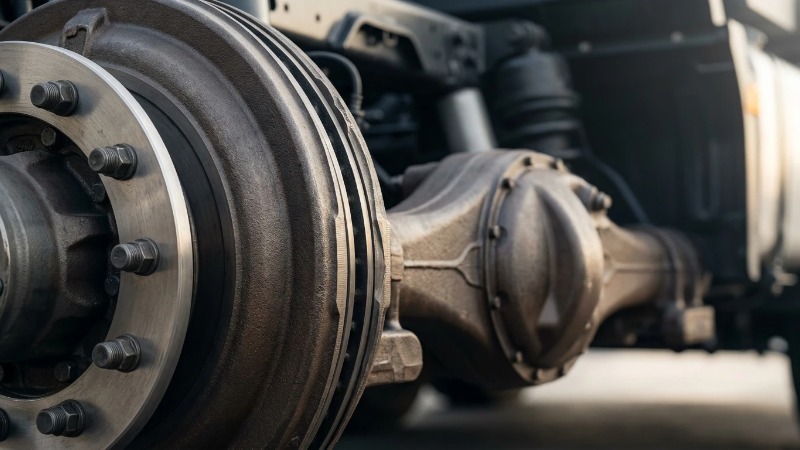
Maintenance, Reliability & Common Mechanical Issues
No honest guide skips the maintenance conversation. Reliability is engineered, but it is also earned through disciplined servicing and informed ownership.
This section covers routine care, then dives deep into a specific engine concern that fleet managers should understand before it becomes costly.
Routine Maintenance Schedule for Foton Diesel Cargo Vehicles
Preventive maintenance is the cheapest insurance a fleet can buy. Following the recommended service schedule keeps small issues from escalating into major failures.
Core intervals typically address engine oil and filters, air and fuel filtration, and coolant checks. Adhering to these protects the powertrain’s longevity and warranty standing.
Wear items require watchful attention. Brakes, tyres, belts, and suspension components degrade predictably, and scheduled inspection catches them before roadside failure.
Documentation supports everything. A complete service history not only preserves reliability but also strengthens residual value at resale. For scheduling and support, the customer service team can help plan intervals.
Understanding Timing Gear Issues in Foton Trucks
Among engine maintenance topics, timing gear health stands out. The timing gear train synchronises the crankshaft and camshaft, and its integrity is essential to engine operation.
Because this component is fundamental, early awareness pays off. Catching a developing problem early can be the difference between a minor service and a major engine rebuild.
Timing Gear Noise & Wear Symptoms
The earliest sign is usually sound. Timing gear noise often presents as a whine, rattle, or ticking that changes with engine speed.
Worn timing gears may also cause subtle performance changes. Slight power loss, rough idling, or minor timing irregularities can accompany the audible warning.
Pay attention to the pattern. Noise that intensifies under load or as the engine warms deserves prompt inspection, since worn timing gears rarely improve on their own.
Timing gear wear symptoms should never be dismissed as normal aging. A qualified technician can confirm the cause and prevent a small concern from becoming catastrophic.
Camshaft Timing Gear Failure: Causes and Prevention
Camshaft timing gear failure typically stems from a handful of root causes. Understanding them is the first step toward prevention.
- Inadequate lubrication — degraded or contaminated oil accelerates gear wear.
- Extended service neglect — missed oil changes let abrasive particles circulate.
- Overloading and abuse — sustained high stress fatigues gear teeth over time.
- Component quality — non-genuine parts may lack the durability of original equipment.
Prevention is refreshingly straightforward. Consistent oil quality, adherence to service intervals, and genuine replacement parts dramatically reduce failure risk.
Proactive inspection completes the strategy. Listening for early noise and acting on it protects the entire engine from the cascading damage a failed gear can cause.
Timing Gear Replacement Cost & Downtime Planning
When replacement becomes necessary, planning limits the pain. Timing gear replacement cost varies with engine model, labour rates, and whether related components need attention.
The larger financial concern is often downtime, not parts. A truck off the road misses revenue-generating loads, so scheduling the work during planned windows minimises disruption.
Fleets with spare capacity absorb this more easily. Building a small buffer of available units protects service commitments when a truck enters the workshop.
The strongest defence remains prevention. Addressing early timing gear wear symptoms costs a fraction of a full failure and keeps the vehicle earning.
Table: Timing Gear Wear Symptoms vs. Recommended Action
| Symptom | Likely Cause | Severity | Recommended Action | Relative Cost |
|---|---|---|---|---|
| Light whine at idle | Early gear wear | Low | Inspect, check oil quality | Low |
| Rattle under load | Progressing wear / backlash | Moderate | Schedule detailed inspection | Moderate |
| Ticking with power loss | Advanced wear / timing drift | High | Workshop diagnosis promptly | Moderate–High |
| Metallic grinding | Imminent gear failure | Critical | Stop operation, immediate repair | High |
Costs are shown relatively because labour and parts rates differ by region. Early action consistently sits at the lower end of the scale.
Maximizing Reliability & Fleet Uptime
Reliability is ultimately a system, not a single feature. Several practical levers help fleets keep trucks working and earning.
Parts availability sits at the core. Sourcing genuine components through the official dealer network prevents the false economy of cut-price substitutes.
Dealer support networks matter for speed. Proximity to authorised service points reduces recovery time when issues arise, protecting delivery schedules.
Warranty optimisation rounds it out. Maintaining full service records and using approved parts preserves coverage, transferring risk away from the operator where possible.
How to Choose the Best Foton Commercial Cargo Truck for Your Operation
With the landscape mapped, the decision becomes a matter of disciplined matching. The best truck is the one aligned to your specific freight reality.
This framework distils the earlier sections into a clear selection process. Work through it methodically before committing capital.
Matching Truck Class to Freight Profile
Begin with the freight itself. Load type, route distance, and volume requirements point directly to the right weight class.
Short urban routes with frequent stops favour light-duty delivery trucks. Their agility and low running cost suit high-frequency, low-distance work.
Regional distribution over moderate distances calls for medium-duty diesel cargo vehicles. They carry more while remaining manageable on mixed roads.
Long-haul, high-tonnage freight demands the heavy-duty Auman range. Only these tractors deliver the gross combination weight and durability that trunk routes require.
Key Specifications Checklist for Procurement
A structured checklist prevents costly oversights. Run every candidate truck against these criteria before signing.
- Payload capacity — confirm it matches your heaviest typical load with margin.
- Engine and torque — verify the powertrain suits your terrain and duty cycle.
- Emission compliance — ensure the standard meets current and near-future regulations.
- Drivetrain configuration — match axle layout to load and traction needs.
- Transmission type — weigh manual economy against AMT efficiency and comfort.
- Service network access — confirm dealer and parts support in your operating area.
Treat this checklist as non-negotiable. A single mismatched specification can undermine years of otherwise sound operation.
Financing, Leasing & Fleet Acquisition Options
How you acquire matters as much as what you acquire. The right structure preserves cash flow while scaling capacity.
Outright purchase suits operators with capital and long hold periods. It maximises long-term value once financing costs are eliminated.
Financing spreads the investment. It keeps working capital available for growth while the asset earns from day one.
Leasing offers flexibility and predictable costs. For fleets managing rapid change or uncertain contract lengths, it transfers residual-value risk and simplifies budgeting. The homepage outlines the full range of acquisition support available.
Frequently Asked Questions (FAQ)
The questions below reflect the concerns operators raise most often. Each answer is kept concise and practical.
What is the payload capacity of a Foton Auman heavy-duty truck?
Payload varies by configuration. Rigid Auman GTL models typically carry between 10 and 20 tonnes, while Auman EST tractors are rated by gross combination weight, generally up to 49 tonnes with a trailer, meaning trailer specification determines usable payload.
How much does a Foton freight truck cost?
Pricing depends heavily on class, specification, and market. Light-duty models sit at the accessible end, with heavy-duty tractors commanding the highest outlay. Import duties, taxes, and financing all influence the final figure, so request a specification-accurate quote from an authorised dealer.
What engine options are available for Foton cargo trucks?
The lineup offers a range of diesel powertrains. Light and medium models use compact diesel engines, while the heavy-duty Auman range draws on proven Cummins and Weichai units delivering strong torque and competitive fuel efficiency across Euro V and Euro VI standards.
Are Foton cargo trucks reliable for long-haul freight transport?
Yes, when properly maintained. Modern Auman tractors, built with established powertrains and improved chassis engineering, perform dependably on high-mileage duty cycles. Reliability hinges on scheduled servicing, genuine parts, and access to dealer support in your operating region.
What causes timing gear noise in Foton diesel engines?
Timing gear noise usually results from worn timing gears, often traced to inadequate lubrication, extended oil-change intervals, or sustained overloading. A whine or rattle that changes with engine speed warrants prompt inspection to prevent progression toward camshaft timing gear failure.
How much does timing gear replacement cost on a Foton truck?
Timing gear replacement cost depends on engine model, labour rates, and any related components involved. The larger expense is often the downtime, so addressing early timing gear wear symptoms and scheduling repairs during planned windows keeps overall costs and disruption low.
Which Foton cargo truck model is best for last-mile delivery?
Light-duty models such as the Aumark and Ollin series excel at last-mile work. Their compact footprint, cab visibility, and low running costs make them ideal for frequent-stop urban routes and commercial goods hauling in dense environments.
Conclusion & Next Steps
Across every weight class, the value proposition is consistent. These commercial cargo trucks deliver capable, cost-efficient performance for logistics, freight, and heavy-duty transport operations.
The right choice always begins with your freight profile and ends with disciplined ownership. Match the class, verify the specifications, and maintain the vehicle rigorously, and the economics take care of themselves.
Key Takeaways for Fleet Decision-Makers
- Match truck class precisely to load type, route distance, and volume.
- Evaluate on total cost of ownership, not purchase price alone.
- The Auman range offers strong long-haul capability at competitive value.
- Preventive maintenance, especially timing gear vigilance, protects uptime.
- Genuine parts and dealer support underpin long-term reliability.
Call to Action: Request a Fleet Consultation or Test Drive
Ready to build a fleet that balances capability, reliability, and cost? Your next step is a conversation with specialists who understand freight economics.
Reach out through the contact us page to request a customised fleet quote, a tailored TCO analysis, or a demonstration unit. Explore the full model range on the truck categories page, and take the first step toward a smarter, more profitable transport operation today.