




FAW dump truck pricing, specs & export guide for 2026. Compare models, engines & shipping costs to buy with confidence. Get expert insights now.
Sourcing heavy-duty vehicles for construction, mining, or aggregate transport requires clear, reliable information. This guide brings together everything importers, fleet operators, and dealers need to evaluate FAW dump trucks across price points, technical specifications, and international export logistics.
Rather than scattered marketing claims, you will find structured data, real-world comparisons, and practical maintenance insight here. The goal is simple: help you make a confident purchasing decision backed by verifiable technical detail.
Introduction: Why FAW Dominates the Global Dump Truck Market
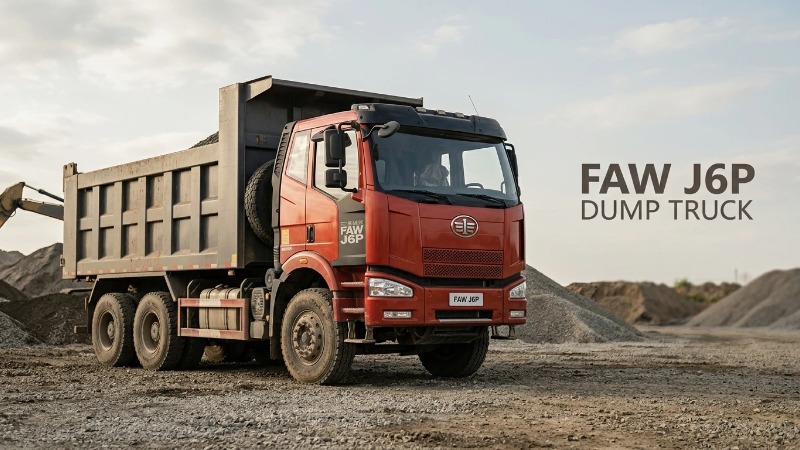
FAW Jiefang has grown into one of the most recognized names in commercial vehicles worldwide. As a leading Chinese FAW truck manufacturer, the brand combines decades of engineering heritage with modern production scale.
Its dump trucks appear on construction sites across Africa, Southeast Asia, the Middle East, and Latin America. This wide market reach reflects a reputation built on durability, affordable ownership, and readily available spare parts.
For buyers, that global footprint matters. It means proven field reliability, established service networks, and consistent supply of genuine components. In short, choosing a FAW dump truck rarely leaves an operator stranded without support.
FAW Jiefang consistently ranks among China’s top heavy-truck brands by annual unit sales, a position it has held for several consecutive years through 2026.
Who This Guide Is For
This resource is written for professionals who need actionable detail. If you manage fleets, broker imports, or run heavy operations, the sections below speak directly to your priorities.
- Fleet managers comparing total cost of ownership across multiple units.
- Import and export dealers evaluating margins and shipping terms.
- Construction contractors matching payload to job-site requirements.
- Mining operators seeking rugged, high-payload configurations.
Each group faces distinct challenges. Accordingly, this guide balances pricing structure, spec comparisons, and after-sales considerations so every reader finds relevant value.
How to Use This Pricing & Specs Guide
The article moves logically from cost drivers to models, then to detailed specifications and maintenance. Along the way, comparison tables summarize the most important numbers at a glance.
First, we break down what actually shapes the FAW dump truck price. Next, we introduce the core lineup and present pricing tables. After that, we dive into technical specs, common engine issues, and the full export process.
Feel free to jump to whichever section matches your immediate need. Alternatively, read straight through for a complete picture. Either way, you can explore the full model range anytime on our truck category page.
Understanding FAW Dump Truck Pricing Structure
Before comparing quotes, it helps to understand why prices differ so widely. A single “sticker figure” rarely tells the whole story, because configuration and shipping terms change the final cost significantly.
In practice, the FAW dump truck price you pay reflects a stack of variables. Engine choice, axle layout, and destination logistics all combine to shape your landed cost. Understanding this stack protects you from misleading comparisons.
Key Variables Affecting FAW Dump Truck Price List
Several core factors move pricing up or down. Recognizing them lets you compare offers on a true like-for-like basis.
- Engine power: Higher horsepower ratings command a premium but improve gradeability and cycle times.
- Axle configuration: A 6×4 layout costs less than an 8×4, yet the 8×4 carries more payload.
- Cargo body volume: Larger, thicker steel bodies raise material cost and shipping weight.
- Cab type: Standard, high-roof, and sleeper cabs differ in comfort and price.
- Emission standard: Higher emission tiers require added aftertreatment hardware.
Because these variables interact, two trucks labeled the same way can still differ in cost. Always request a detailed specification sheet before comparing any FAW dump truck price list.
FOB vs. CIF vs. Landed Cost
Shipping terms have an enormous effect on your budget. Many buyers focus only on the factory number and later feel surprised by port charges and duties.
The China FAW heavy duty truck price varies depending on which term governs the sale. Below is a simple breakdown of what each covers.
| Term | What It Includes | Buyer Responsibility |
|---|---|---|
| FOB (Free On Board) | Truck loaded onto the vessel at the origin port | Ocean freight, insurance, duties, inland delivery |
| CIF (Cost, Insurance, Freight) | Truck plus ocean freight and marine insurance to destination port | Import duties, customs clearance, local transport |
| Landed Cost | Total after duties, taxes, and clearance at destination | Local registration and final-mile delivery |
As a rule, FOB quotes look lower but exclude significant downstream expenses. Therefore, always calculate the full landed cost before finalizing any deal.
Currency, Steel Costs & Market Trends
Raw material prices ripple directly into truck pricing. Steel forms the backbone of the chassis and cargo body, so its market movement matters.
Through 2026, steel and freight costs have remained volatile but relatively stabilized compared with earlier post-pandemic spikes. Consequently, quoted prices can shift month to month, especially on large fleet orders.
Currency exchange rates add another layer. When your home currency weakens against the yuan, imported units effectively cost more. Locking in exchange rates early can protect large purchases from unexpected swings.
FAW Dump Truck Models Overview
FAW offers a broad dump truck lineup, but a handful of configurations dominate global exports. Understanding the core families helps you shortlist quickly.
The flagship platform remains the J6 range, complemented by premium J7 options and lighter regional tippers. Each serves a distinct operating profile, from severe mining duty to lighter urban haulage.
FAW J6 Series Dump Trucks
The J6 series is the workhorse of the FAW heavy-duty range. It targets construction and mining applications where durability outweighs almost every other consideration.
Operators favor the J6 for its reinforced chassis, robust drivetrain, and proven reliability under continuous loading cycles. As a result, the FAW J6 dump truck models remain the brand’s export backbone.
FAW J6P 6×4 Dump Truck
The J6P in a 6×4 layout is the single most exported configuration. It strikes an ideal balance between payload capacity, fuel economy, and purchase cost.
This popularity drives strong FAW 6×4 dump truck export volumes to developing markets. Contractors appreciate its versatility across road building, sand transport, and general site work.
Because parts and service knowledge for this model are so widespread, downtime tends to be short. That advantage alone makes the 6×4 a safe first purchase for new fleets.
FAW J6P 8×4 Dump Truck
When payload matters most, the 8×4 variant steps in. Its additional front axle spreads load and boosts legal carrying capacity.
Heavy hauling, aggregate transport, and large-scale earthmoving all suit this configuration. Mining operators in particular gravitate toward the 8×4 for maximizing tonnes per trip.
Naturally, higher capacity brings higher fuel use and slightly greater purchase cost. Still, for high-volume operations, the productivity gain usually justifies the investment.
FAW J7 Series & Premium Options
The J7 series represents FAW’s premium tier. It brings a more refined cab, advanced electronics, and improved driver ergonomics.
Operators running long shifts or demanding routes often choose the J7 for comfort and efficiency. Although positioned above the J6, it delivers strong long-haul value where uptime and driver retention are priorities.
For fleets planning gradual upgrades, mixing J6 and J7 units can balance cost against comfort. You can review current availability through our homepage catalog.
FAW Tipper Trucks for Regional Markets
Not every market needs the heaviest specification. Lighter tipper configurations serve buyers seeking lower cost and manageable payloads.
These units suit Africa, Southeast Asia, and the Middle East, where road conditions and load regulations vary widely. Consequently, FAW tailors body volume and axle ratings to regional norms.
A well-matched tipper reduces fuel consumption and eases maintenance. For contractors handling moderate loads, this configuration often delivers the best return per dollar invested.
FAW Dump Truck Price List & Comparison Table
This section presents indicative pricing tiers to guide budgeting. Because exact figures shift with configuration, emission spec, and freight, we present relative comparisons rather than fixed numbers.
Use these tables as a planning framework. For a precise, current quotation matched to your specification, request pricing directly through our contact page.
FAW Dump Truck Price by Model (Comparison Table)
The following table compares core models by configuration and capability. Pricing is shown as a relative tier to help you rank options without fixating on a single figure.
| Model | Configuration | Engine | Payload | Body Volume | Relative Price Tier |
|---|---|---|---|---|---|
| FAW J6P 6×4 | 6×4 rear drive | Diesel inline-6 | ~25–30 t | 16–20 m³ | Entry–Mid |
| FAW J6P 8×4 | 8×4 rear drive | Diesel inline-6 | ~35–40 t | 20–26 m³ | Mid–High |
| FAW J7 6×4 | 6×4 premium | Diesel inline-6 | ~28–32 t | 18–22 m³ | High |
| FAW Regional Tipper | 6×4 light-spec | Diesel inline-6 | ~18–22 t | 12–16 m³ | Entry |
As the table shows, payload and body volume climb together with price tier. Match these figures to your typical load profile before requesting a formal quotation.
Regional Price Variations
Destination heavily influences delivered cost. Duties, port fees, and freight distance all differ by region.
The comparison below outlines how relative delivered cost tends to shift across major FAW export markets. These are general patterns rather than fixed values.
| Region | Typical Freight Distance | Duty Environment | Relative Landed Cost |
|---|---|---|---|
| West & East Africa | Medium–Long | Moderate to high duties | Higher |
| Middle East | Medium | Generally lower duties | Moderate |
| Latin America | Long | Variable by country | Higher |
| Southeast Asia | Short–Medium | Moderate duties | Lower–Moderate |
Notably, the FAW tipper truck price Africa buyers face often reflects longer inland transport and higher import duties. Southeast Asian buyers, being closer to origin, frequently enjoy lower freight components.
New vs. Used FAW Tipper Truck for Sale
Budget-conscious buyers sometimes weigh certified used units against new trucks. Each path carries clear trade-offs.
New units offer full warranty, latest emission compliance, and zero operating history. A used FAW tipper truck for sale lowers upfront cost but may carry unknown wear and shorter remaining service life.
| Factor | New Unit | Certified Used Unit |
|---|---|---|
| Upfront cost | Higher | Lower |
| Warranty | Full manufacturer coverage | Limited or none |
| Emission compliance | Current standards | Depends on build year |
| Expected lifespan | Maximum | Reduced |
| Maintenance risk | Low initially | Higher, history-dependent |
For long-term fleet stability, new units usually win on total cost of ownership. However, for short-term projects or tight budgets, a well-inspected used truck can bridge the gap effectively.
FAW 6×4 Dump Truck Specs & Technical Deep Dive
Specifications separate a good purchase from a costly mistake. This section details the FAW dump truck specifications that fleet engineers scrutinize most closely.
We focus on the popular 6×4 platform, since it anchors the export range. Nonetheless, most principles apply across the wider lineup.
FAW 6×4 Dump Truck Specs Table
The table below summarizes representative technical values for a typical J6P 6×4 dump truck. Exact figures depend on the chosen variant and market configuration.
| Parameter | Typical Specification |
|---|---|
| Overall dimensions (L×W×H) | ~8,000 × 2,500 × 3,400 mm |
| Gross Vehicle Weight (GVW) | ~40,000 kg |
| Engine model | FAW/Weichai inline-6 diesel |
| Horsepower | 350–460 hp range |
| Transmission | 8–12 speed manual (auto optional) |
| Rear axle rating | ~13 t per axle |
| Tire size | 12.00R20 / 315/80R22.5 |
| Fuel tank | 300–400 L |
These figures represent a strong middle-ground specification. For heavier mining duty, engineers may specify higher horsepower and reinforced axles.
Engine & Powertrain Options
Powertrain choice defines both productivity and running cost. FAW dump trucks typically pair proven inline-6 diesel engines with heavy-duty transmissions.
Higher-torque engines improve gradeability on loaded climbs. Meanwhile, well-matched transmissions keep the engine within its efficient operating band, reducing fuel burn per load.
For operators covering long distances, fuel efficiency compounds quickly across a fleet. Even a small per-kilometer saving translates into significant annual savings across many trucks.
Cab, Chassis & Cargo Body Configurations
Structural components determine how well a truck endures abuse. Body material, hydraulic systems, and chassis reinforcement all influence durability.
- Cargo body: High-tensile steel bodies resist dents and abrasion from rock and aggregate.
- Hydraulic lifting: Front or under-body tipping cylinders raise heavy loads reliably.
- Chassis frame: Reinforced dual-channel frames handle continuous heavy cycling.
Choosing the right body material matters enormously for mining. Abrasive loads wear thin steel quickly, so heavier plate pays off despite added weight.
Emission Standards & Compliance
Emission rules vary sharply by destination. Some markets accept older standards, while others enforce stricter tiers.
As of 2026, many exporters supply configurations calibrated to the importing country’s requirements. Confirming this early prevents costly clearance delays at the destination port.
For detailed compliance guidance, our team explains market-specific requirements through the customer service page. Always verify the emission tier before shipping.
Critical Engine Components & Common Maintenance Issues
Uptime defines profitability in heavy hauling. Understanding core engine components helps fleet operators anticipate and prevent failures.
This section reviews key heavy truck engine components, then walks through two of the most common real-world problems: front cover oil leaks and cooling fan failures.
Understanding Key Heavy Truck Engine Components
A diesel engine relies on many interacting parts, but a few deserve special attention for reliability. Sealing surfaces, covers, and cooling elements top that list.
Neglecting these components invites oil leaks, overheating, and eventual catastrophic damage. Proactive inspection therefore protects both the engine and your operating budget.
Diesel Engine Timing Cover & Front Cover
The diesel engine timing cover protects the timing gears and drive mechanisms at the front of the engine. It shields these critical parts from contamination and retains lubricating oil.
Between the cover and the block sits the aluminum front cover gasket. This gasket seals the joint and prevents oil from escaping under pressure.
Over time, heat cycling and vibration can degrade this seal. When it fails, oil begins seeping from the front of the engine, signaling the need for inspection.
Crankshaft Seal Housing & Sealing Points
The crankshaft seal housing surrounds the point where the crankshaft exits the block. It holds the seal that keeps oil contained while the shaft rotates.
A healthy seal maintains oil pressure and prevents contamination of nearby components. When it wears, oil escapes and pressure can drop, threatening lubrication.
Because this area rotates continuously at high speed, seal wear is a normal long-term maintenance item. Monitoring for leaks here should be part of routine servicing.
Diagnosing & Repairing Front Cover Oil Leaks
Front cover oil leaks rank among the most common complaints on high-mileage engines. Fortunately, early detection makes repair straightforward and affordable.
Effective front cover oil leak repair begins with accurate diagnosis. Confirm the leak source before disassembly, since oil often travels and mimics leaks from other areas.
Symptoms of a Failing Front Cover Gasket
Several signs point to a compromised front cover seal. Catching them early prevents larger problems downstream.
- Visible oil residue on the front of the engine or timing cover.
- Oil drips accumulating beneath the front of the vehicle after parking.
- Gradually declining oil level without visible smoke.
- Burning oil smell as leaked oil contacts hot surfaces.
If you notice these indicators, schedule inspection promptly. Ignoring a small leak often leads to a larger, costlier failure.
Front Cover Oil Leak Repair Cost Estimates
Repair cost depends on parts, labor rates, and regional service pricing. The table below outlines cost components in relative terms rather than fixed amounts.
| Cost Component | Description | Relative Cost Level |
|---|---|---|
| Gasket / seal parts | Aluminum front cover gasket, crankshaft seal | Low |
| Labor | Disassembly and reassembly time | Moderate |
| Regional variation | Local shop rates and part availability | Variable |
Parts themselves are usually inexpensive. Labor, however, drives most of the total, since accessing the cover takes time. Sourcing genuine parts through a reliable supplier keeps the parts portion economical.
Engine Cooling Fan Failures
Cooling fan issues pose a serious overheating risk in dump truck operations. Heavy loads and slow climbs generate intense heat, so the fan system works hard.
When the fan underperforms, engine temperatures climb quickly. Recognizing early warning signs prevents expensive thermal damage.
Cracked Fan Blade Symptoms & Detection
An engine cooling fan blade failure often starts as a small crack. Left unchecked, that crack can propagate until a blade separates entirely.
Watch for these cracked fan blade symptoms during routine checks:
- Unusual vibration or noise from the front of the engine.
- Visible hairline cracks near the blade root during inspection.
- Reduced airflow and rising coolant temperature under load.
- Imbalance that worsens at higher engine speeds.
Inspecting fan blades regularly catches these issues early. A quick visual check during servicing can prevent a sudden roadside failure.
Worn Fan Clutch Diagnosis
The fan clutch controls when the fan engages. A worn fan clutch fails to lock up properly, so the fan spins too slowly when cooling demand peaks.
This directly causes engine overheating from fan damage or wear. Symptoms include rising temperatures during climbs, a fan that never seems to roar under load, and slow warm-up recovery.
Diagnosing a worn fan clutch involves checking engagement behavior and free-spin resistance. If the fan spins freely when hot, the clutch likely needs replacement.
Fan Blade Replacement Cost & Sourcing
Replacing a damaged fan restores proper cooling and protects the engine. The table below outlines the relative cost structure and sourcing options.
| Item | Consideration | Relative Cost Level |
|---|---|---|
| Fan blade (genuine) | OEM fit and balance quality | Moderate |
| Fan clutch | Often replaced together with blade | Moderate |
| Labor | Relatively accessible component | Low–Moderate |
| Aftermarket alternative | Lower cost, variable quality | Low |
For long-term reliability, genuine parts are strongly preferred. You can confirm fan blade replacement cost and availability by contacting a trusted parts supplier through our service team.
FAW Dump Truck Export Guide
Buying internationally involves more than choosing a truck. The export process spans supplier vetting, documentation, shipping, and local registration.
This end-to-end guide walks the FAW dump truck for export buyer through each stage. Following it reduces risk and prevents costly surprises.
Selecting a Reliable FAW Jiefang Dump Truck Exporter
Your exporter shapes the entire experience. A trustworthy partner delivers accurate specs, honest pricing, and dependable after-sales support.
When vetting a FAW prime mover supplier or dump truck exporter, evaluate these criteria:
- Track record: Verified export history to your target region.
- Transparency: Clear specifications and no hidden charges.
- References: Documented cooperation cases and client feedback.
- Parts support: Access to a genuine FAW Jiefang spare parts supplier network.
Reviewing real project history builds confidence. You can explore documented deployments on our cooperative case page.
Documentation & Compliance Requirements
Correct paperwork keeps shipments moving. Missing or inaccurate documents cause delays and unexpected storage fees at the destination port.
Standard export documentation typically includes:
- Bill of lading confirming cargo and shipping details.
- Certificate of origin establishing the manufacturing country.
- Inspection certificates verifying condition and compliance.
- Homologation documents for local roadworthiness approval.
Prepare these early with your exporter. Doing so smooths customs clearance and avoids demurrage charges.
Shipping Methods & Timelines
Two main shipping methods serve heavy trucks: RoRo and container. Each fits different needs and budgets.
| Method | Best For | Consideration |
|---|---|---|
| RoRo (Roll-on/Roll-off) | Complete, drivable units | Efficient loading; limited to available RoRo routes |
| Container | Partially disassembled or protected transport | Extra protection; added handling and packing effort |
Transit times vary by route. Shipments to Southeast Asia often arrive fastest, while Africa and Latin America require longer voyages. Confirm estimated timelines with your freight forwarder before committing.
Import Duties & Local Registration
Every country applies its own import duties and registration rules. These local factors significantly affect final ownership cost.
Some markets impose high tariffs on imported trucks to protect domestic industry. Others offer favorable rates for commercial vehicles supporting infrastructure development.
Research your destination’s duty structure carefully. Consulting a local customs broker alongside your exporter prevents miscalculation and delays.
How to Buy FAW Dump Truck Online Safely
Online purchasing offers convenience but requires caution. Fraud risk rises whenever large sums move between distant parties.
To buy a FAW dump truck online safely, follow these protective steps:
- Verify the supplier’s business registration and export licenses.
- Insist on transparent, documented specifications.
- Use secure payment terms, ideally with escrow protection.
- Request pre-shipment inspection reports and photos.
- Confirm after-sales and spare parts support in writing.
Reputable exporters welcome these safeguards. Learn more about our verified processes on the about us page.
FAW Tractor Trucks: A Complementary Investment
Many fleets diversify beyond dump trucks. Tractor units expand hauling capability and improve fleet flexibility.
Combining dump trucks with tractor heads lets operators serve more contract types. This diversification often stabilizes revenue across seasonal demand shifts.
FAW 6×4 Tractor Head Price Overview
The FAW 6×4 tractor head balances power and efficiency for long-haul work. Its pricing sits in a similar tier to comparable dump configurations.
For fleets exporting internationally, the FAW J6 tractor truck for export offers proven reliability. It pairs well with a range of trailer types, from flatbeds to tankers.
FAW Jiefang Tractor Head Price Comparison
The comparison below places tractor and dump configurations side by side. This helps fleet planners weigh mixed-purchase strategies.
| Configuration | Primary Use | Relative Price Tier |
|---|---|---|
| FAW J6 6×4 Tractor Head | Long-haul trailer towing | Mid |
| FAW J6P 6×4 Dump Truck | Construction and aggregate | Entry–Mid |
| FAW J6P 8×4 Dump Truck | High-payload mining | Mid–High |
| FAW J7 6×4 Tractor Head | Premium long-distance haulage | High |
As shown, the FAW Jiefang tractor head price aligns closely with dump equivalents. This parity makes mixed fleets financially predictable.
Sourcing Chinese FAW Commercial Trucks Wholesale
Dealers and large fleets benefit from wholesale purchasing. Bulk orders unlock better per-unit economics and streamlined logistics.
Buying Chinese FAW commercial trucks wholesale also simplifies parts standardization. When your fleet shares components, inventory management becomes far easier.
To discuss volume requirements, reach out through our contact page. Our team structures wholesale terms around your fleet plan.
Spare Parts, Warranty & After-Sales Support
A truck’s value extends far beyond the initial purchase. Long-term support determines whether ownership stays profitable.
Reliable parts supply, clear warranty coverage, and responsive service networks all matter. This section addresses these ownership essentials.
Finding a Reliable FAW Jiefang Spare Parts Supplier
Parts availability directly affects uptime. A dependable FAW Jiefang spare parts supplier keeps your fleet running with minimal downtime.
Consider the trade-off between genuine and aftermarket parts. Genuine components guarantee fit and durability, while quality aftermarket options can lower cost for non-critical items.
| Aspect | Genuine Parts | Aftermarket Parts |
|---|---|---|
| Fit and reliability | Guaranteed OEM match | Variable |
| Cost | Higher | Lower |
| Best for | Critical engine components | Non-critical, high-wear items |
| Warranty impact | Preserves coverage | May affect coverage |
For engine-critical items like seals and gaskets, genuine parts remain the safer choice. Explore maintenance insights further on our knowledge base.
Warranty Coverage & Service Networks
Global buyers should clarify warranty terms before purchase. Coverage duration, included components, and claim procedures vary between suppliers.
A strong service network turns warranty promises into real support. Confirm whether your destination country has authorized service points or trained technicians nearby.
Clear expectations prevent disappointment later. Always request warranty terms in writing before finalizing any order.
Total Cost of Ownership Analysis
Purchase price is only one part of ownership cost. Fuel, maintenance, parts, and depreciation all add up over the vehicle’s life.
The table below outlines a simplified five-year ownership framework in relative terms. Actual figures depend on usage intensity and local conditions.
| Cost Category | Description | Relative Share |
|---|---|---|
| Purchase price | Initial acquisition and shipping | Largest single item |
| Fuel | Consumption over 5 years | Very significant |
| Maintenance & parts | Routine service and repairs | Moderate |
| Downtime | Lost productivity from failures | Variable |
| Residual value | Resale after 5 years | Offsetting credit |
Fuel and downtime often surprise new buyers. Consequently, choosing an efficient, reliable configuration pays back far more than a low sticker price alone.
Frequently Asked Questions (FAQ)
Below are concise answers to the questions buyers ask most often. Each addresses a high-intent concern for serious purchasers.
What is the average FAW 6×4 dump truck price?
Pricing varies widely by engine power, body volume, emission spec, and shipping terms. A standard 6×4 configuration typically falls within the entry-to-mid tier of the export range. For an accurate figure matched to your specification, request a tailored quotation through our contact page.
Which FAW dump truck model is best for mining?
The FAW J6P 8×4 dump truck suits mining best. Its additional axle boosts payload, while reinforced chassis and body plate withstand abrasive loads. For extreme duty, specify higher horsepower and heavy-gauge steel bodies.
How long does FAW dump truck export shipping take?
Transit time depends on destination and shipping method. Southeast Asian ports often receive shipments fastest, while Africa and Latin America require longer voyages. Confirm exact timelines with your freight forwarder, since routes and vessel schedules change.
Are FAW spare parts easy to source internationally?
Yes, FAW’s global footprint supports strong parts availability. A reliable spare parts supplier can deliver both genuine and quality aftermarket components. For critical engine parts like gaskets and seals, genuine components are recommended to protect reliability.
What are the most common FAW engine repair issues?
Two frequent issues are front cover oil leaks and cooling fan failures. Front cover leaks stem from a worn front cover gasket or crankshaft seal, while cooling problems arise from cracked fan blades or a worn fan clutch. Both respond well to early detection and prompt repair.
Conclusion & Next Steps
FAW dump trucks combine proven durability, competitive pricing, and strong global support. Across models, the J6 range anchors the export lineup, complemented by premium J7 units and regional tippers.
Throughout this guide, we examined pricing structure, detailed specifications, common maintenance issues, and the full export process. Together, these insights equip you to buy with confidence rather than guesswork.
Remember that landed cost, emission compliance, and after-sales support matter as much as the headline figure. Weighing all three protects your long-term investment.
Ready to Source Your FAW Dump Truck? (CTA)
Take the next step toward equipping your fleet. Whether you need a single unit or a wholesale order, verified support makes the process smooth and secure.
Request a custom quote, download the full price list, or connect with a verified FAW Jiefang dump truck exporter today. Reach our team directly through the contact page, browse the complete lineup on our truck category page, or explore our homepage to begin.