




For global logistics companies, local freight contractors and fleet operators, box trucks are the most versatile and reliable commercial vehicles. Unlike dump trucks or cargo chassis, enclosed box trucks protect goods from rain, dust, sunlight and road damage.
More importantly, Chinese box trucks provide outstanding cost advantages. They deliver stable performance at a much lower investment cost compared with European and American brands. This makes them the top choice for bulk fleet imports worldwide.
However, many first-time overseas buyers face many uncertainties. They struggle to select the right tonnage, distinguish domestic and export specs, and work out the full import process.
This detailed import guide aims to solve all common doubts. It covers mainstream Chinese box truck models, core specifications, configuration differences, pricing factors and professional import procedures. For verified export-grade box truck resources, you can check official offerings from Mettlead Truck.
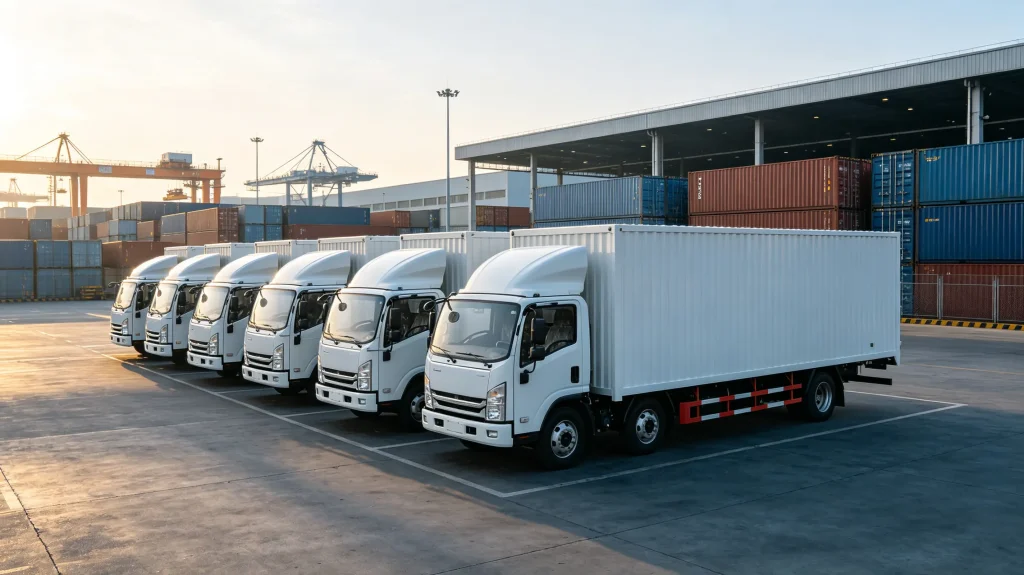
Why Global Buyers Choose to Import Box Trucks from China
In recent years, Chinese commercial vehicles have dominated the global medium and light truck market. Box trucks, in particular, have become the most exported truck type from China.
There are practical and commercial reasons behind this trend. It is not simply low pricing, but overall cost performance and complete product coverage.
First of all, China’s truck manufacturing chain is fully mature. All core components including engines, gearboxes, chassis and box bodies are produced locally. This greatly cuts production costs and stabilizes quality consistency.
Secondly, Chinese box trucks cover every tonnage level. Buyers can find lightweight, medium-duty and heavy-duty box models in one factory. This makes one-stop fleet procurement extremely convenient.
In addition, formal Chinese export truck manufacturers provide targeted overseas upgrades. These include anti-corrosion treatment, climate adaptation, emission customization and complete export document sets.
Finally, the after-sales and spare parts supply system for Chinese trucks is improving globally. Buyers no longer worry about long-term maintenance difficulties in local markets.
Cost Performance Advantage
Compared with Western commercial vehicles, Chinese box trucks offer nearly identical practical performance. Yet their purchase price is far lower.
For fleet buyers who need dozens of vehicles for daily operation, the overall cost saving is extremely obvious. It greatly shortens the fleet investment return cycle.
Meanwhile, Chinese truck engines and transmission systems are designed for durability. They tolerate poor road conditions and high-frequency daily use, which fits most developing market environments.
Full Model Coverage for All Scenarios
No matter your business type, you can find a matching Chinese box truck model.
Light box trucks suit urban parcel delivery, food transportation and small commodity distribution. Medium box trucks fit regional logistics and cross-city freight. Heavy-duty box trucks support long-haul bulk cargo transportation.
Such complete model coverage allows importers to build mixed fleets according to actual business needs. You can browse full truck categories for reference at all-categories product page.
Professional Export Customization
Domestic Chinese trucks and export-spec trucks are completely different in details. Export box trucks are specially optimized for overseas road rules, climate environments and registration standards.
Manufacturers adjust emission standards, driving side, electrical systems, paint anti-rust performance and accessory configurations. This ensures smooth local registration and long-term stable operation.
Mainstream Chinese Box Truck Models for Export
Chinese export box trucks are mainly divided into three categories by tonnage: light-duty, medium-duty and heavy-duty box trucks.
Each category corresponds to independent application scenarios, payload ranges and power configurations. Choosing the correct model is the first step of successful import procurement.
Light Duty Box Trucks
Light duty box trucks usually refer to 2-ton to 8-ton cargo vehicles. They are the most widely used urban logistics trucks globally.
These trucks feature compact body size, flexible steering and low fuel consumption. They can easily pass urban streets, community roads and narrow freight terminals.
Common applications include express delivery, e-commerce parcel transport, fresh food logistics, daily grocery distribution and small engineering tool transportation.
Light box trucks are usually equipped with 120HP to 160HP diesel engines. The chassis is lightweight but reinforced enough for daily urban freight intensity.
For most small and medium-sized local logistics companies, light box trucks are the best entry-level fleet models with low investment risk and fast profit return.
Medium Duty Box Trucks
Medium duty box trucks cover payloads from 10 tons to 18 tons. They bridge the gap between light urban trucks and heavy long-haul trucks.
This type of box truck focuses on intercity logistics and regional cargo turnover. It balances transportation volume and driving flexibility perfectly.
Medium box trucks adopt 180HP to 260HP engines. The chassis, suspension and brake systems are upgraded to adapt to long-distance continuous driving.
Most cross-town commodity transportation, factory cargo delivery and wholesale market distribution rely heavily on medium-duty box trucks.
If your business mainly covers regional provincial or state-level transportation, medium box trucks are the most cost-effective choice.
Heavy Duty Box Trucks
Heavy duty box trucks start from 20 tons payload. Most mainstream models are 6×4 axle configuration, with individual cargo volume up to 40 cubic meters or more.
These large box trucks are designed for long-haul highway logistics and cross-border freight. They support large-volume, long-distance and high-efficiency cargo turnover.
Equipped with 380HP to 460HP high-power engines and mature manual transmission gearboxes, heavy box trucks maintain stable performance during tens of thousands of kilometers of continuous operation.
Large logistics fleets and cross-border freight companies usually purchase heavy-duty box trucks in batches to improve overall transportation efficiency.
You can check practical fleet application cases of heavy box trucks through cooperative-case page.
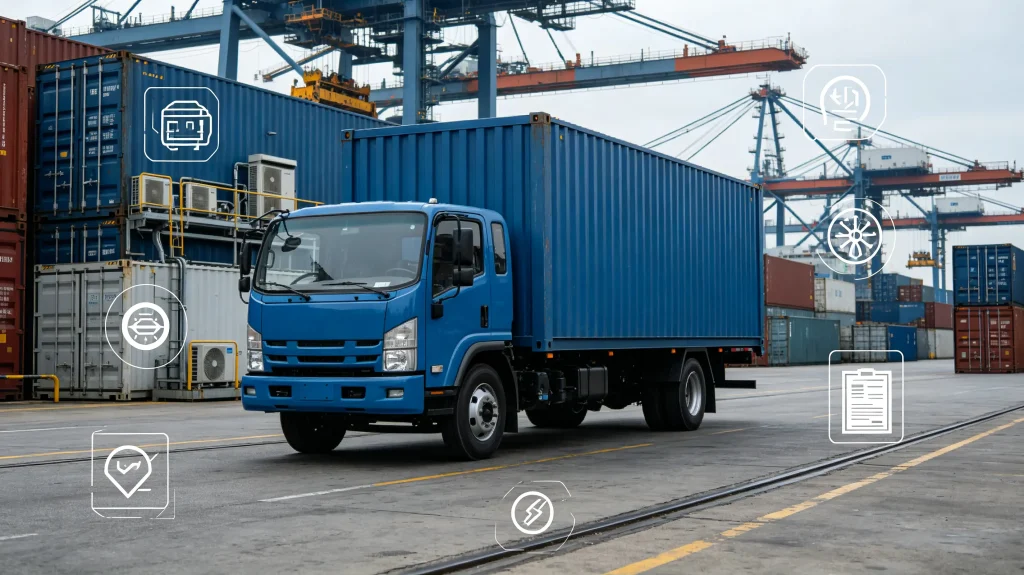
Key Technical Specs of Export Box Trucks
Many overseas buyers only focus on appearance and price. In fact, technical specifications determine the truck’s service life, compliance and operating cost.
When importing Chinese box trucks, you must check these core parameters one by one to avoid configuration mismatch.
Axle Configuration and Payload
Light box trucks mostly adopt 4×2 single-row axle layout. It meets the lightweight and flexible characteristics of urban logistics.
Medium box trucks still use 4×2 structure but with reinforced axle load capacity. Their legal payload is significantly higher than light models.
Heavy-duty box trucks mainly use 6×4 axles. Dual driving axles provide stronger traction and load-bearing performance for full-load long-distance driving.
Always match axle configuration with your local road weight limit rules. This avoids legal penalties caused by overload or non-compliant axle structures.
Engine Power and Fuel Economy
Chinese export box trucks are equipped with well-known domestic brand engines. These power units feature low failure rate and easy global spare parts matching.
Light models pursue fuel economy, while heavy models focus on power reserve and climbing performance.
Buyers can choose different horsepower versions according to road conditions. Mountainous areas need higher power, while flat highways can adopt economical low-power configurations.
Box Body Material and Structure
The box body is the core working part of a box truck. Export models adopt high-strength lightweight materials to reduce self-weight and increase actual cargo capacity.
Common materials include iron plate, aluminum alloy and composite thermal insulation panels. Different materials suit different cargo types.
Ordinary commodity transportation uses standard iron box bodies. High-value and moisture-proof goods choose aluminum alloy boxes. Fresh and cold chain cargo needs thermal insulation box structures.
Emission Standard Configuration
Export box trucks support Euro 2, Euro 3, Euro 5 and other regional emission standards. Manufacturers calibrate the engine system according to local policy requirements.
It is crucial to confirm local emission access rules before ordering. Wrong emission configuration will lead to failed registration and cannot be used legally.
Difference Between Domestic and Export Spec Box Trucks
Many importers make a serious mistake: purchasing domestic Chinese trucks for overseas operation.
Domestic trucks are only suitable for China’s road conditions and policies. They have obvious adaptation problems when used abroad.
Climate Adaptation Upgrade
Export box trucks add global climate adaptation design. For coastal countries, factories enhance salt fog corrosion resistance.
For high-temperature tropical regions, the cooling system is upgraded. For cold northern regions, engine preheating and antifreeze systems are added.
These targeted upgrades effectively reduce vehicle aging speed in overseas environments. You can learn more factory export strength at about-us page.
Electrical System Protection
Export-spec trucks adopt waterproof and dustproof electrical components. The circuit layout is optimized for long-distance sea transportation and humid climate.
Domestic trucks have simple electrical protection. After sea freight and long-term overseas use, circuit failure probability increases greatly.
Complete Export Document Package
Formal export trucks come with full sets of customs declaration documents, factory qualification certificates and vehicle parameter conformity files.
These files are essential for overseas customs clearance and local registration. Domestic trucks cannot provide complete export document support.
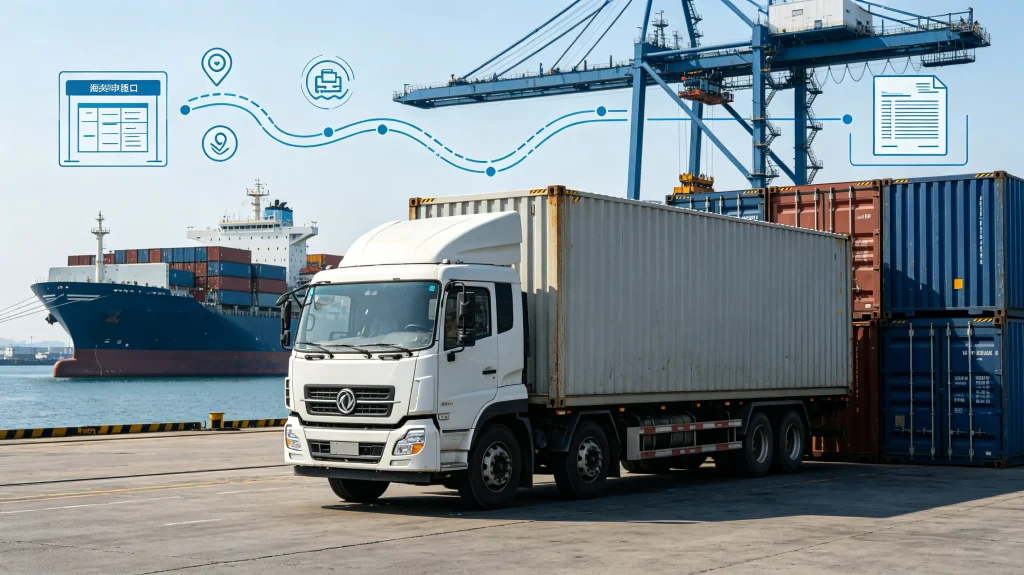
Step-by-Step Guide to Import Box Trucks from China
Importing Chinese box trucks is not complicated, but every step needs standard operation. Wrong processes will cause customs delay or cost waste.
Confirm Local Import Policy and Rules
First, confirm local import tariff policy, emission standards, left/right driving rules and vehicle age restrictions.
Different countries have different access thresholds. Clarifying policy requirements in advance is the premise of smooth procurement.
Select Suitable Box Truck Model and Configuration
Select tonnage, axle type, power, box material and emission standard according to business scenarios.
Professional suppliers can provide targeted configuration matching suggestions to avoid over-spec or under-spec procurement.
Confirm Quotation and Trade Terms
Confirm unit price, total amount, payment terms, delivery cycle and trade terms such as FOB, CIF and CFR.
Clear all cost components in advance to avoid hidden charges in later stages.
Production Inspection and Loading Arrangement
After production is completed, you can arrange factory inspection. Confirm vehicle appearance, parameters and accessories consistency.
Then arrange container loading or bulk ship loading according to vehicle quantity.
Customs Declaration and Sea Freight
The factory will complete export customs declaration and provide full document sets. After customs clearance, the goods will be shipped by sea.
During transportation, you can track shipping status in real time until the goods arrive at the destination port.
Destination Customs Clearance and Pickup
After arriving at the port, complete local customs clearance, tax payment and vehicle registration procedures.
Formal export documents can ensure zero obstacles in local customs clearance. For after-sales support during import, refer to customer-service page.
Key Factors Affecting Box Truck Import Cost
The total import cost of box trucks includes multiple parts. Simply looking at the factory price cannot calculate the real investment budget.
Vehicle Basic Configuration Cost
Different tonnage, power and box structures lead to different base prices. High-horsepower and large-volume models have higher factory costs.
Export Customization Cost
Special climate adaptation, driving side conversion, anti-corrosion upgrade and special box customization will generate reasonable customized fees.
Shipping and Port Charges
Sea freight varies according to season, route and container type. Port handling and document fees are fixed necessary costs.
Import Tariff and Local Tax
Each country has independent import tariff rates for commercial vehicles. Buyers need to calculate tax costs in advance to make accurate budget plans.
Common Buying Mistakes to Avoid
Most import problems come from information asymmetry and improper early selection. Avoid these typical mistakes to improve procurement efficiency.
Blindly Pursuing Low Price
Excessively low-price box trucks usually adopt reduced configurations. They lack export adaptive upgrades and have hidden dangers in later operation.
Fleet procurement must prioritize formal export-spec vehicles to ensure long-term stability.
Ignoring Local Policy Restrictions
Buying models that do not meet local emission or axle load standards will lead to unregistrable vehicles and huge economic losses.
Matching Wrong Model with Business Scenario
Using light trucks for heavy cargo causes frequent failures. Using heavy trucks for light logistics leads to serious cost waste.
After-Sales and Spare Parts Guarantee</h2>>
Stable after-sales service is the core of long-term fleet operation. Chinese formal export brands provide complete global service support.
Including remote technical guidance, global spare parts delivery and standardized warranty policies.
Buyers can reserve common wearing parts in advance to reduce vehicle downtime. For business cooperation and technical consultation, contact via contact-us page.
FAQ When Buying Box Trucks from China
Q1: Are Chinese box trucks reliable for long-term fleet use?
Yes. Export-spec box trucks adopt mature chassis and power systems. They have stable performance, low failure rate and adapt to various overseas road conditions.
Q2: What is the most popular box truck model for export?
10-18 ton medium-duty 4×2 box trucks and 25-30 ton 6×4 heavy box trucks are the most mainstream export models.
Q3: How long is the box truck production and delivery cycle?
Conventional models take 15-25 days production. Customized configurations take 30-40 days. Sea freight time depends on destination port.
Q4: Can Chinese box trucks pass local registration?
Yes. Formal export vehicles are fully calibrated according to overseas standards with complete legal documents to ensure smooth registration.
Q5: Can I customize box truck size and structure?
Full customization is supported. Box length, height, material, door type and internal structure can be adjusted according to customer demand.
Final Summary
Importing box trucks from China is currently the most cost-effective fleet procurement solution for global buyers.
Chinese box trucks cover all tonnage levels from light to heavy. They adapt to urban distribution, regional logistics and long-haul cross-border transportation.
By selecting export-spec models, matching correct configurations and following standard import procedures, buyers can build high-efficiency and low-cost commercial vehicle fleets.
If you need customized model recommendation, detailed quotation and professional import guidance, you can contact the official team for one-on-one service.