


Introduction
Buying an 8×4 truck is a major decision for any construction, mining, or logistics business. The right chassis can improve daily efficiency, lower operating costs, and support heavier workloads over time. The wrong choice, however, can create delays, extra repair bills, and lower profits.
Many buyers focus only on price or appearance when comparing 8×4 trucks for sale. They may overlook axle layout, load capacity, terrain adaptability, and export customization needs. As a result, some imported trucks struggle with local road conditions, climate challenges, or frequent breakdowns.
So, what makes an 8×4 truck a better long-term investment? This guide explains how the configuration works, which applications it fits best, and what specifications matter most. You will also find practical tips on suppliers, customization, warranty, and maintenance.
If you want to explore verified heavy truck models immediately, you can visit our truck product category page. There, you can filter chassis types, tonnage ranges, and export configurations in one place.
What Is an 8×4 Truck?
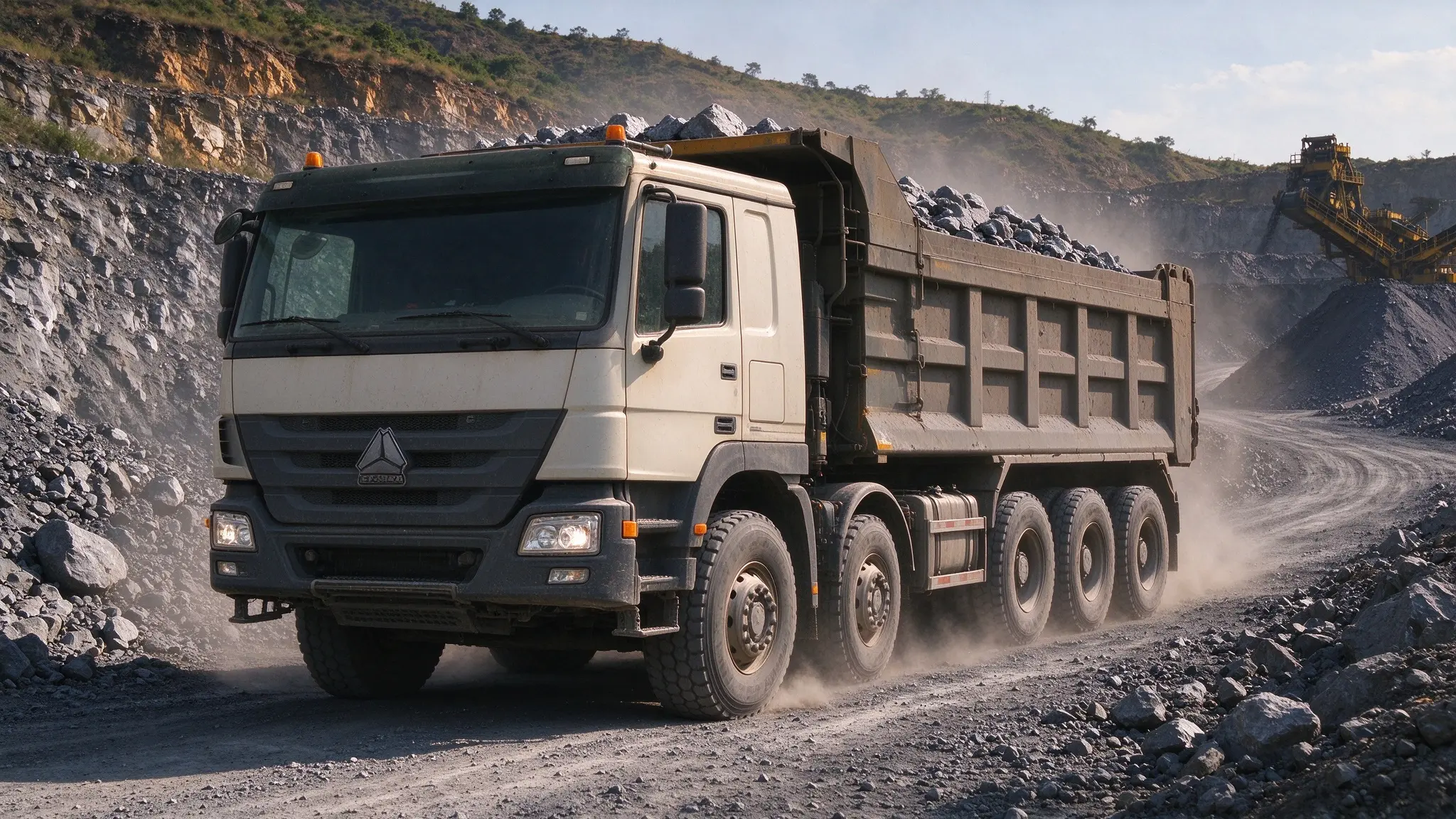
An 8×4 truck is a heavy-duty commercial vehicle with eight tire groups and four drive axles. The first number refers to the total number of tire groups on the chassis. The second number shows how many of those groups receive power from the engine.
This four-drive-axle design helps the vehicle distribute weight more evenly while delivering stronger traction. That is why 8×4 trucks are often preferred for heavy-load engineering work, mining transport, and bulk material hauling.
Dual Front Axles
Most standard 8×4 trucks use a dual front axle layout. The front axles handle steering and carry part of the vehicle’s total weight. Compared with single-front-axle designs, this arrangement can improve stability when the truck is loaded.
Dual front axles also spread the front-end weight across more tires. This reduces excessive pressure on individual components and helps reduce wear during long-term heavy operation.
Dual Rear Drive Axles
The rear section of an 8×4 chassis typically includes two full drive axles. Both axles can transfer engine power to the wheels at the same time. This gives the truck stronger pulling force than many single-drive-axle alternatives.
For example, an 8×4 truck can maintain steadier power when starting with a full load, climbing slopes, or driving on muddy construction roads. It also helps reduce wheel slip in difficult terrain.
Chassis Structure
The 8×4 chassis is built to handle high-intensity work. It usually has thicker frame rails, stronger suspension parts, and more robust axle assemblies than standard highway logistics trucks.
Every structural upgrade serves one main purpose: to support continuous heavy loads without premature bending or failure. For more details on axle configurations, you can check our truck knowledge base.
8×4 vs 6×4 vs 6×2: Which One Do You Need?
Many buyers confuse 8×4, 6×4, and 6×2 trucks. The difference is not just in the number of axles. Each configuration serves a different load range, working environment, and operating cost structure.
Load Capacity
A 6×2 truck is generally a medium-heavy logistics vehicle. It may work well on flat highways and regular freight routes, but it is less suitable for ultra-heavy engineering tasks.
A 6×4 truck offers stronger load capacity than a 6×2 model. It can handle many general construction jobs, but it may face extra stress when carrying dense materials such as sand, gravel, or ore.
An 8×4 truck sits at the top of this group for heavy-duty performance. Its multi-axle layout supports higher gross weight and helps distribute the load across more wheels.
Traction and Terrain
A 6×2 truck usually has the weakest off-road capability of the three. It performs best on paved roads and may struggle on muddy sites, gravel roads, or steep slopes.
A 6×4 truck delivers better traction than a 6×2 model. It can handle many light construction sites, but it may lack enough power for extremely heavy starts or difficult terrain.
An 8×4 truck provides the highest traction in this comparison. The combination of front load distribution and rear drive power makes it more reliable for challenging work sites.
Cost Efficiency
A 6×2 truck often has the lowest purchase and operating cost among the three. It can be a good choice for long-distance highway transport where road conditions are stable.
A 6×4 truck balances cost and capability. It works well for mixed logistics and lighter construction tasks, especially when the route is not extremely harsh.
An 8×4 truck usually costs more upfront and may use more fuel. However, its ability to carry heavier loads and survive tougher conditions can make it more profitable over time.
Why Choose an 8×4 Heavy Truck?
An 8×4 truck is not just another heavy-duty vehicle. Its design addresses some of the most common problems in construction, mining, and bulk transport. These include frequent breakdowns, overload stress, poor traction, and low daily productivity.
Strong Load-Bearing Capacity
Construction materials such as soil, gravel, ore, and cement are dense and heavy. Ordinary trucks may struggle when the actual load exceeds the nominal capacity. An 8×4 chassis, with its multi-axle layout, can spread the weight more evenly.
This reduces stress on individual axles and tires. It also helps protect the frame from bending or deformation during repeated heavy loads.
Better Traction on Tough Roads
Construction sites are often unpaved. There may be mud, gravel, steep gradients, and uneven surfaces along the route. Many standard trucks lose momentum or slip under these conditions.
Because an 8×4 truck sends power to more rear wheels, it can maintain steadier movement. This is especially useful when the vehicle is fully loaded and the road surface is poor.
Higher Daily Productivity
An 8×4 truck can carry more material per trip than many smaller heavy trucks. Fewer trips mean less fuel consumption, less driver time, and lower wear on the vehicle.
For instance, if a construction project requires large amounts of earthwork or gravel, an 8×4 truck can help complete the task faster. This can shorten project cycles and improve overall profits.
Longer Service Life
Export-grade 8×4 trucks are usually built with stronger components. The frame, axles, suspension, and engine are often reinforced to handle continuous heavy-duty use.
Compared with modified general-purpose trucks, properly engineered 8×4 models tend to have fewer minor faults. They may also require less frequent repairs over years of operation.
Better Regulatory Compliance
Many countries are tightening weight limit enforcement. An 8×4 truck’s multi-axle design makes it easier to stay within legal axle load limits. This can reduce the risk of fines and delays during road transport.
At the same time, a compliant 8×4 truck can still travel on public highways between project sites. That dual-purpose capability increases its overall utilization.
Common Applications for 8×4 Trucks
8×4 trucks are specialized vehicles. They do not fit every transport task, but they excel in heavy-load and high-intensity operations. Understanding the main applications can help you decide whether an 8×4 truck is the right investment.
Construction Site Hauling
Road construction, bridge building, urban renewal, and infrastructure projects all require large amounts of earthwork and gravel transport. 8×4 dump trucks are among the most common vehicles on these sites.
They can carry large volumes of material in one trip and handle frequent loading and unloading cycles. Their strong chassis also resists damage from rough site roads.
Mining and Quarry Transport
Ore, stone, and coal are extremely dense. Ordinary heavy trucks may experience axle damage, tire failure, or reduced frame life after long-term use in mines and quarries.
An 8×4 truck can handle these heavy bulk loads more reliably. Its reinforced structure is better suited to the constant stress of high-density material transport.
Municipal and Sanitation Work
Large-scale garbage transfer and construction waste removal also benefit from 8×4 trucks. Sealed garbage trucks or dump trucks with large body volumes can improve daily cleaning efficiency.
The stable chassis also helps the vehicle operate safely on urban roads. This makes the 8×4 layout useful for municipal teams that need both capacity and control.
Cement and Bulk Material Transport
Bulk cement tankers are often mounted on 8×4 chassis. The stable frame reduces movement of the tank body during transit, which helps protect material quality.
For example, concrete and cement mixtures can be sensitive to rough handling. A stable 8×4 chassis supports smoother transport and lowers the risk of material waste.
Heavy Equipment Transport
With the right modification, an 8×4 flatbed truck can carry small construction machinery, steel structures, and oversized cargo. The high load capacity makes it suitable for heavy industrial shipments.
However, you must match the body type to your cargo. Not every 8×4 truck for sale will be suitable for equipment hauling without proper modification.
Popular Types of 8×4 Trucks for Export
The 8×4 chassis is highly versatile. Different body types can be attached for different industries. If you are exploring export options, these are the most common configurations to consider.
8×4 Dump Truck
The 8×4 dump truck is the most popular export model. It is widely used for earthwork, mining, construction waste, and gravel transport. Its hydraulic lifting system allows fast and controlled unloading.
This type of truck is ideal for buyers who need a flexible workhorse for construction sites. It is also relatively easy to operate and maintain compared with more specialized vehicles.
8×4 Bulk Cement Truck
The 8×4 bulk cement truck is designed for powdery materials such as cement and fly ash. It uses a sealed tank and pneumatic system to load, carry, and unload the material efficiently.
This configuration reduces spillage and dust pollution. It is especially useful for large infrastructure projects and cement plants that require regular bulk deliveries.
8×4 Flatbed Truck
An 8×4 flatbed truck works well for steel, machinery, building materials, and irregular cargo. The open platform allows flexible loading with a crane or forklift.
It is a practical choice for industrial logistics companies. It can also be modified with side rails, stakes, or cover systems depending on the cargo type.
8×4 Sealed Van Truck
The 8×4 sealed van truck is used for industrial goods, municipal supplies, and protected cargo. Its enclosed body protects materials from rain, dust, and theft.
This type is less suitable for loose bulk material but very useful for finished goods and controlled cargo. If your business involves multiple delivery routes, it may be a strong option.
Custom Special Vehicles
Factories can also build 8×4 chassis into sprinklers, sewage suction trucks, crane trucks, and other special vehicles. Each modification targets a specific operational need.
If you need a custom solution, you should discuss your work environment and cargo requirements early. This helps the supplier recommend the right axle ratio, body size, and auxiliary equipment.
Top Chinese 8×4 Truck Export Brands
Chinese heavy truck brands have become major players in global export markets. They offer competitive pricing, strong chassis technology, and improving after-sales support. Several brands dominate the 8×4 segment.
SINOTRUK HOWO 8×4 Series
SINOTRUK HOWO is one of the most exported heavy truck brands in China. Its 8×4 engineering series is known for durability and simple maintenance. Many buyers choose it because parts are widely available overseas.
The HOWO 8×4 chassis usually comes with high-torque diesel engines and reinforced frame rails. This combination helps it handle heavy loads and rough site conditions.
Shacman 8×4 Heavy-Duty Trucks
Shacman focuses on structural strength and off-road performance. Its 8×4 models are often preferred in African, Middle Eastern, and Southeast Asian markets where road conditions are challenging.
The suspension and frame are optimized for bumpy roads. Shacman trucks also tend to have strong corrosion resistance, which helps in dusty and high-temperature environments.
FAW Jiefang 8×4 Models
FAW Jiefang offers balanced 8×4 trucks for both engineering and logistics use. Its models often emphasize fuel efficiency and driver comfort, which can help reduce long-term operating costs.
FAW trucks are a good choice for large fleets that want predictable performance. They are especially suitable when the route includes both project roads and public highways.
To compare brand strengths and factory capabilities, you can visit our company profile page. You will find background information on our export operations and product support.
Key Specifications to Check Before Buying
Comparing 8×4 trucks for sale can be confusing. Many buyers focus on price first, but the most important factors are specifications. The right parameters will determine performance, reliability, and operating cost.
Engine Power and Torque
Engine horsepower and torque directly affect loading ability, climbing performance, and fuel consumption. For ordinary construction sites, a moderate engine may be enough. For heavy mining or mountain routes, a higher-torque engine is usually better.
You should also consider local fuel quality and maintenance conditions. In some overseas markets, simpler mechanical pump engines are easier to service than complex electronic injection systems.
Chassis Frame Strength
The chassis frame is the backbone of the truck. A high-quality 8×4 truck will use thickened integral box beams. The thickness and reinforcement level determine how well the frame resists bending under heavy loads.
You should ask whether the frame has been reinforced for engineering use. A standard logistics chassis may not survive long in heavy construction applications.
Drive Axle Ratio
The axle ratio influences both speed and pulling power. A higher ratio improves climbing ability and heavy-load starts. A lower ratio supports faster highway cruising.
You must choose based on your typical route. If your work involves steep slopes and heavy loads, a higher axle ratio is usually better. If you travel long distances on flat roads, a lower ratio may save fuel.
Hydraulic System for Dump Trucks
If you are buying an 8×4 dump truck, the hydraulic system is critical. You should check the cylinder brand, lifting speed, and load capacity. A good hydraulic system should lift smoothly and without leakage.
Poor hydraulic performance can cause unloading delays and safety risks. This is especially important if the truck will operate on uneven ground at the construction site.
Tire Load Rating
Standard 8×4 trucks often use 12R22.5 or 315/80R22.5 tires. However, the load rating matters more than the size alone. You need tires that can support your fully loaded gross weight.
For mining and quarry use, extra wear resistance and puncture resistance are important. Cheap tires may fail quickly under heavy loads and rough surfaces.
Emission Standards
Emission requirements vary by country. Some markets accept Euro 2 or Euro 3 engines, while others require Euro 5 or Euro 6. You must confirm the local standard before ordering.
Choosing the wrong emission level can cause customs clearance problems. It may also lead to registration issues after the truck arrives.
Export Customization Options
Many standard domestic trucks are not ready for overseas conditions. Export customization helps the vehicle adapt to different climates, fuels, and road networks. This step can extend service life and reduce maintenance issues.
High-Temperature Cooling
In tropical or desert regions, engine overheating is a common problem. An upgraded radiator and enhanced cooling system can help maintain normal operating temperatures.
This is especially important for trucks that work in open mines or long-distance routes with heavy loads. A better cooling system reduces the risk of sudden shutdowns.
Dust and Sand Protection
Dusty environments require improved filtration. Multi-stage air filters can block fine sand and dust particles, protecting the engine’s internal components.
This type of modification is valuable for desert areas and dry mining regions. It helps reduce wear and may extend the time between major overhauls.
Anti-Corrosion Treatment
Trucks that travel by sea or operate in coastal areas are exposed to salt spray. Chassis anti-corrosion coating and undercoating can protect the frame and metal parts from rust.
This is not just a cosmetic improvement. Corrosion can weaken structural parts over time, especially in high-humidity areas.
LHD and RHD Conversion
Steering side is another critical export requirement. Factories can build 8×4 trucks in left-hand drive or right-hand drive versions depending on the destination country.
You must confirm this before production. Changing the steering side after manufacturing is much more expensive and may affect vehicle safety.
Special Climate Packages
For cold or high-altitude regions, cold-start packages may be necessary. These can include upgraded batteries, pre-heating systems, and low-temperature resistant fluids.
For hot regions, heat-resistant electrical parts and air conditioning upgrades may improve driver comfort and reliability.
How to Find a Reliable 8×4 Truck Supplier
The supplier you choose affects more than just price. A good supplier will help you select the right configuration, provide correct documents, and support after-sales service. A bad supplier may deliver wrong specifications or no support at all.
Check Brand Authorization
Official brand authorization is one of the most important checks. Authorized suppliers can provide genuine factory vehicles and more reliable warranty support.
You should ask for proof of authorization from brands such as SINOTRUK, Shacman, or FAW. This reduces the risk of buying refurbished units or copied configurations.
Verify Export Documents
Qualified suppliers should offer complete export documentation. This may include ISO, CE, SGS, and export filing certificates depending on the destination.
Missing documents can cause customs delays. They may also make vehicle registration difficult after arrival.
Look for Overseas Experience
Suppliers with export experience understand different certification rules and climate requirements. They can guide you toward the right emission standard, steering side, and customization package.
You can ask for case studies or references from similar markets. This gives you more confidence that the supplier knows your local requirements.
For more information on our background and export capabilities, you can visit our homepage. There, you will find an overview of our product range and service approach.
Avoid Low-Price Traps
Ultra-low prices can be tempting, but they often hide problems. Some suppliers cut corners on frame thickness, tire quality, hydraulic parts, or documentation.
You should compare the full specification, not just the unit price. A slightly more expensive truck with better parts may save you money in the long run.
Standard Export Procurement Process
Buying an 8×4 truck for export should follow a clear process. A structured order flow reduces mistakes and ensures that you receive the configuration you need.
First, define your local road conditions, cargo type, typical load weight, climate, and emission requirements. Second, discuss these details with the sales team to confirm the right chassis and body type.
Third, request a formal quotation that includes specifications, customization items, delivery time, and warranty terms. Fourth, sign the export contract before production starts.
Fifth, monitor production progress during the manufacturing period. Sixth, inspect the vehicle before shipment to confirm appearance, configuration, and performance.
Finally, arrange shipping and receive the full export document set. This includes the packing list, commercial invoice, bill of lading, and relevant certificates.
If you want to discuss a custom procurement plan, you can contact our contact us page. Our team can help you compare configurations and build a suitable order structure.
Shipping and Customs Clearance
Heavy trucks are usually shipped by RoRo or container. RoRo shipping is common for large fleet orders because it is efficient and cost-effective. Container shipping may be better for single-unit orders that need extra protection.
You should confirm the shipping method with your supplier early. The destination port, local import rules, and document requirements will all influence the total cost.
A professional supplier will prepare the correct paperwork for customs clearance. This helps avoid delays at the port and ensures a smoother handover to your local transport team.
After-Sales Warranty and Maintenance
After-sales service is critical for 8×4 trucks. These vehicles work under heavy loads, so regular maintenance is necessary. A strong warranty and parts support system can reduce downtime.
Core Component Warranty
Most export-grade 8×4 trucks include a factory warranty on core components such as the engine, gearbox, and drive axles. You should understand the warranty period and what it covers before purchase.
Warranty terms should be written in the contract. Verbal promises are not enough, especially for large fleet orders.
Daily Maintenance
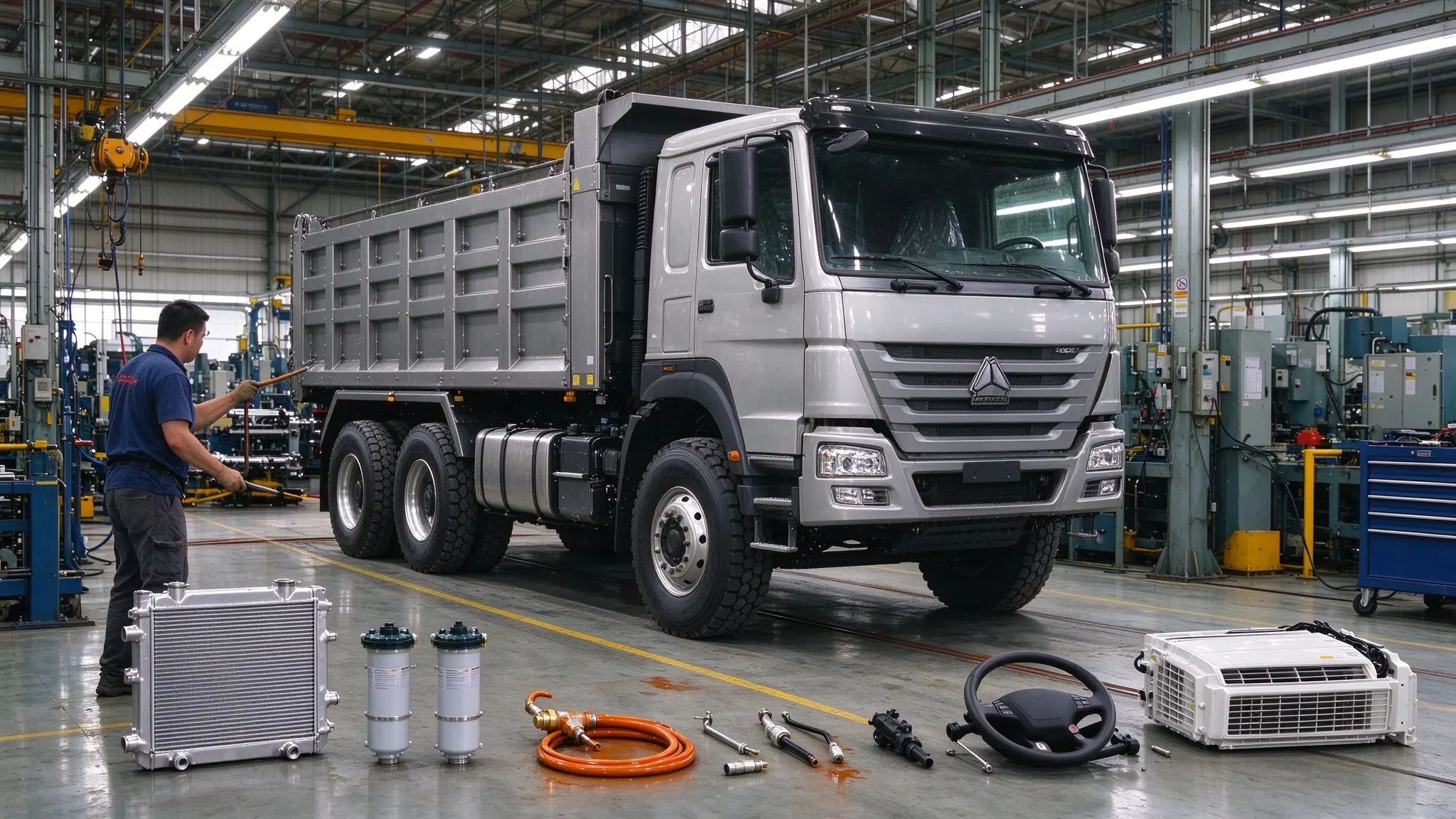
Daily maintenance includes checking chassis bolts, oil levels, filters, hydraulic oil, tire pressure, and radiator cleanliness. These simple checks can prevent major failures later.
For example, cleaning the radiator regularly helps prevent overheating. Checking tire pressure and wear reduces the risk of sudden tire failure under heavy loads.
Parts Supply
Parts availability is another important factor. A supplier that can provide fast access to spare parts will help you keep the fleet operational.
You should ask about common wear parts, oil filters, fuel filters, brake pads, and hydraulic components. For urgent support, you can also visit our customer service page.
Common Mistakes to Avoid When Buying an 8×4 Truck
Many overseas buyers make the same mistakes when sourcing 8×4 trucks for sale. These errors can be expensive, but they are often easy to avoid with careful planning.
Do not choose the truck with the lowest price only. A cheap unit may have a thinner frame, weaker axles, or incomplete documents. It may cost you more in repairs later.
Do not select an engine that is too small for your workload. If you regularly carry heavy loads on slopes, you need enough torque and power reserve.
Do not ignore export customization. A truck built only for domestic conditions may overheat, rust, or fail prematurely in your market.
Do not skip the pre-shipment inspection. Check the vehicle’s appearance, configuration, tires, hydraulic system, and documentation before it leaves the factory.
Finally, do not rely on verbal agreements. Put every specification, warranty term, and delivery commitment in writing.
Case References and Real Export Examples
Case references can help you understand how different 8×4 configurations perform in real conditions. They also show how suppliers handle export documentation and after-sales support.
For example, some 8×4 dump truck orders are customized for African mining sites with enhanced cooling and dust filtration. Other orders are built for Southeast Asian municipal projects with right-hand drive and sealed body options.
If you want to review real export examples, you can visit our cooperative case page. There, you will find project references and configuration details for different markets.
Conclusion
An 8×4 truck is a heavy-duty investment, but it can deliver strong returns when chosen correctly. Its multi-axle layout supports heavy loads, improves traction, and helps meet weight regulations. These capabilities make it especially useful for construction, mining, and bulk transport.
However, you cannot select an 8×4 truck based on price alone. You must evaluate the chassis strength, engine power, axle ratio, tire rating, emission level, and export customization. The supplier’s experience and after-sales support are also critical.
With the right configuration and formal procurement process, an 8×4 truck can become a reliable workhorse for your fleet. It will support higher productivity, lower downtime, and steadier profits over the long term.
If you want to stay updated on new models, market trends, and export tips, you can also check our blog page. For detailed quotations and specification sheets, please contact our sales team directly.