Introduction

For small and medium-sized logistics companies, local distribution teams, and municipal engineering fleets across the Middle East, Africa, and Southeast Asia, 4×2 trucks stand out as the most cost-effective commercial vehicle option. Unlike heavy multi-axle trucks, 4×2 models feature a lightweight structure, flexible operation, and outstanding fuel economy.

In addition, 4×2 trucks have lower purchase costs and simpler daily maintenance requirements. This makes them ideal for short-to-medium distance transportation, urban cargo delivery, and light-duty construction tasks. For fleet buyers with limited budgets and fixed daily operation scenarios, 4×2 trucks can significantly improve overall project profitability.

However, the global 4×2 truck market features countless brands, configurations, and customized versions. Many first-time buyers struggle to distinguish parameter differences, resulting in mismatched models, excessive fuel consumption, or frequent mechanical failures after purchase.

Furthermore, many buyers blindly follow market trends without matching truck performance to actual working conditions. This common mistake leads to unnecessary operational losses and short vehicle service life.

To solve these pain points, this complete buying guide explains everything you need to know about selecting, verifying, and purchasing high-quality 4×2 trucks for sale. Whether you need a single unit for daily delivery or bulk fleet orders, this step-by-step guide helps you make data-driven decisions. For reliable sourcing support, you can work with professional Chinese truck export suppliers to avoid common procurement risks.
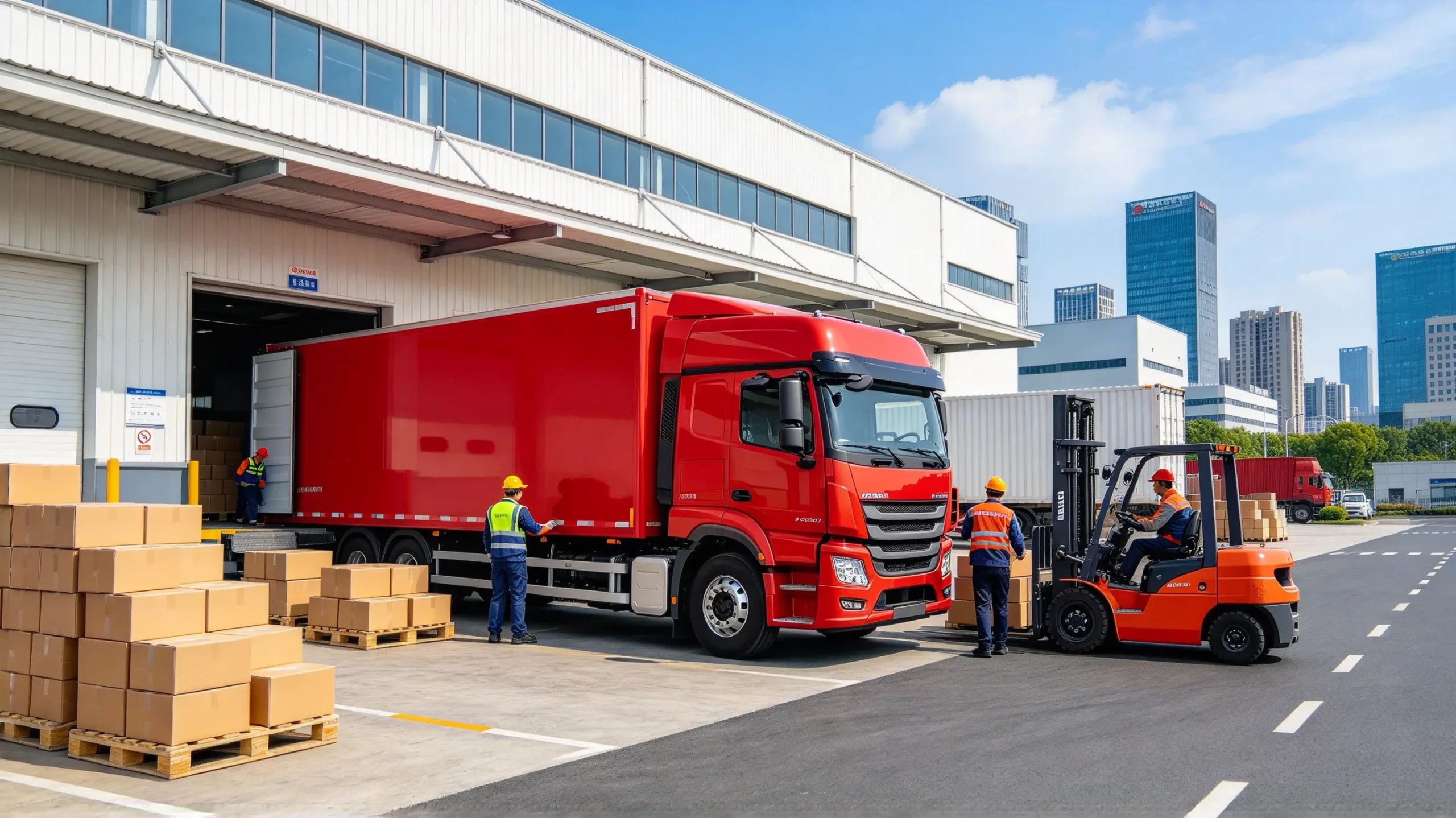
4x2 truck for sale at urban logistics yard with staff checking delivery vehicle

Chapter 1: What Is a 4×2 Truck? Core Definition & Working Principles

Before starting your purchase, it is essential to fully understand the basic definition and structural advantages of 4×2 trucks. Many buyers confuse 4×2, 6×4, and 8×4 configurations, which directly affects model selection accuracy.

Simply put, the numbers in truck axle configurations represent total wheel groups and driving wheel groups respectively. A 4×2 truck means four total wheel groups and two driving wheel groups. Specifically, it adopts one steering front axle and one driving rear axle layout.

Compared with multi-axle heavy trucks, this structure has fewer accessory parts and a lighter chassis weight. As a result, 4×2 trucks deliver more flexible steering and a smaller turning radius, which is perfect for narrow urban roads and crowded warehouse access routes.

Meanwhile, the simplified mechanical structure reduces operational resistance and fuel consumption. For long-term high-frequency daily transportation, the fuel cost advantage of 4×2 trucks becomes extremely obvious.

Nevertheless, 4×2 trucks also have inherent limitations. Due to fewer driving axles and smaller load-bearing chassis, they cannot bear ultra-heavy cargo or adapt to extremely rough off-road roads. Therefore, scenario matching is the primary principle for choosing a 4×2 truck.

1.1 Core Structural Features of Standard 4×2 Trucks

Standard commercial 4×2 trucks adopt a classic two-axle layout. The front axle undertakes steering tasks only, while the rear axle provides all power output and main load-bearing support.

Most mainstream 4×2 truck models are equipped with high-efficiency inline engines and matched mechanical gearboxes. The power system tuning focuses on stability and fuel economy rather than extreme horsepower.

In addition, the chassis suspension of 4×2 trucks is optimized for flat road conditions. The suspension hardness and shock absorption parameters are suitable for highway and urban road driving, ensuring both driving stability and cargo safety.

1.2 Main Classification of 4×2 Trucks by Body Type

To adapt to different cargo types and operation scenarios, 4×2 trucks are divided into multiple mainstream body types. Each version has exclusive functional advantages.

First, 4×2 cargo box trucks. This is the most universal model, suitable for general dry cargo, daily necessities, and industrial parts transportation. The enclosed cargo box effectively protects goods from sun exposure and rain erosion.

Second, 4×2 flatbed trucks. Flatbed models are widely used for bulk building materials, steel products, and mechanical equipment transportation. The open design facilitates fast loading and unloading.

Third, 4×2 van trucks. Fully sealed van bodies are ideal for high-value goods, electronic products, and fragile cargo transportation, with excellent anti-theft and dustproof performance.

Fourth, 4×2 light dump trucks. Small dump models are used for construction waste cleaning, sand and gravel short-distance transportation, and municipal renovation projects.

You can browse full 4×2 truck series and customized body solutions to quickly match the body type that fits your business.

Chapter 2: Core Advantages of Choosing a 4×2 Truck for Commercial Use

Most fleet operators prefer 4×2 trucks for light and medium commercial transportation because of their comprehensive cost-performance advantages. Compared with 6×4 and 8×4 heavy trucks, 4×2 models have obvious practical value in daily commercial scenarios.

2.1 Outstanding Fuel Economy for Long-Term Cost Savings

Fuel cost accounts for the largest proportion of truck fleet daily operating expenses. 4×2 trucks have lighter chassis weight and fewer running parts, which effectively reduces engine load during driving.

Under the same road conditions and cargo weight, 4×2 trucks save 15% to 25% fuel compared with 6×4 heavy trucks. For logistics fleets with hundreds of daily trips, this fuel-saving advantage creates huge profit margins every year.

In addition, most mainstream 4×2 truck engines are tuned for economic speed sections. They maintain low fuel consumption during constant-speed highway cruising, fully adapting to medium-distance trunk transportation needs.

2.2 Flexible Maneuverability for Complex Urban Roads

Urban logistics and municipal operations often involve narrow streets, crowded community roads, and limited warehouse parking spaces. Large multi-axle trucks are difficult to turn and reverse in these scenarios.

On the contrary, 4×2 trucks have a short wheelbase and small turning radius. They can flexibly pass through complex urban road sections and complete precise parking and loading operations.

This flexible feature greatly improves transportation efficiency, especially for last-mile distribution and urban short-distance replenishment businesses.

2.3 Low Purchase & Maintenance Costs

In terms of initial procurement cost, 4×2 trucks are much cheaper than heavy-duty multi-axle trucks. They require no redundant axle configurations and heavy-duty reinforced chassis, which greatly reduces factory manufacturing costs.

Meanwhile, the mechanical structure of 4×2 trucks is simpler. The wearing parts such as filters, brake pads, and axle accessories are universal and affordable.

Daily maintenance cycles are shorter and maintenance difficulty is lower. Ordinary maintenance personnel can complete routine inspections and repairs without professional high-tech equipment.

2.4 High Vehicle Utilization Rate

4×2 trucks are not limited to single transportation scenarios. They can switch freely between urban distribution, highway trunk transportation, and light construction auxiliary tasks.

For small fleets with mixed business types, 4×2 trucks can maintain high daily utilization rates. This avoids the idle waste of professional heavy trucks with single functions.

Chapter 3: Ideal Application Scenarios for 4×2 Trucks (Who Should Buy)

Although 4×2 trucks have comprehensive advantages, they are not suitable for all operation scenarios. Clear scenario matching is the core premise of correct selection. This chapter summarizes the most suitable application fields for 4×2 trucks.

3.1 Urban & Suburban Logistics Distribution

Urban express delivery, supermarket goods replenishment, and daily commodity distribution are the most mainstream scenarios for 4×2 trucks. The flexible body size meets urban traffic restrictions and height limits.

Besides, the moderate load capacity fully covers daily light and medium cargo demand. There is no need to bear the excess cost and fuel consumption of heavy trucks.

3.2 Medium-Distance Highway Transportation

For cross-city and cross-province medium-distance trunk transportation with cargo weight below 15 tons, 4×2 trucks are the best choice. The stable power system ensures long-distance continuous driving stability.

At the same time, the fuel-saving advantage can effectively control long-distance transportation costs and improve the overall profit of a single trip.

3.3 Municipal Engineering & Urban Renovation

Municipal road maintenance, greening construction, urban garbage cleaning, and pipeline renovation projects all require flexible light trucks.

4×2 dump trucks and flatbed trucks can quickly transport construction tools, auxiliary materials, and waste materials. Their flexible mobility adapts to frequent site switching needs.

3.4 Small-Scale Construction Auxiliary Transportation

For rural construction, small factory renovation, and low-intensity earthwork projects, 4×2 light dump trucks can meet the demand for short-distance transportation of sand, gravel, and construction waste.

Compared with large mining dump trucks, 4×2 models have lower rental and purchase costs, which is more in line with small project budget planning.

3.5 Scenarios Not Suitable for 4×2 Trucks

First, ultra-heavy cargo transportation over 20 tons. 4×2 chassis load-bearing capacity is limited, and overloading will cause chassis deformation and axle damage.

Second, long-term off-road mining and desert rough road operations. The single driving axle has insufficient grip and weak anti-skid ability, which is prone to slipping and power insufficiency.

Third, large-scale container terminal transportation with high load requirements. In these scenarios, 6×4 tractor heads are more professional and reliable.

Chapter 4: 4×2 Truck vs 6×4 Truck: Key Differences & Selection Standards

Most buyers hesitate between 4×2 and 6×4 trucks during procurement. These two configurations have completely different positioning and applicable scenarios. Clear comparison helps you eliminate selection confusion.

4.1 Load Capacity Difference

4×2 trucks are positioned for light and medium loads, with a conventional load range of 5 to 18 tons. They are suitable for daily commercial light cargo transportation.

6×4 trucks add one rear driving axle, with stronger chassis bearing capacity. The load range can reach 25 to 40 tons, which is oriented to heavy-duty industrial transportation and large-scale construction projects.

4.2 Fuel Consumption & Operating Cost Difference

4×2 trucks have fewer axles and lighter body weight, so the fuel consumption per kilometer is significantly lower. The daily tire wear and maintenance cost is also much lower.

6×4 heavy trucks have large body resistance and more wearing parts. Long-term operation will generate higher fuel costs and maintenance expenses.

4.3 Maneuverability & Road Adaptability

4×2 trucks have a short wheelbase and flexible steering, adapting to urban narrow roads and complex traffic environments.

6×4 trucks have a long wheelbase and large turning radius, with poor flexibility. They are more suitable for wide highways and professional freight routes, not for urban complex road conditions.

4.4 Purchase Price Difference

The overall price of 4×2 trucks is 30% to 50% lower than that of 6×4 trucks with the same brand. The initial investment pressure is small, which is friendly for individual drivers and small fleets.

6×4 heavy trucks have high configuration costs and are more suitable for large professional logistics companies with sufficient capital and heavy-load business demands.

4.5 Final Selection Suggestion

Choose 4×2 trucks if your business focuses on urban distribution, medium-distance light cargo transportation, and municipal auxiliary projects with limited budget.

Choose 6×4 trucks if you need long-term heavy-load transportation, large-scale construction material hauling, and high-intensity industrial operation.

Chapter 5: Top Chinese 4×2 Truck Brands & Reliable Models for Sale

Chinese 4×2 trucks occupy a major share of the global light and medium commercial vehicle market. Mainstream brands have stable quality, mature technology, and cost-effective pricing. This chapter sorts out the most reliable 4×2 truck brands and recommended models in 2026.

5.1 SINOTRUK HOWO 4×2 Series

SINOTRUK HOWO is one of the most recognized Chinese truck brands overseas. Its 4×2 series trucks focus on durability and comprehensive adaptability.

HOWO 4×2 cargo trucks and flatbed trucks adopt reinforced lightweight chassis. The chassis ensures load-bearing strength while controlling body weight, realizing higher effective load capacity.

Matched with self-developed high-efficiency engines, the power output is stable and fuel-saving. The whole vehicle is suitable for long-distance highway transportation and daily urban distribution.

In addition, HOWO 4×2 trucks support targeted export upgrades, including high-temperature heat dissipation, dust-proof sealing, and anti-corrosion treatment, adapting to Middle East and African harsh environments.

5.2 Foton Auman 4×2 Series

Foton Auman 4×2 trucks are famous for comfortable driving experience and intelligent configuration. The cabin adopts humanized design with good shock absorption and noise reduction effect.
The power matching of Auman models is reasonable, with multiple horsepower options to meet different load and speed requirements. The gearbox shifts smoothly, reducing driver fatigue during long-term driving.
This series is very suitable for logistics fleets that pursue driving comfort and long-term stable operation.

5.3 Shacman 4×2 Series

Shacman 4×2 trucks are positioned for high-durability commercial scenarios. The chassis and suspension are strengthened, with strong anti-fatigue performance.
They perform well in frequent start-stop urban transportation and complex road working conditions. The failure rate of core components is low, and the later maintenance pressure is small.
Shacman 4×2 light dump trucks are especially popular in municipal engineering and small construction projects.

5.4 FAW 4×2 Series

FAW 4×2 trucks focus on fuel economy and cost control. The engine power tuning is precise, with low comprehensive fuel consumption per hundred kilometers.
The vehicle structure is simple and mature, with extremely high market retention. Spare parts are universal and easy to purchase, which greatly reduces the difficulty of later maintenance.
It is the preferred model for cost-sensitive small and medium-sized logistics fleets.
You can check brand authorization and export qualification details to confirm genuine factory 4×2 truck sources.

Chapter 6: Key Parameter Checklist When Buying a 4×2 Truck

Parameter matching determines whether the 4×2 truck can adapt to your business needs. Many buyers only pay attention to appearance and price, ignoring core parameters, which leads to poor vehicle adaptability. This chapter sorts out all must-check core parameters.

6.1 Engine Power & Torque Parameters

Engine is the core power source of the truck. For 4×2 light and medium trucks, the mainstream horsepower range is 160HP to 240HP.
For flat road urban distribution with light load, 160HP to 180HP models are sufficient, with better fuel economy.
For medium-distance highway transportation with frequent climbing, it is recommended to choose 200HP to 240HP high-torque versions to ensure sufficient power reserve.
At the same time, confirm the engine brand and technical maturity. Prefer mature mass-produced engines to avoid new unstable power units.

6.2 Wheelbase & Cargo Box Size

Wheelbase directly affects vehicle flexibility and cargo box length. Short wheelbase models are flexible with shorter cargo boxes, suitable for urban small-batch distribution.
Long wheelbase models have longer cargo boxes and larger loading volume, suitable for medium-distance large-volume cargo transportation.
Buyers need to match the wheelbase and cargo box size according to their conventional cargo volume and transportation route restrictions.

6.3 Chassis & Suspension Configuration

The chassis thickness and beam structure determine the load-bearing capacity and service life of the truck. For long-term heavy-load operation, choose thickened reinforced chassis.
Suspension types include leaf spring suspension and air suspension. Leaf spring suspension is durable and low-cost, suitable for most commercial scenarios.
Air suspension has better shock absorption effect, which can protect fragile goods, but the purchase and maintenance cost is higher.

6.4 Tire Specification & Load-Bearing Grade

Tire specifications determine the safety and load limit of the vehicle. Mainstream 4×2 trucks are equipped with 11R22.5 standard tires.
For long-term overloaded operation, you can upgrade to reinforced wear-resistant tires to reduce tire burst risks and extend tire service life.

6.5 Transmission Gearbox Matching

Manual gearboxes are mainstream for 4×2 trucks, with mature technology and low failure rate. The common gear numbers are 8-speed and 10-speed.
8-speed gearboxes are suitable for flat road transportation with stable speed. 10-speed gearboxes have richer gear ratios, suitable for complex road conditions with frequent speed changes.

Chapter 7: Customization Upgrades for 4×2 Export Trucks (GCC & Overseas Markets)

Standard domestic 4×2 trucks cannot fully adapt to overseas high-temperature, dusty, and humid environments. For Middle East, African, and Southeast Asian buyers, targeted export customization is essential.

7.1 High-Temperature Heat Dissipation Upgrade

For Middle East desert regions with long-term high temperature above 45°C, the original radiator cannot meet heat dissipation demand.
Export 4×2 trucks need to be upgraded with oversized thickened radiators and enhanced cooling fans to avoid engine overheating and power attenuation in high-temperature environments.

7.2 Multi-Stage Dust Prevention Upgrade

Desert and dusty areas have a lot of floating sand, which easily enters the engine and causes component wear.
Three-stage dust filtration system can effectively intercept fine sand and dust, protect the engine core components, and extend the maintenance cycle.

7.3 Chassis Anti-Corrosion Treatment

Ocean transportation salt spray and coastal humid air easily cause chassis rust and metal component aging.
Export vehicles need professional anti-corrosion spraying and chassis undercoating to improve the vehicle’s environmental adaptability.

7.4 Standard GCC Certification Configuration
All 4×2 trucks exported to GCC countries must meet GSO certification standards. Including standard lighting system, safety braking parameters, and electrical system specifications.
Professional exporters will complete certification configuration matching before production to ensure smooth local customs clearance and road registration.
For customized upgrade solutions, you can consult the professional export service team to get targeted modification schemes.
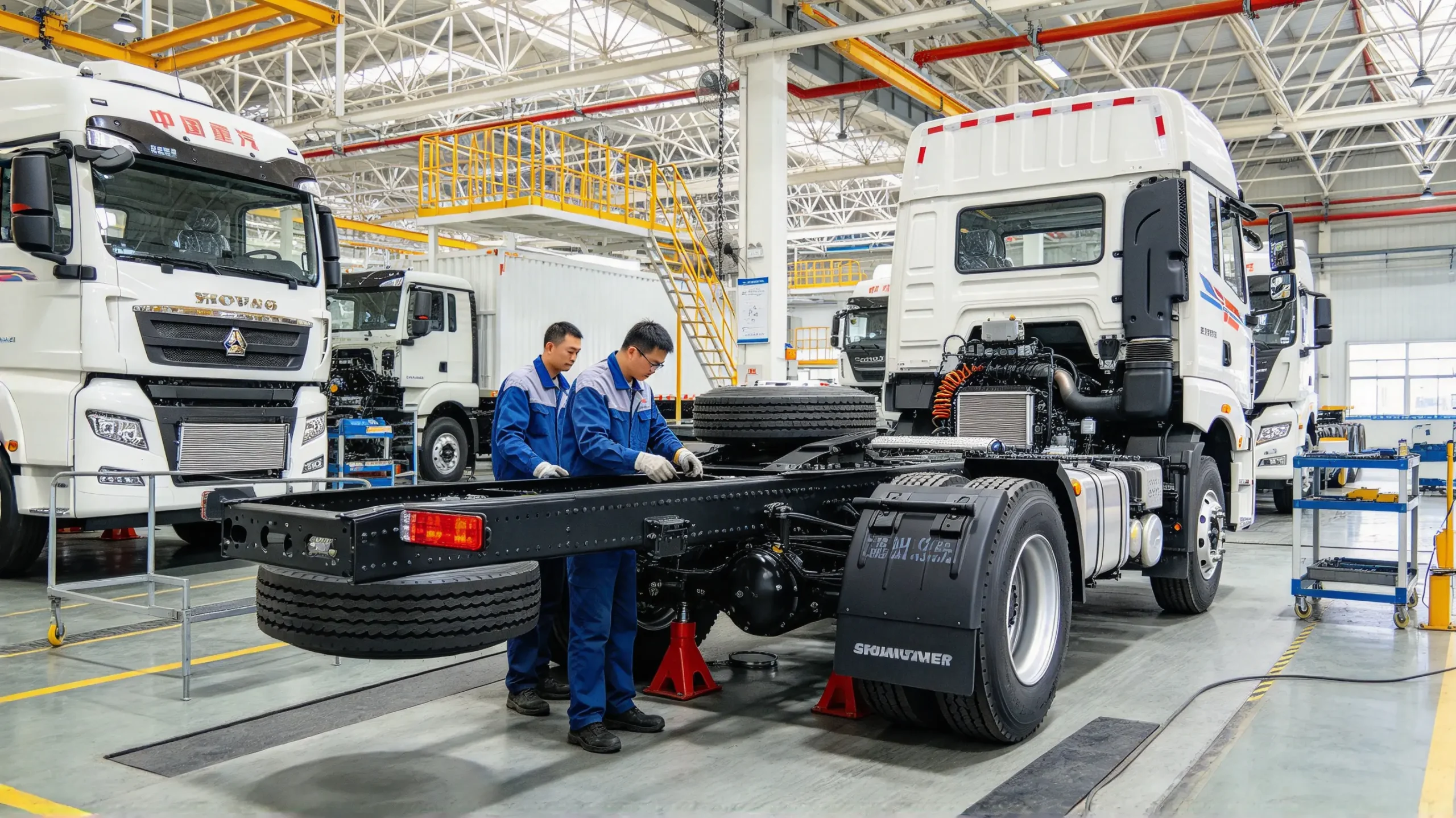
Factory customization and export upgrades for 4x2 trucks before overseas delivery

Chapter 8: How to Verify Reliable 4×2 Truck Suppliers & Avoid Scams

The quality of suppliers directly determines vehicle quality, after-sales service, and procurement risk. There are a large number of informal brokers in the market, and buyers need to strictly screen qualified suppliers.

8.1 Core Supplier Qualification Verification

First, verify factory official authorization. Formal export suppliers have brand authorization certificates, which can directly order genuine export-spec vehicles from the factory.
Second, check overseas project experience. Confirm whether the supplier has delivered 4×2 trucks to GCC, Africa, and other overseas markets, and ask for delivery cases and customer feedback.
Third, verify document processing capability. Confirm that the supplier can provide complete certification documents, customs clearance materials, and factory qualification certificates.
Fourth, check after-sales and spare parts support. Ensure long-term spare parts supply channels and technical support services.

8.2 Common Supplier Scams to Avoid

Avoid ultra-low price traps. Some brokers offer far below market prices, but deliver unmodified domestic vehicles without export certification, which cannot clear overseas customs.
Avoid verbal commitment traps. All configuration upgrades, certification services, and after-sales warranties must be written into formal contracts.
Avoid no-tracking production traps. Regular suppliers provide real-time production videos and photos, while informal brokers cannot track production progress.

Chapter 9: Order Process, Production & Pre-Shipment Inspection

Standardized procurement processes can effectively avoid configuration errors and quality problems. This chapter sorts out the complete ordering process for 4×2 export trucks.

9.1 Demand Confirmation & Quotation Locking

First, clarify your operation scenario, load demand, road conditions, and local certification requirements. Then confirm model, configuration, and customized upgrade items with the supplier.
Lock the full quotation including vehicle price, modification fee, certification fee, and logistics cost to avoid subsequent price increases.

9.2 Formal Contract Signing

The contract must clearly mark all vehicle parameters, upgrade items, delivery cycle, document standards, warranty terms, and breach of contract liability.
Standard contract clauses are the core guarantee for safeguarding buyer’s rights in international trade.

9.3 Production Progress Tracking

After deposit payment, the factory starts official production. Professional exporters regularly feed back chassis assembly, power matching, modification construction, and vehicle painting progress.
Buyers can remotely monitor the whole production process to ensure all customized items are implemented in place.

9.4 Full Pre-Shipment Quality Inspection

After production completion, the QC team conducts comprehensive inspection on engine performance, braking system, electrical system, sealing performance, and appearance quality.
Only vehicles that pass all inspection items can be arranged for shipment. Bulk orders support third-party factory inspection.

Chapter 10: Shipping, Customs Clearance & Local Landing Guidance

After vehicle production and inspection are completed, the subsequent shipping and customs clearance processes determine whether the goods can arrive smoothly.

10.1 Shipping Mode Selection

4×2 trucks are small and flexible, suitable for both ro-ro shipping and container shipping.
Ro-ro shipping is fast and low-cost, suitable for bulk fleet orders. Container shipping has better protection effect, suitable for small trial orders.

10.2 Export Customs Clearance Process

The supplier sorts out commercial invoice, packing list, certificate of origin, export license, and certification documents to complete China export customs declaration.
Standardized document sorting ensures zero obstacles for overseas customs clearance.

10.3 Overseas Customs Clearance & Registration

After the goods arrive at the destination port, complete tariff payment, parameter verification, and vehicle inspection according to local policy requirements.
After customs clearance, complete local road registration and license processing to realize legal road operation.

Chapter 11: After-Sales Warranty, Maintenance & Spare Parts Support

Long-term after-sales service determines the continuous operation efficiency of the 4×2 truck fleet. Professional maintenance can effectively extend vehicle service life.

11.1 Official Warranty Scope

Core components such as engine, gearbox, and drive axle enjoy factory warranty. Buyers can get free maintenance and fault repair services for quality problems within the warranty period.
For operational faults, you can contact the after-sales technical support team for timely troubleshooting guidance.

11.2 Daily Maintenance Tips for 4×2 Trucks

Regularly replace filter elements to prevent dust and impurities from entering the engine.
Check radiator cleanliness regularly to avoid heat dissipation blockage in high-temperature environments.
Inspect brake system and tire wear regularly to ensure driving safety.
Do a good job in chassis anti-corrosion cleaning to reduce metal aging.

11.3 Spare Parts Supply Guarantee

Reliable exporters provide long-term spare parts supply services. Common wearing parts are in stock for fast delivery, solving the problem of difficult overseas parts procurement.

Chapter 12: Real 4×2 Truck Procurement Cases & Experience Summary

Real overseas procurement cases can provide practical reference for new buyers. A large number of successful 4×2 truck delivery cases verify the reliability of Chinese models in overseas markets.
You can browse authentic overseas truck procurement and delivery cases to summarize practical selection and procurement experience.
These cases cover Middle East logistics fleets, African municipal projects, and Southeast Asian distribution businesses, fully matching different overseas operation scenarios.

Chapter 13: Common Buying Mistakes & Avoidance Strategies

Most procurement risks come from common low-level mistakes. Summarizing error avoidance strategies can help buyers complete high-quality procurement.
First, blind pursuit of low price. Low-priced vehicles lack necessary export upgrades and certification, leading to customs clearance failure.
Second, mismatched model configuration. Choosing high-power heavy chassis for light load scenarios causes waste of fuel cost; choosing low-power model for heavy load leads to insufficient power.
Third, ignoring customized environmental upgrades. Standard domestic vehicles cannot adapt to overseas high-temperature and dusty environments, resulting in frequent failures.
Fourth, neglecting document verification. Incomplete or inconsistent documents will cause port detention and huge demurrage losses.
Fifth, no spare parts plan. Lack of wearing parts reserve leads to long-term vehicle downtime.

Chapter 14: Ultimate Buying Checklist for 4×2 Trucks in 2026

Use this detailed checklist before confirming orders to ensure full coverage of all key points.
Confirm your core operation scenario and daily average load.
Select matching horsepower, wheelbase, and cargo box size parameters.
Determine necessary overseas environmental upgrade items.
Verify local certification requirements and supplier certification capabilities.
Check supplier qualification, project experience, and after-sales guarantee.
Lock all configuration and service terms in formal contracts.
Complete pre-shipment full inspection and document verification.
Reserve conventional wearing parts to ensure continuous fleet operation.
For more professional truck selection skills and industry updates, visit our truck export knowledge base to improve procurement professionalism.

Conclusion

4×2 trucks are the most cost-effective light and medium commercial transportation vehicles for global small and medium fleets in 2026. With flexible operation, low fuel consumption, low maintenance cost, and wide scenario adaptability, they can meet the daily operation needs of most logistics and municipal projects.
The key to purchasing a suitable 4×2 truck lies in scenario matching, parameter verification, customized adaptation, and reliable supplier selection. Blindly pursuing low prices or high configurations will affect long-term fleet operation benefits.
By following the systematic selection process in this guide, you can avoid most procurement pitfalls and select high-quality, high-adaptability, low-consumption 4×2 trucks for your business development.
Cooperating with professional and experienced Chinese truck export suppliers can further simplify the procurement process, reduce operational risks, and create stable long-term benefits for your fleet.