


Introduction
The demand for heavy-duty commercial vehicles across the Middle East continues to rise in 2026. Large-scale infrastructure projects, mining operations, long-haul logistics and municipal works all need durable heavy trucks that can survive harsh desert environments.
For many fleet owners and contractors in GCC countries, Chinese heavy trucks have become the top choice. These vehicles balance strong load capacity, flexible customization and easy maintenance, which fits local operating conditions perfectly.
Still, many buyers feel confused when selecting models. Different brands have different strengths. Some trucks work well for highway transport, while others are built for rough mining sites. Choosing the wrong unit leads to frequent breakdowns and extra maintenance costs.
Besides, GCC certification rules and desert modification requirements have updated this year. A truck that performed well in previous years may not fully meet the 2026 standards for temperature resistance, dust protection and safety components.
This guide breaks down the best heavy trucks from China for Middle East markets in 2026. We walk through top brands, recommended models, key desert upgrades, certification checks and practical buying advice. When you partner with professional China heavy truck export specialists, you can simplify the whole fleet sourcing process and reduce operational risks.
Chapter 1: Why Chinese Heavy Trucks Dominate the Middle East Market in 2026
Before diving into specific truck models, it helps to understand why Chinese heavy trucks keep gaining popularity in Saudi Arabia, UAE, Oman, Kuwait, Qatar and Bahrain. Multiple practical factors drive this trend for fleet operators.
1.1 Strong Adaptability to Desert Working Conditions
The most obvious advantage is desert-ready modification. Standard trucks from Europe or North America often need expensive rework to handle high heat, blowing sand and rough unpaved roads.
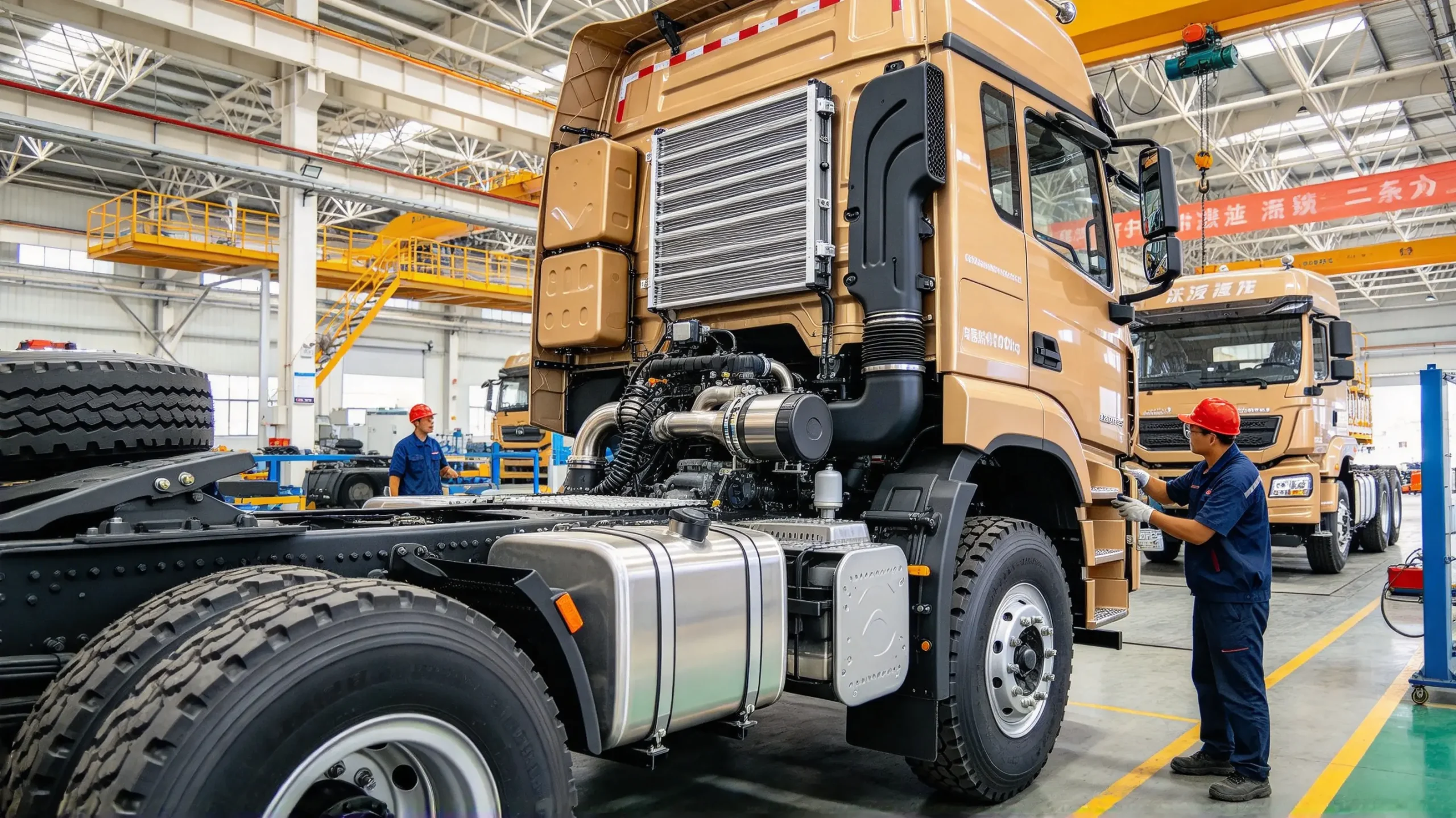
By contrast, Chinese OEMs have spent years refining export packages for GCC clients. Factories can add reinforced cooling systems, multi-stage air filters and sealed cabins directly on the production line.
These built-in upgrades lower the chance of engine damage caused by sand ingestion and overheating. For mining and construction fleets operating in remote inland zones, this feature saves a great deal of downtime.
1.2 Accessible Aftermarket and Spare Parts Supply
Spare part availability is a major concern for any fleet manager. If replacement parts take months to arrive, a single broken truck can delay an entire project.
Major Chinese heavy truck brands have built up spare part networks across the Gulf region. Authorized exporters keep common wear parts in local warehouses, which speeds up maintenance cycles.
Compared with many Western brands, component prices are more reasonable. This helps businesses control long-term fleet operating expenses over many years of service.
1.3 Flexible Customization for Different Project Needs
Every project in the Middle East has unique requirements. A truck for container hauling on highways will not have the same setup as a dump truck moving rock and soil at a mine site.
Chinese manufacturers support targeted customization. Buyers can adjust axle configurations, cabin features, chassis strength and auxiliary systems according to their actual working scenarios.
This level of flexibility makes it easier to build a mixed fleet that covers multiple jobs within one project. You can browse GCC-ready heavy truck models and configurations to match your fleet requirements quickly.
1.4 Complete GCC Certification Support
Without valid GCC GSO certification, trucks cannot clear customs and cannot be registered for road use in GCC member states. Many new buyers underestimate how strict these checks are.
Top Chinese heavy truck exporters handle certification filing and document preparation. They verify every vehicle parameter before shipment to avoid mismatches between paperwork and physical trucks.
This removes one of the biggest barriers for overseas buyers who lack experience with Middle East import regulations.
Chapter 2: Top Chinese Heavy Truck Brands for Middle East Fleets in 2026
Several leading Chinese heavy truck OEMs serve the GCC export market. Each brand has its own strengths, target use cases and recommended model lines. Knowing these differences makes your selection process much simpler.
2.1 SINOTRUK HOWO
SINOTRUK HOWO remains one of the most widely recognized heavy truck brands in the Middle East. It has a long track record in mining, construction and long-distance transport projects across the Gulf.
HOWO heavy-duty trucks are known for robust chassis structure and reliable power assemblies. Many fleet operators choose HOWO dump trucks and tractor heads for heavy-load work in harsh desert locations.
The brand has mature desert upgrade packages. Enhanced radiators, heavy-duty air filtration and reinforced suspension are common options for GCC export orders.
Spare parts for HOWO trucks are widely available in the Middle East. Local service teams are familiar with troubleshooting and routine maintenance for these models.
2.2 Shacman
Shacman heavy trucks are highly favored by mining and earthmoving contractors. The brand focuses on heavy-load durability and strong off-road performance.
Shacman’s dump trucks and tipper models perform well on uneven, unpaved mine roads. The chassis and suspension are built to withstand repeated heavy impact under dusty desert conditions.
Many large-scale mining projects in Saudi Arabia and Oman rely on Shacman fleets. The brand also offers tractor head versions for highway container transport.
2.3 FAW
FAW heavy trucks stand out for stable fuel economy and refined powertrain tuning. They are a solid pick for buyers who run long-haul highway logistics fleets.
FAW export models for GCC markets include tractor heads and cargo chassis. These trucks deliver consistent performance for cross-city freight transport under high-temperature climate.
The brand focuses on engine reliability and low fuel consumption, which helps logistics companies cut down recurring operational costs over thousands of kilometers.
2.4 Foton Auman
Foton Auman heavy trucks combine modern cabin design and efficient power systems. The brand targets both highway transport and medium-heavy construction tasks.
Auman models are popular for buyers who want better driver comfort alongside solid load capacity. The cabin insulation and noise reduction work well for long hours of driving in hot weather.
Foton also provides full GCC certification support for export orders, making it a practical option for fleet buyers who value balanced performance.
You can review company background and export project experience to learn more about how these brands are delivered to GCC buyers.
Chapter 3: Recommended Heavy Truck Models for Different Middle East Project Types
Once you understand the main brands, the next step is matching the right model to your project type. A truck that excels at one job may not work efficiently for another. Below are the best choices for common Middle East fleet applications.
3.1 Tractor Heads for Long-Haul Highway Logistics
For container transport and intercity freight across UAE, Saudi Arabia and Qatar, 6×4 heavy tractor heads are the standard selection.
Recommended models include HOWO 6×4 tractor, FAW 6×4 tractor and Foton Auman 6×4 tractor. These units focus on fuel efficiency, stable cruising performance and driver comfort.
Key upgrades for highway fleets include high-temperature cooling systems, desert air filters and reinforced braking systems for long downhill sections.
When selecting tractor heads, pay attention to horsepower ratings and gearbox configurations. Match power output to your typical cargo weight and route terrain.
3.2 Heavy Dump Trucks for Mining & Earthworks
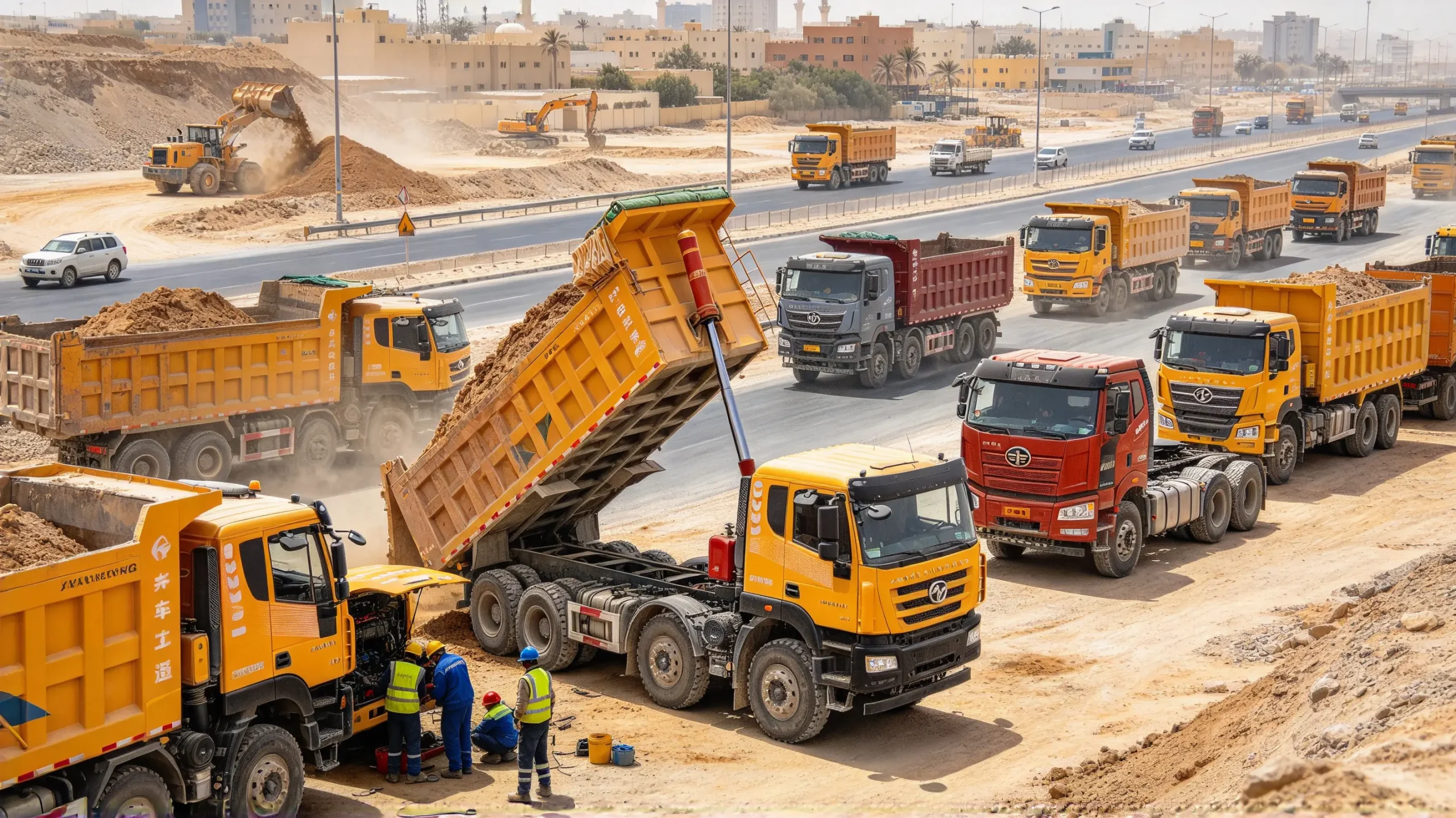
Mining and land development projects demand heavy-duty dump trucks. 8×4 tipper trucks are the mainstream choice for high-volume material transport at mine sites and construction zones.
Shacman and HOWO 8×4 dump trucks are widely used in Saudi and Omani mining areas. Their reinforced chassis and heavy-duty suspension handle repeated heavy loads on rough roads.
For these trucks, desert upgrades are non-negotiable. Multi-stage air filters, heavy-duty cooling and dust-sealed electrical systems protect core components from sand damage.
You also need to consider tipper body material. High-strength steel bodies resist abrasion when hauling rock, gravel and abrasive mining materials.
3.3 Special Heavy Chassis for Municipal & Engineering Equipment
Many Middle East buyers purchase heavy truck chassis to mount special equipment. Common builds include water spray trucks, concrete mixers and crane carrier trucks.
HOWO and Shacman heavy chassis are popular for these custom builds. Their strong frame structure supports the added weight of upper equipment.
Before ordering, confirm that the chassis configuration matches the weight and working requirements of your mounted equipment. Your supplier should verify compatibility before production.
Chapter 4: Essential Desert Upgrades for 2026 GCC Heavy Truck Orders
A standard domestic Chinese heavy truck cannot operate reliably in Middle East desert conditions. Every export truck for GCC markets must include targeted upgrades. These modifications directly affect service life and uptime.
4.1 High-Capacity Cooling System
Summer temperatures in many desert regions can exceed 45 degrees Celsius. Without an upgraded radiator, engines easily overheat during continuous heavy-load operation.
Desert spec trucks use larger, thicker radiators and optimized fan assemblies. This keeps engine temperature stable even under extreme heat and heavy loads.
4.2 Multi-Stage Air Filtration System
Fine desert sand is one of the biggest threats to heavy truck engines. Tiny particles can wear cylinder walls and reduce engine lifespan dramatically if they enter the combustion chamber.
Three-stage air filter systems trap sand step by step. This reduces engine wear and extends the service interval for filter replacement.
For mining fleets operating in extra dusty zones, suppliers can add extra pre-cleaner units to boost protection further.
4.3 Sealed Cabin & Electrical Protection
Dust can also damage wiring harnesses, sensors and control modules. Sealed cabin and electrical harness shielding prevents sand from entering sensitive electronic parts.
Heat insulation inside the cabin improves driver comfort. It also reduces the load on the air conditioning system during long shifts in hot weather.
4.4 Anti-Corrosion Chassis Treatment
Ocean shipping exposes the chassis to salt spray. After arrival, coastal humidity in some GCC countries also speeds up rust formation on metal parts.
Anti-corrosion paint and chassis undercoating protect frame, axles and fuel tanks. This treatment slows rust and extends chassis service life.
Chapter 5: GCC Certification & Compliance Checks for 2026 Heavy Truck Imports
GCC GSO certification is mandatory for heavy trucks imported into GCC nations. Rules have been updated for 2026, so buyers must confirm that their selected models meet the latest standards.
5.1 What GCC Certification Covers
The certification process checks vehicle safety, braking performance, lighting systems, emissions and component consistency. Every parameter listed on documents must match the actual truck.
VIN numbers, engine numbers and chassis specifications will be verified during customs clearance. Any mismatch will trigger inspection delays and port detention.
5.2 Pre-Shipment Document Verification
Reliable exporters will organize all required documents before loading. This includes certification reports, commercial invoice, packing list, certificate of origin and vehicle conformity papers.
It is wise to ask your supplier to cross-check all data two or three times before shipment. This simple step avoids costly demurrage fees at destination ports.
If you have questions about document requirements, you can reach out to the professional export team for clarification.
Chapter 6: How to Select a Trusted Supplier for Your 2026 Heavy Truck Fleet
Even if you pick the right truck model, a poor supplier can ruin your procurement project. The quality of service varies widely between brokers and authorized export companies.
6.1 Key Supplier Qualifications to Verify
First, confirm the supplier has official factory authorization from the truck brand. Authorization proves they can order genuine export-spec vehicles directly from the OEM production line.
Second, check their track record of deliveries to GCC countries. Ask for project references, port loading photos and customer feedback from Middle East fleet buyers.
Third, confirm their ability to handle GCC certification and full document packages. Avoid suppliers who only sell trucks without supporting certification services.
Fourth, confirm after-sales and spare parts support. Ask about spare part lead times and warranty coverage for core components.
6.2 Red Flags to Avoid During Supplier Selection
Watch out for sellers who offer extremely low prices without mentioning desert upgrades or GCC certification. These vehicles often use domestic configurations that cannot pass local customs checks.
Avoid suppliers who only give verbal promises and refuse to write configuration and warranty terms into formal contracts. Verbal agreements carry no protection for international trade.
Also avoid brokers who cannot provide production tracking videos or photos. Without visibility, you cannot confirm whether the correct upgrades are installed during manufacturing.
Chapter 7: Ordering, Production & Pre-Shipment Inspection Process
Once you choose your brand, model and supplier, the next phase covers contract signing, production tracking and quality inspection before shipment.
7.1 Contract & Configuration Lock-In
All vehicle specs, desert upgrade items, certification responsibilities and delivery timelines must be written clearly in the sales contract.
Include clauses about configuration consistency, document completeness and liability for delays. This protects your investment if the finished trucks do not match your agreed requirements.
7.2 Production Progress Tracking
Reputable exporters share regular updates during production. You can receive photos and videos showing chassis assembly, engine fitting, modification work and final painting.
The standard production cycle for GCC customized heavy trucks is roughly 30 to 45 working days. Complex custom orders may take longer depending on modification scope.
7.3 Full Pre-Shipment Quality Inspection
When production finishes, every truck must go through comprehensive inspection. Technicians test engine performance, braking system, electrical functions, sealing and cooling systems.
For bulk fleet orders, you can arrange remote video inspection or appoint a third-party inspector to visit the factory and check the trucks in person.
Only after inspection passes will the supplier prepare documents and arrange loading onto vessels for ocean transport.
Chapter 8: Shipping, Port Arrival & Local Clearance Basics
Two main shipping methods apply for heavy truck export to the Middle East: ro-ro shipping and container shipping. Ro-ro is the preferred option for large fleet orders.
Ro-ro vessels drive trucks directly into the ship’s hold. Loading is fast, and there is no need for disassembly. This reduces risk of damage during loading and transit.
Container shipping works better for small trial orders. Trucks may need partial disassembly to fit inside the container, which increases handling work and cost.
The ocean transit time from Chinese ports to GCC ports generally ranges from 18 to 30 days, depending on shipping line and destination port.
After arrival at the destination port, your local customs agent will submit documents for customs clearance. Prepare to pay relevant duties and complete vehicle inspection before collecting the trucks.
Chapter 9: After-Sales, Warranty & Long-Term Fleet Maintenance Tips
Delivery is not the end of your fleet investment. Proper maintenance and reliable spare parts supply keep your trucks operating efficiently for years.
9.1 Factory Warranty Coverage
Core components such as engine, gearbox and drive axle come with factory warranty. The exact warranty period depends on the brand and order terms written in your contract.
If you encounter technical faults during operation, you can reach the after-sales service team for troubleshooting guidance and support.
9.2 Routine Maintenance for Desert Heavy Trucks
Desert working conditions shorten maintenance intervals compared with normal temperate regions. Air filters need more frequent replacement to prevent sand buildup.
You should regularly inspect radiator cleanliness, brake wear and chassis corrosion. Schedule periodic chassis cleaning to remove accumulated sand and salt residue.
Train your local driver and maintenance team to follow the OEM service schedule. Consistent preventive maintenance greatly reduces unexpected breakdowns.
9.3 Spare Parts Stock Planning
It is smart to order a starter stock of common wear parts together with your truck shipment. Filters, brake pads, seals and electrical sensors are typical consumable items.
Keeping these parts on hand minimizes downtime when replacement is needed, especially for remote mine sites with limited local parts availability.
Chapter 10: Real 2025–2026 Middle East Heavy Truck Fleet Cases
Real fleet cases help new buyers understand how these Chinese heavy trucks perform in live GCC projects. Many contractors have scaled up their fleets after successful trial orders.
You can browse authentic Middle East heavy truck delivery and fleet operation cases to learn from real procurement experiences.
These projects cover Saudi mining fleets, UAE logistics companies and Omani municipal construction teams. Each case shows how buyers selected models, arranged desert upgrades and handled import procedures.
Chapter 11: Common Mistakes When Buying Chinese Heavy Trucks for GCC in 2026
Many first-time buyers run into avoidable issues. Review these common mistakes so you can plan your fleet purchase carefully.
The first mistake is skipping desert upgrades to cut initial costs. Trucks without proper sand and heat protection will suffer frequent failures, raising total cost of ownership significantly.
The second mistake is ignoring updated GCC certification standards. Older certification documents may no longer be accepted in 2026, which leads to customs clearance failure.
The third mistake is ordering the wrong axle configuration for your working terrain. A highway tractor will not deliver good performance on rough mine roads.
The fourth mistake is failing to lock spare parts support in your contract. Without a reliable supply channel, your fleet may sit idle waiting for replacement components.
Chapter 12: Final Buying Checklist for 2026 Heavy Truck Fleet Procurement
Use this checklist before confirming your order to make sure you have covered all critical points.
Confirm your main working environment: highway, mine, construction site or municipal project.
Select the correct axle configuration and horsepower rating to match your cargo weight and route conditions.
Confirm all required desert upgrades are included in the quotation and written in the contract.
Verify that the model supports 2026 GCC certification and the supplier will manage certification paperwork.
Check the supplier’s export authorization, GCC project history and after-sales spare parts capacity.
Review all contract clauses covering configuration, documents, delivery timeline and warranty terms.
Arrange pre-shipment inspection and document verification before balance payment and loading.
Plan initial spare parts package and local maintenance schedule for desert operation.
For more truck selection knowledge and market updates, visit our truck export knowledge base to continue your research.
Conclusion
Chinese heavy trucks remain one of the most practical fleet solutions for Middle East buyers in 2026. HOWO, Shacman, FAW and Foton each bring unique strengths for mining, highway logistics and municipal construction work.
The key to a successful purchase lies in matching the model to your project, applying proper desert upgrades and ensuring full GCC compliance. A low upfront price means nothing if the truck cannot operate reliably or clear local customs.
Work with an experienced exporter who understands GCC regulations and desert truck requirements. This approach helps you build a durable fleet that can handle tough Middle East working conditions year after year.
By following the guidance in this article, you can compare the best heavy trucks from China for the Middle East market and make a well-informed decision for your 2026 fleet investment.