





Introduction: Why Global Fleets Source Tipper Trucks From China
For construction contractors, mining operators and logistics fleet managers across the world, tipper trucks form the backbone of bulk‑material transport. Whether you move rock, sand, soil or construction debris, reliable tipper equipment directly shapes project timelines and operating costs.
Over the past decade, more international buyers have turned to Chinese manufacturers when expanding or renewing their tipper fleets. Large‑scale production capacity, flexible factory customization and competitive landed costs make China a compelling sourcing destination for heavy‑duty tipper units.
Even so, importing tipper trucks from China brings many practical hurdles. Many first‑time buyers struggle with model selection, local regulatory matching, export documentation, shipping arrangements and destination‑port customs clearance. Small mistakes at any stage can trigger shipment delays, unexpected fines or even failed vehicle registration.
This complete import guide walks you through every practical phase of buying tipper trucks from China. It covers market background, model evaluation, factory communication, compliance checks, shipping solutions, clearance workflows and post‑delivery fleet management. Real‑world tips are included to help you avoid common cross‑border procurement pitfalls.
If you want to browse ready‑to‑export tipper truck options, you can visit Export‑Grade Tipper Truck Series to review mainstream configurations for mining, road‑building and earth‑moving assignments.
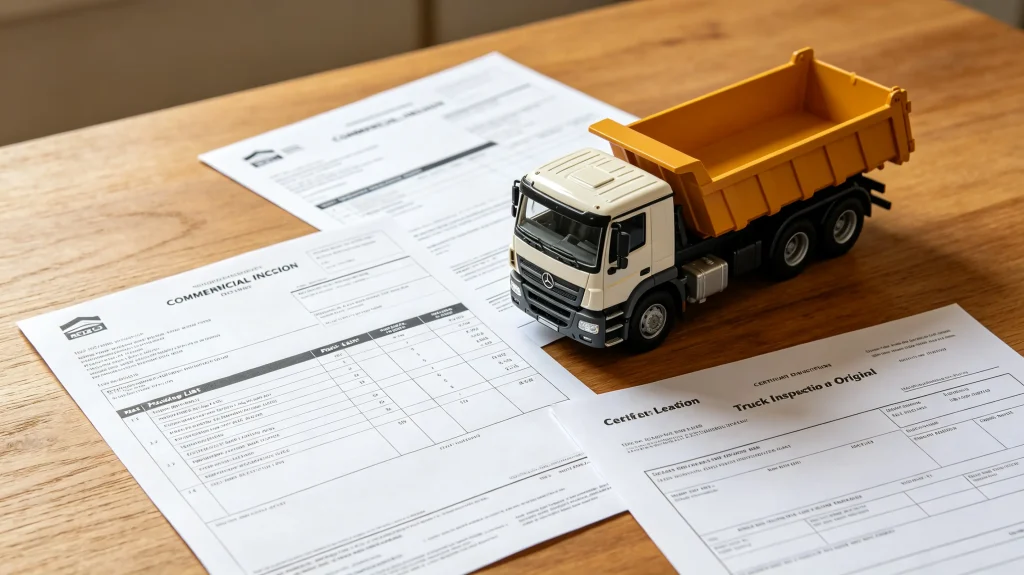
Main Tipper Truck Types Available for Export From China
Chinese factories produce tipper trucks for a wide range of working conditions. Before starting supplier outreach, you should clarify which axle layout, payload class and body style fits your actual site environment.
4×2 Tipper Trucks
4×2 tipper models feature one steering front axle plus one drive rear axle. They deliver moderate payload capacity, compact outer dimensions and good fuel economy. These units work best for urban construction, small‑scale earthwork and short‑haul aggregate delivery. They are less suitable for heavy mining or long‑distance slope climbing.
6×4 Tipper Trucks
The 6×4 three‑axle tipper remains the most widely exported heavy‑duty specification. Two rear drive axles deliver strong traction and load‑bearing performance. Typical usable payload falls between 20‑28 tons. This configuration adapts to quarries, highway construction projects and general bulk‑cargo transport across mixed terrain. It represents the balanced mainstream choice for most overseas fleets.
8×4 Tipper Trucks
8×4 four‑axle tipper trucks add an extra steering front axle alongside two rear drive axles. The multi‑axle design disperses vehicle weight, supports higher gross vehicle weight ratings and complies with strict single‑axle‑load road rules in many countries. Real payload commonly reaches 25‑32 tons. These heavy‑spec machines serve large‑scale open‑pit mining, big infrastructure schemes and high‑volume material‑hauling assignments.
Special‑Purpose Tipper Variants
Beyond standard on‑road tippers, Chinese factories also produce reinforced mining‑oriented tippers, lightweight tippers for grain and low‑density cargo, and chassis variants built for special body modifications. You can select left‑hand‑drive or factory‑original right‑hand‑drive steering layouts to match local traffic rules.
You can compare specifications and application scenarios of all major heavy‑vehicle categories inside Full Heavy‑Duty Truck Product Catalog.
Key Factors to Define Your Tipper Truck Requirements Before Inquiry
Many import projects slow down because buyers send vague inquiries without clear‑cut requirement lists. When you prepare well before contacting suppliers, you shorten negotiation cycles and reduce the risk of receiving mis‑matched finished vehicles.
Start with your working‑site conditions. Think about what materials you transport. High‑density ore and stone demand strong chassis, wear‑resistant cargo boxes and high‑torque engines. Light‑weight soil, sand or grain puts less mechanical stress and allows you to prioritize larger box volume and fuel efficiency instead.
Terrain matters significantly. Flat highway‑adjacent sites can use standard‑power setups. Frequent steep climbing, muddy ground or high‑altitude locations call for higher horsepower, reinforced drive axles and improved cooling systems.
Next, confirm local legal constraints. Check official limits for gross vehicle weight, single‑axle load, overall vehicle length‑width‑height, and mandatory emission standards. Your ordered trucks must satisfy these rules, otherwise you cannot complete local registration after arrival.
Also clarify steering requirement: LHD or factory‑produced RHD. Avoid post‑factory steering conversions, because converted vehicles often fail local safety inspections.
Other points include target payload range, preferred cabin comfort level, optional safety add‑ons, target delivery timeline and shipping terms such as FOB, CFR or CIF. Compile these points into one clear requirement summary before sending out inquiries.
If you feel uncertain sorting out your configuration list, you can submit your project background to technical sales staff via Request Custom Quotation & Spec Consultation to receive targeted suggestions.
How to Choose Reliable Chinese Tipper Truck Suppliers
The quality of your sourcing outcome heavily depends on which supplier you work with. China has thousands of truck‑related companies, ranging from original‑equipment‑manufacturer direct outlets to intermediate trading firms. Their export capability, quality‑control standards and after‑sales support differ greatly.
Give priority to partners with genuine long‑term export experience. Ask to see past shipment records, destination‑market customer references and completed project cases. Experienced exporters understand cross‑border documentation rules and know common import‑market compliance traps, which helps you stay away from costly mistakes.
Verify their cooperation relationships with mainstream original brands including Howo, Shacman and FAW. Confirm whether they can arrange genuine factory‑original units instead of second‑hand reconditioned or locally‑assembled rebuilt vehicles when you order new trucks.
Pay attention to quality‑control workflows. Trustworthy suppliers support pre‑shipment inspection. They can provide factory‑shoot photos, test videos and third‑party inspection reports upon request. Avoid vendors who refuse inspection or only offer very limited visual evidence before loading.
Spare‑parts supply capacity deserves careful evaluation too. After your tipper trucks arrive in‑country, you need accessible replacement components for routine wear‑and‑tear parts. Suppliers with stable spare‑part warehouses can prevent fleet downtime caused by component shortages.
You can view real‑world overseas project deployments through Global Project Reference Cases to observe how Chinese‑built tipper trucks perform under different regional operating environments.
Critical Configuration Checks When Ordering Export‑Oriented Tipper Trucks
Even when you pick the correct axle model such as 6×4 or 8×4, many detailed configuration items will shape long‑term usability for your target market. Never overlook these practical parameters during technical confirmation.
Engine and emission standard sits high on the list. Confirm horsepower‑torque output matching your terrain, and double‑check emission tier: Euro 2, Euro 3, Euro 4 or Euro 5. The emission standard must strictly follow your nation’s import regulations. Wrong emission selection will cause customs rejection and registration failure.
Cargo box material and dimension need careful discussion. Manganese steel serves general construction work. Super‑wear‑resistant alloy steel suits mining‑site stone and ore impacts. Box inner length, width and side‑plate height should balance volume needs against local weight‑limit legislation.
Chassis, axle and suspension setups directly affect service life on rough job sites. Heavy‑duty multi‑leaf‑spring suspension, reinforced frame beams and heavy‑load‑rated drive axles are standard for export‑grade tippers. Ask suppliers to document these specs clearly inside formal documents.
Transmission, clutch and optional auxiliary braking deserve review as well. 12‑speed or 16‑speed heavy‑manual gearboxes are typical for heavy tipper trucks. For regions with many long downhill sections, hydraulic retarder options greatly improve operational safety and brake‑pad service life.
Cabin features include original factory air‑conditioning, suspension seats, instrument layout and optional safety tools such as ABS, tire‑pressure monitoring or surround‑view cameras. Adjust these selections according to local climate and fleet‑management requirements.
Every confirmed technical item should be written into formal proforma invoice and sales contract. Verbal agreements create high risks of delivery discrepancies. You can learn more professional tipper‑truck configuration knowledge inside Heavy‑Truck Import Knowledge Base.
Essential Export Documentation for Tipper Truck Shipment From China
Complete and accurate paperwork is one core pillar of smooth import workflows. Missing or incorrectly filled documents frequently produce port‑storage costs and multi‑week clearance delays. You should understand which papers will be prepared before vessel departure.
Commercial Invoice: Lists buyer‑seller information, unit quantity, unit value, total contract value, vehicle model and key specification summaries.
Packing List: Records chassis VIN numbers, engine serial numbers, gross‑weight and net‑weight data for each truck unit.
Bill of Lading: Issued by shipping lines. This acts as cargo ownership proof for collecting goods at destination ports.
Certificate of Origin: Proves manufacturing origin inside China. Some trade‑agreement regions apply preferential import‑duty rates based on this certificate.
Factory Conformity Certificate: Declares vehicles comply with original‑factory technical specifications.
Some destination nations additionally demand third‑party pre‑shipment inspection reports such as SGS or BV documents. Confirm these special local requirements in advance with your customs broker or government import authority.
Keep in mind that different countries add special document requirements. Always communicate your country’s official rules to your supplier early, so they can prepare all needed papers before container loading. Improper documentation ranks among the top reasons for import‑project setbacks.
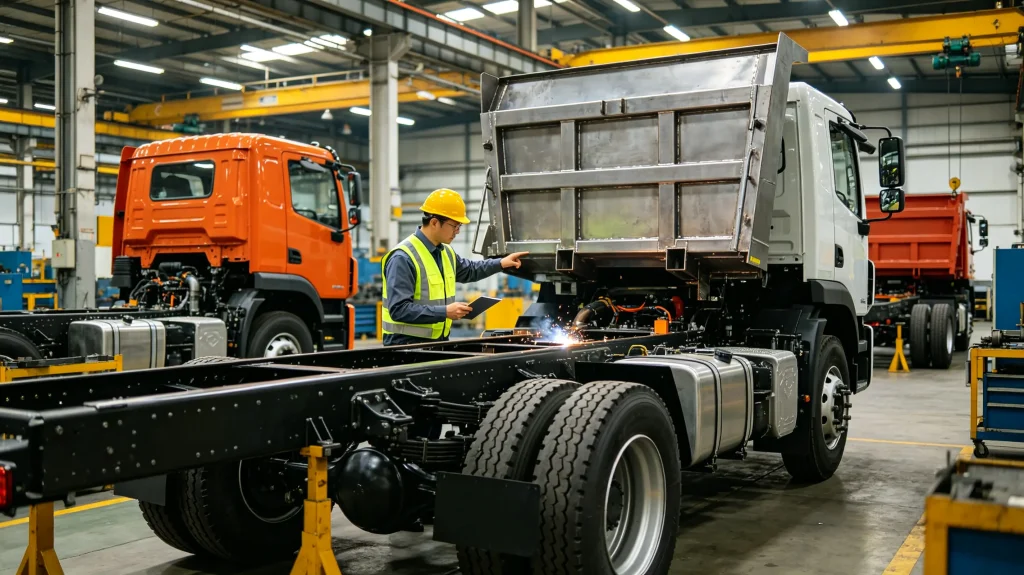
Shipping Options for Tipper Trucks Exported From China
Two primary transport solutions are widely used for exporting heavy tipper trucks out of Chinese ports: roll‑on‑roll‑off shipping and containerized shipping. Each solution carries distinct cost limits, protective effects and applicability scenarios.
Ro‑Ro (Roll‑on‑Roll‑off) Vessel Shipping
Trucks drive directly onto specialized ro‑ro ships. This method fits complete heavy‑duty tipper units. It avoids large‑scale vehicle disassembly. Ro‑ro shipping usually handles larger batch orders. Lead‑time stability depends on scheduled vessel departures from major Chinese ports. One disadvantage is that vehicles sit exposed to sea‑air environments during transit, so anti‑corrosion surface treatment before shipment becomes important.
Container Shipping
For small‑quantity orders, tipper trucks are partially disassembled and secured inside large open‑top or flat‑rack containers. Container transport gives better physical protection against salt spray and external damage. However disassembly and reassembly work add labour costs both at loading port and destination side. You need to confirm that your local workshop has technical capability for reassembly before selecting this solution.
Your supplier or freight forwarder will calculate ocean‑freight estimates according to truck dimensions, weight, shipment volume and destination‑port location. Remember to budget for port‑handling fees, marine‑cargo insurance and inland‑delivery charges after goods arrive at the target port.
Destination‑Port Customs Clearance & Local Registration Workflow
Ocean transportation completes only half of your import project. After vessels arrive at destination ports, customs clearance and vehicle‑registration work determine whether you can actually put your new tipper trucks into daily operation.
Most buyers choose to cooperate with a professional local customs broker. Experienced brokers understand local tariff codes, import‑permit application steps and document‑submission standards. They greatly reduce your personal workload and lower clearance‑failure risks.
Prepare to submit core documents including bill‑of‑lading, commercial invoice, packing list, certificate‑of‑origin and conformity certificates. Some authorities require import permits, emission‑compliance forms or road‑worthiness test reports.
Pay import duties and value‑added tax following local tax‑office rules. Tax calculation is normally based on CIF value (cost plus insurance plus freight). Make sure you estimate landed total cost early in your project planning phase, instead of only focusing on factory unit price.
Once customs releases the trucks, you proceed to local‑government vehicle‑inspection departments. Officials will verify chassis numbers, engine serial numbers, emission compliance and physical safety conditions. After passing inspection, you obtain license plates and official registration, so tipper trucks can legally drive on public roads.
Many new importers underestimate the whole‑cycle time requirement. From factory production through clearance and registration, the full workflow may take several months depending on order volume, vessel schedules and local‑government processing efficiency.
Total‑Cost‑of‑Ownership Analysis for Imported Chinese Tipper Trucks
When you evaluate procurement budgets, you should not only compare ex‑factory unit prices. Real fleet expense covers many cost layers across the whole service life of tipper trucks.
Direct purchasing costs contain factory price, ocean‑freight expense, marine insurance, port‑handling fees, import‑duty and local‑tax payments, broker service charges and inland‑ground‑transport fees from arrival port to your job site.
Operating costs include diesel‑fuel consumption, regular maintenance expenses, tire‑replacement cycles, hydraulic‑system servicing and wear‑part purchases. This part represents the largest share of long‑term expenditure for heavy‑duty tipper fleets.
Spare‑parts accessibility heavily influences real‑world running costs. If replacement components become hard to source locally, your trucks risk long‑term idle downtime. This explains why supplier spare‑part‑supply capability deserves high priority during your supplier‑selection stage.
Resale value also matters for fleet‑renewal planning. Well‑known Chinese export‑oriented brands maintain better secondary‑market recognition in many developing‑market regions.
You can get more background on factory manufacturing standards through Factory Profile & Export Qualifications.
Common Mistakes When Buying Tipper Trucks From China & Practical Avoidance Tips
Based on real cross‑border‑trading cases, several recurring mistakes cause heavy losses for overseas tipper‑truck purchasers. Understanding these pitfalls helps you run your import project more smoothly.
Mistake 1: Placing orders without checking local import‑regulations
Some buyers confirm truck specifications before verifying national emission standards, axle‑load limits or documentation requirements. After trucks arrive at port, they find units cannot clear customs or cannot register locally. Always complete regulatory research before locking specifications.
Mistake 2: Relying purely on low‑price indicators for supplier choice
Extremely low quotations often correspond to downgraded component configurations, non‑original accessories or incomplete after‑sales commitments. Compare full configuration sheets rather than only comparing unit prices. Unreasonably cheap options create higher long‑term failure risks for heavy‑duty fleets.
Mistake 3: Accepting verbal technical promises without written contract records
Customized items such as cargo‑box thickness, horsepower ratings, RHD steering modifications and optional add‑ons must be clearly written within proforma invoices and formal sales contracts. Oral discussion cannot serve as valid proof when delivery discrepancies occur.
Mistake 4: Skipping pre‑shipment inspection
Without pre‑loading visual confirmation, you may receive units inconsistent with your agreed‑upon specifications. Request photos, test videos or third‑party inspection reports before vessel departure.
Mistake 5: Ignoring post‑import spare‑part planning
Many buyers only focus on truck delivery, and neglect stocking key wearing parts. Once critical components break down on‑site, the whole tipper unit stops working. Confirm spare‑part supply channels together with your supplier at order time.
Warranty, After‑Sales Service and Spare‑Part Arrangements After Import
Warranty scope for export‑spec tipper trucks differs from domestic‑market Chinese vehicles. You need to understand exactly what is covered and what is excluded before signing purchase contracts.
Typical factory‑export warranty covers main core assemblies such as engine, gearbox and drive axles within agreed‑upon time‑or‑mileage limits. Consumable wearing parts like brake pads, filters, tires and hydraulic‑seal components normally sit outside warranty coverage.
Clarify warranty‑claim workflows. Confirm whether technical support is delivered via remote guidance, local‑partner‑workshop support or component‑replacement shipments from China. Clear communication prevents disputes later when mechanical failures appear.
Spare‑part supply forms the backbone of continuous fleet operation. Reliable export suppliers maintain organized spare‑part inventories. You can place batch spare‑part orders together with your truck shipment, so essential components arrive at your country alongside your new tipper trucks.
For detailed after‑sales policy descriptions, please refer to Global After‑Sales & Spare‑Parts Support.
Step‑by‑Step Summary Workflow for Importing Tipper Trucks From China
To help you organize your whole procurement project, here is a condensed step‑by‑step workflow you can follow:
1. Clarify your project‑site conditions, payload requirements, terrain characteristics and local import legal rules.
2. Define axle layout, engine horsepower, emission standard, steering mode, cargo‑box specifications and optional configurations.
3. Screen qualified export‑experienced suppliers, review their cases and technical‑support capabilities.
4. Send detailed requirement sheets and collect formal quotations with full specification breakdowns.
5. Confirm final technical parameters; write all customized points into proforma invoice and sales contract.
6. Arrange deposit payment; factory starts production and assembly work.
7. Conduct pre‑shipment inspection via photos, videos or third‑party inspection agency.
8. Balance payment settlement; supplier prepares full set of export‑required documents.
9. Arrange ocean‑shipping (Ro‑Ro or container), buy marine‑cargo insurance.
10. Track vessel progress while preparing destination‑country import‑permit and customs‑declaration materials.
11. After vessel arrives, cooperate with local customs broker for customs clearance and tax settlement.
12. Complete local vehicle inspection, official registration and license‑plate acquisition.
13. Receive tipper trucks at your site; launch fleet‑training work for drivers and maintenance technicians; set‑up spare‑part stock plans.

Final Conclusion
Buying tipper trucks from China offers global fleet operators practical access to heavy‑duty equipment with flexible factory customization options. Nevertheless, successful import results depend on systematic preparation, careful supplier screening, strict configuration confirmation, complete documentation management and reasonable after‑sales planning.
Every phase from requirement definition, factory production, ocean transport to destination‑port clearance carries potential risks. You will reduce most avoidable troubles by respecting local regulatory constraints and insisting on written technical confirmation instead of informal oral promises.
When you manage each link prudently, Chinese‑manufactured tipper trucks can deliver stable performance for mining, infrastructure‑construction and bulk‑hauling assignments, bringing solid returns for your fleet‑investment project.