




Chinese prime mover trucks: full 2026 buyer’s guide to specs, top brands, real pricing & export logistics. Source smarter, import with confidence.
A comprehensive resource for fleet operators, importers, and logistics professionals evaluating Chinese tractor head trucks for procurement and export.
The global freight industry runs on the shoulders of heavy trucks. Behind every container ship unloaded, every mining operation supplied, and every long-haul route completed, a prime mover truck does the heavy lifting. Increasingly, the machines pulling those loads are engineered and built in China.
This guide is written for the professionals who source, import, and operate these vehicles. It cuts through marketing noise to deliver the practical intelligence you need to make confident procurement decisions.
Introduction: Why Chinese Prime Mover Trucks Are Reshaping Global Freight
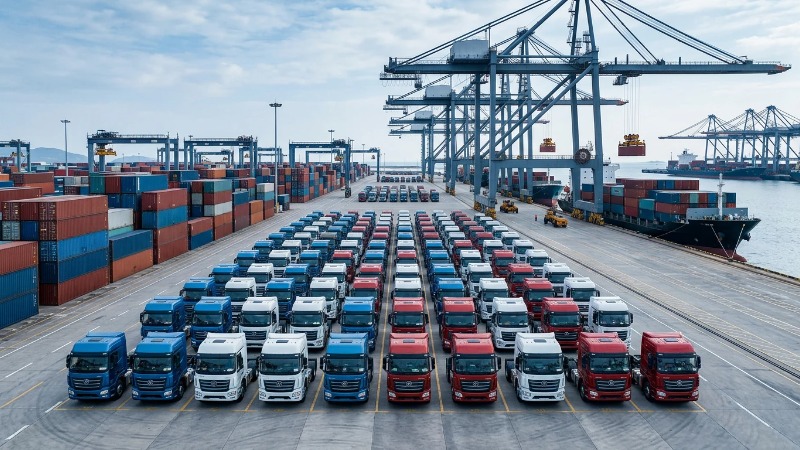
Over the past two decades, China has transformed from a domestic-focused truck producer into the world’s largest manufacturer of heavy commercial vehicles. Chinese factories now roll out more than a million heavy trucks annually, and a rising share of that output crosses borders.
Buyers in Africa, Southeast Asia, the Middle East, Central Asia, and Latin America have discovered a compelling proposition. Chinese tractor units deliver comparable payload capability and durability to established Western brands, yet arrive at a fraction of the acquisition cost.
Meanwhile, the technology gap has narrowed sharply. Joint ventures with European engineering firms, licensed powertrains, and China VI emission compliance have pushed Chinese trucks into a new tier of credibility.
For importers, this creates both opportunity and complexity. Choosing the right model, verifying the right supplier, and navigating export logistics all demand real expertise. That is precisely what this article provides.
By the end, you will understand the terminology, the specifications, the leading brands, indicative pricing dynamics, the full export process, and the decision framework that ties it all together. Let us begin with the fundamentals.
What Is a Prime Mover Truck? Definitions & Core Applications
Before comparing models, it helps to establish a shared vocabulary. The heavy-truck world uses different names for the same machine across regions, and confusion here can derail a purchasing conversation.
Prime Mover vs. Tractor Head vs. Semi Truck Tractor Units
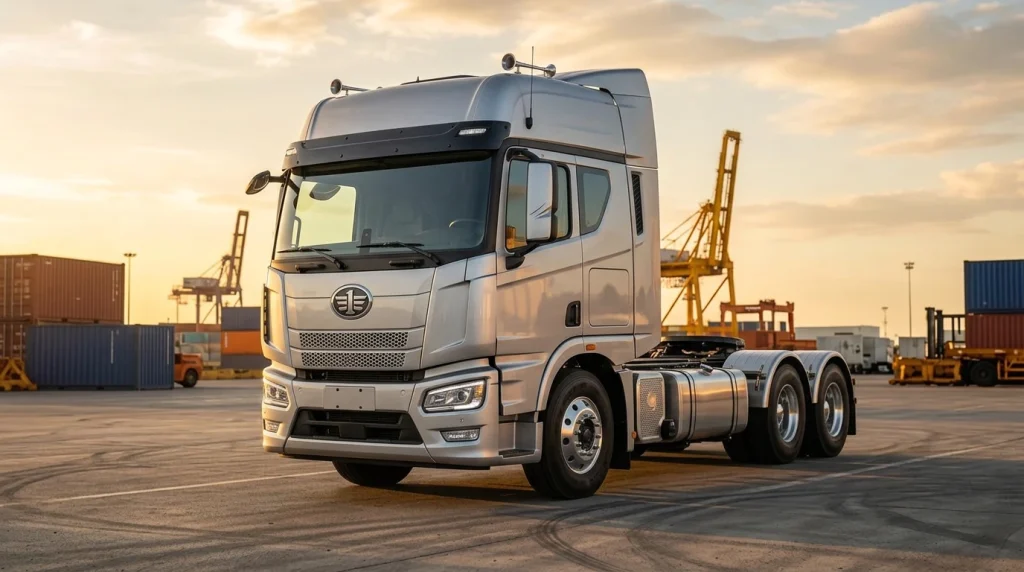
A prime mover truck is the powered front unit that pulls a semi-trailer. It contains the engine, cab, and drive axles but carries no cargo bed of its own.
In Australia, Southeast Asia, and much of Africa, operators call it a “prime mover.” In North America, the same vehicle is a “semi truck,” “tractor,” or “tractor unit.” In parts of Asia and the Middle East, “tractor head” is the preferred term.
All three names describe an identical vehicle class. When you see “prime mover truck,” “tractor head,” and “semi truck tractor units” used interchangeably in supplier catalogs, they refer to the same product. Understanding this prevents costly miscommunication during sourcing.
Primary Use Cases: Long-Haul, Port Logistics & Heavy Haul Truck Applications
Prime movers serve an enormous range of freight tasks. Their versatility is one reason global demand keeps climbing.
- Long-haul freight: Moving general cargo across national and cross-border corridors, often thousands of kilometers per trip.
- Port and container drayage: Shuttling shipping containers between ports, rail yards, and distribution centers.
- Mining and construction support: Hauling aggregates, equipment, and bulk materials to and from remote sites.
- Heavy-haul operations: Transporting oversized or overweight loads using specialized multi-axle trailers.
Each application places different demands on the truck. A port shuttle prioritizes maneuverability and reliability, while a heavy-haul unit prioritizes raw torque and robust drivetrains. Matching configuration to use case is central to smart procurement.
Where a Prime Mover Fits in the Tractor-Trailer System
The prime mover connects to a semi-trailer through a coupling device called the fifth wheel. This circular plate on the tractor’s rear frame locks onto the trailer’s kingpin, allowing the two units to articulate around corners.
A portion of the trailer’s weight rests directly on the tractor’s drive axles. This is what gives the drive wheels traction to pull heavy loads.
Proper payload distribution across the fifth wheel and axles determines legal compliance, tire wear, and safety. Understanding this relationship helps buyers specify the correct axle configuration and gross weight rating for their trailers. For a broader introduction to truck fundamentals, our knowledge base offers additional background reading.
Understanding Prime Mover Truck Specifications
Specifications separate a truck that thrives on your routes from one that struggles. This section breaks down the parameters that matter most to professional buyers evaluating chinese prime mover specifications and models.
Axle Configurations Explained: 6×4, 4×2, 8×4 & Beyond
Axle configuration is expressed as two numbers. The first indicates total wheel-ends, and the second indicates how many are driven.
- 4×2: Two axles, one driven. Lightweight and fuel-efficient, suited to lighter loads and paved routes.
- 6×4: Three axles, two driven. The workhorse standard for heavy-duty long-haul and rough terrain.
- 8×4: Four axles for extreme payload distribution, common in heavy-haul and specialized applications.
Among export markets, 6×4 tractor head configurations dominate. The tandem drive axles provide superior traction, load capacity, and durability across the varied road conditions found in developing markets.
If your routes include unpaved sections, steep grades, or heavy trailers, the 6×4 layout is almost always the right choice. It has become the default recommendation for the majority of importers we advise.
Diesel Engine Truck Models & Power Ratings
The engine defines a truck’s character. Chinese prime movers offer a broad power spectrum to match different operational demands.
Typical horsepower ranges span from 350 HP for lighter regional work up to 560 HP for demanding heavy-haul and mountainous routes. Engine displacement usually falls between 9 and 13 liters.
Torque figures matter as much as horsepower for hauling. Higher torque at low RPM means the truck pulls loaded trailers up gradients without straining. Premium units deliver peak torque above 2,500 Nm.
Emission standards are a critical purchasing factor. Chinese-market trucks now meet China VI, roughly equivalent to Euro VI. However, many export units are built to Euro V or even Euro III specifications to suit destination fuel quality and regulations. Always confirm the emission tier your country accepts before ordering.
Sleeper Cab Specifications & Cabin Comfort Standards
For long-haul operations, the cab is the driver’s home. Sleeper cab specifications directly affect driver retention and productivity.
Chinese manufacturers offer several cabin layouts. A day cab suits short shuttle work with no overnight rest. A single-sleeper cab includes one bunk, while a double-sleeper cab provides two berths for team driving.
Modern flagship cabs rival European standards for comfort. Expect flat floors, air-suspended seats, refrigerators, and climate control on premium trim levels.
Cabin dimensions influence both comfort and aerodynamics. Buyers serving long-distance corridors should prioritize high-roof sleeper configurations to reduce driver fatigue and improve efficiency.
Transmission, Drivetrain & GVW Ratings
The transmission connects engine power to the wheels. Chinese trucks offer both manual and automated options.
Traditional manual gearboxes with 9, 10, 12, or 16 speeds remain popular for their simplicity and low repair cost. Automated manual transmissions, or AMTs, are increasingly available and reduce driver fatigue while improving fuel economy.
Rear axle ratio determines the balance between top speed and pulling power. A numerically higher ratio favors climbing and heavy loads, while a lower ratio favors highway cruising efficiency.
Gross Combination Weight, or GCW, defines the maximum legal weight of the loaded tractor and trailer together. Heavy-duty Chinese 6×4 units typically handle GCW ratings from 40 to 100 tonnes depending on configuration.
Specification Comparison Table: Common Chinese 6×4 Prime Mover Configurations
| Configuration | Engine Displacement | Power Range | Peak Torque | Transmission | GCW Rating | Fuel Tank |
|---|---|---|---|---|---|---|
| Standard 6×4 | 9.7 L | 350–380 HP | 1,600 Nm | 9-speed manual | 40 tonnes | 300 L |
| Heavy-duty 6×4 | 11 L | 400–440 HP | 2,100 Nm | 12-speed manual/AMT | 60 tonnes | 400 L |
| Premium 6×4 | 12–13 L | 460–540 HP | 2,500 Nm | 12-speed AMT | 80 tonnes | 600 L |
| Heavy-haul 6×4 | 13 L | 540–560 HP | 2,600+ Nm | 16-speed manual | 100 tonnes | 2 x 400 L |
These figures represent typical market offerings. Actual specifications vary by manufacturer and trim, so always request a detailed technical datasheet before finalizing any order. You can explore full configurations across our truck category page.
Best Chinese Prime Mover Truck Brands: Leading Manufacturers
Brand selection shapes reliability, resale value, and parts availability. Below we profile the major Chinese prime mover truck manufacturers with proven export credibility.
Sinotruk (HOWO & Sitrak Series)
Sinotruk ranks among China’s largest and most globally recognized heavy-truck producers. Its HOWO series is arguably the most widely exported Chinese tractor unit in the world.
HOWO trucks earned their reputation on rugged simplicity and affordability, making them a favorite across African and Central Asian markets. The premium Sitrak line, developed with technology from German engineering partners, targets buyers wanting near-European refinement.
With extensive overseas service networks and enormous production volume, Sinotruk offers strong parts availability. For many first-time importers, it represents a safe, well-supported entry point.
FAW Jiefang
FAW Jiefang is one of China’s oldest truck brands, with a heritage stretching back to the industry’s earliest days. Its J6 and J7 tractor series enjoy solid reputations for durability.
The brand has expanded aggressively into export markets, particularly across Southeast Asia and the Middle East. Buyers value its balance of reliability and competitive positioning.
FAW’s long manufacturing history translates into mature engineering and dependable powertrains, making it a credible alternative to Sinotruk for fleet buyers.
Dongfeng Commercial Vehicles
Dongfeng is another giant of Chinese commercial vehicle production. Its tractor head models benefit from a longstanding technical partnership with European truck engineering.
The brand maintains a strong international presence, with distribution across dozens of countries. Dongfeng units are known for comfortable cabs and efficient powertrains.
For operators prioritizing fuel economy and driver comfort on paved corridors, Dongfeng deserves serious evaluation.
Shacman (SHAANXI Automobile)
Shacman specializes in heavy-duty applications and has built a formidable reputation in demanding environments. Its X3000 and X5000 series are engineering standouts.
The X3000 in particular has become a favorite for heavy-haul, mining support, and rough-terrain operations. Robust chassis design and powerful engine options make it exceptionally capable under load.
Where durability under extreme conditions is the priority, Shacman consistently ranks among the top choices for professional buyers.
FOTON Auman & Others
FOTON’s Auman line represents a growing force in the tractor segment, offering modern designs and competitive value. The brand continues to expand its export footprint.
Beyond these leaders, secondary players such as JAC, CAMC, and Beiben also produce credible tractor units. These can offer niche advantages, though buyers should verify parts support carefully.
For guidance on evaluating any manufacturer, our team is happy to help through our contact page.
Brand Comparison Table: Models, Engine Options & Target Markets
| Brand | Flagship Tractor Model | Power Range | Emission Options | Primary Export Markets |
|---|---|---|---|---|
| Sinotruk HOWO | HOWO 6×4 / Sitrak C7H | 371–540 HP | Euro III–VI | Africa, Central Asia, SE Asia |
| FAW Jiefang | J6P / J7 | 380–560 HP | Euro III–VI | SE Asia, Middle East |
| Dongfeng | KL / KX Tractor | 385–520 HP | Euro III–VI | Africa, Latin America |
| Shacman | X3000 / X5000 | 375–560 HP | Euro III–VI | Middle East, Mining regions |
| FOTON Auman | EST / GTL Tractor | 400–520 HP | Euro IV–VI | SE Asia, Africa |
Popular Chinese Prime Mover Truck Models for Export
Let us move from brands to specific units. These are the models importers request most frequently, along with the criteria for choosing between them.
Sinotruk HOWO 6×4 Tractor Head
The HOWO 6×4 remains the benchmark for value-focused fleet buyers seeking a china 6×4 prime mover for sale. It combines proven mechanicals with broad parts availability.
Power options typically range from 371 to 420 HP, paired with manual transmissions and robust rear axles. The truck excels on mixed road conditions and moderate to heavy loads.
Ideal applications include general freight, container haulage, and construction material transport. For buyers entering the Chinese truck market, the HOWO 6×4 offers a low-risk, well-understood starting point.
Sitrak C7H Premium Tractor Unit
The Sitrak C7H sits at the premium end of Sinotruk’s lineup. It incorporates powertrain technology derived from German engineering, delivering refinement closer to European trucks.
Expect a spacious high-roof sleeper cab, powerful engine options up to 540 HP, and available AMT transmission. Fuel efficiency and driver comfort are notable strengths.
This model suits operators running long-distance corridors who want lower fuel bills and higher driver satisfaction without paying Western-brand acquisition costs.
Shacman X3000 Heavy-Duty Tractor
The Shacman X3000 is engineered for punishment. Its reinforced chassis and powerful engine make it a favorite in mining, heavy-haul, and rough-terrain roles.
Configuration options span multiple power ratings and cab layouts. Market feedback consistently praises its structural durability and pulling capability under extreme loads.
If your operation involves overweight trailers, unpaved routes, or continuous heavy cycles, the X3000 warrants strong consideration.
Best Chinese 6×4 Prime Mover for Sale: Selection Criteria
Choosing the right model is a matching exercise. Consider these factors when narrowing your shortlist.
- Route type: Highway-dominant routes favor fuel-efficient premium units, while mixed or unpaved routes favor rugged workhorses.
- Terrain: Mountainous or heavy-grade regions demand higher torque and appropriate axle ratios.
- Load profile: Heavier and continuous loads justify premium drivetrains and larger engines.
- Fuel quality: Local diesel and fuel standards dictate the correct emission tier.
- Parts support: Favor brands with established service presence in your region.
By scoring candidate models against these criteria, buyers can confidently identify the best chinese prime mover truck brands for their specific operation. Browse our current selection on the categories page to compare available units.
Chinese Prime Mover Truck Price Guide
Pricing intelligence underpins every procurement decision. While we avoid quoting specific figures here, this section explains the dynamics that shape the chinese prime mover truck price so you can plan effectively.
China Truck Head Price and Models: What to Expect
Chinese tractor units are typically quoted on an FOB basis, meaning the price covers delivery to the departure port. Pricing tiers correspond broadly to configuration and brand positioning.
Entry-level 6×4 units like the standard HOWO occupy the most accessible tier. Mid-range heavy-duty configurations sit higher, while premium units such as the Sitrak C7H command the top of the Chinese range.
Even at the premium end, Chinese tractor units remain substantially more affordable than comparable Western brands. This cost advantage is the primary driver of global demand.
Factors That Influence Chinese Prime Mover Truck Price
Several variables move the final quotation up or down. Understanding them helps you negotiate and budget accurately.
- Emission standard: Higher emission tiers add cost due to advanced after-treatment systems.
- Cab type: Sleeper cabs, high roofs, and premium interiors raise the price versus basic day cabs.
- Engine brand and power: Higher horsepower and premium engines increase cost.
- Optional equipment: Air conditioning, refrigerators, AMT, and safety features add incremental cost.
- Order volume: Larger fleet orders unlock more favorable per-unit pricing.
When requesting quotes, specify every requirement precisely. Vague specifications lead to apples-to-oranges comparisons that obscure true value.
Semi Truck Cost Comparison: China vs. Western Brands
The financial case for Chinese trucks becomes clearest in direct comparison. Established North American brands such as Freightliner and Peterbilt occupy a distinctly higher price bracket.
A new premium Chinese tractor typically costs a fraction of a comparable new North American unit. Even accounting for potential differences in resale value, the acquisition savings are dramatic.
This semi truck cost comparison favors Chinese units especially for buyers in markets where capital efficiency matters more than brand prestige. The savings free up capital for larger fleets or operational reserves.
Price Comparison Table: Chinese Models vs. North American Equivalents
| Attribute | Chinese 6×4 Premium Tractor | North American Premium Tractor |
|---|---|---|
| Relative acquisition cost | Low (baseline) | Significantly higher |
| Power range | 460–540 HP | 450–600 HP |
| Sleeper cab comfort | High (premium trims) | High to very high |
| Parts cost | Low | Higher |
| Global parts availability | Strong in emerging markets | Strong in North America |
| Total cost of ownership | Competitive to favorable | Higher upfront, strong residuals |
Used Semi Truck Values & Depreciation Considerations
Residual value planning is part of smart fleet management. Chinese tractor units generally depreciate faster than premium Western brands in secondary markets.
However, the low acquisition cost offsets much of this depreciation gap. When you pay far less upfront, the absolute value lost over the ownership period is smaller.
Used semi truck values for Chinese units hold up best where local demand and parts availability are strong. Buyers planning eventual resale should factor regional market depth into their brand choice.
Prime Mover Truck Export from China: Complete Process
Sourcing the right truck is only half the journey. Executing a clean export transaction requires methodical process discipline. Here is the step-by-step approach we recommend for prime mover truck export from china.
Step 1: Supplier & Manufacturer Verification
Verification protects you from the single biggest risk in international trade. Never send funds to an unvetted counterparty.
Confirm the supplier holds a valid business license and export rights. Verify production capacity, request factory audit reports, and check trade references from previous buyers.
Distinguish between direct manufacturers and trading companies. Both can serve you well, but you should know which you are dealing with and what value they add. Reviewing a partner’s track record, such as documented cooperative case studies, provides valuable reassurance.
Step 2: Compliance & Homologation for Target Markets
Every destination country imposes its own rules. A truck that cannot be registered locally is worthless regardless of price.
Confirm the required emission standard, safety certifications, and any homologation or type-approval processes. Some markets mandate pre-shipment inspection by accredited agencies.
Address left-hand versus right-hand drive early, along with lighting standards and speed-limiter requirements. Building compliance into the order specification prevents costly rework or rejected shipments.
Step 3: Incoterms, Payment Terms & Documentation
Clear commercial terms prevent disputes. Incoterms define exactly where responsibility and cost transfer between seller and buyer.
- FOB (Free On Board): Seller delivers to the departure port; buyer arranges main freight and insurance.
- CFR (Cost and Freight): Seller covers freight to the destination port; buyer handles insurance.
- CIF (Cost, Insurance and Freight): Seller covers freight and insurance to the destination port.
On payment, a Letter of Credit (LC) offers strong security for larger orders, while a Telegraphic Transfer (TT) with a deposit and balance structure is common and faster. Balance risk against convenience based on your relationship with the supplier.
Required documents typically include the commercial invoice, packing list, bill of lading, certificate of origin, and any inspection certificates. Accurate paperwork is essential for smooth customs clearance.
Step 4: Shipping Methods — RoRo vs. Container
Two main methods move trucks across oceans, each with trade-offs.
RoRo (Roll-on/Roll-off): Trucks are driven directly onto specialized vessels. This is efficient for drivable units and often cost-effective, though it exposes vehicles to open-deck conditions.
Container shipping: Trucks are loaded into containers, sometimes partially disassembled. This offers greater protection and security but adds handling cost and complexity.
Transit times vary by route, typically ranging from a few weeks to over a month depending on distance. Choose the method that balances cost, protection, and schedule for your destination.
Export Cost Breakdown Table
| Cost Component | Description | Responsible Party (FOB) |
|---|---|---|
| Unit cost (FOB) | Truck price delivered to departure port | Buyer pays seller |
| Ocean freight | Main sea transport to destination | Buyer |
| Marine insurance | Coverage against transit loss or damage | Buyer |
| Import duties & taxes | Levied by destination customs | Buyer |
| Customs clearance | Broker and clearance handling fees | Buyer |
| Inland delivery | Transport from port to final location | Buyer |
Common Export Pitfalls & How to Avoid Them
Experience teaches which mistakes recur most often. Avoid these to protect your investment.
- Quality disputes: Prevent them with pre-shipment inspection and clear written specifications.
- Documentation delays: Confirm every document early; a missing certificate can strand a shipment at customs.
- Spare-parts gaps: Negotiate a starter parts package with your initial order.
- Unclear terms: Put all commercial agreements in a detailed written contract.
A trustworthy export partner will guide you through each of these. Our customer service team supports buyers through the entire process from quotation to delivery.
Financing & Payment Options for Fleet Buyers
Larger procurement often requires structured financing. Understanding your options expands what is possible for your fleet.
Tractor Trailer Financing Options for Importers
Several pathways help spread the capital burden of fleet acquisition. The right choice depends on your balance sheet and market.
- Leasing: Preserves working capital by paying over the asset’s useful life rather than upfront.
- Trade credit: Some suppliers or trading partners extend payment terms for established relationships.
- Export financing: Bank and export-credit facilities can finance cross-border equipment purchases.
- Bank equipment loans: Traditional financing secured against the vehicles themselves.
These tractor trailer financing options make it feasible to build or expand a fleet without exhausting cash reserves. Consult your bank and your supplier about which structures they support.
Managing Currency, Deposits & Risk
Cross-border transactions carry financial risks worth managing deliberately. A little planning prevents unpleasant surprises.
Currency fluctuation can shift your effective cost between order and payment. Consider hedging or agreeing on a fixed exchange basis for large orders.
Structure deposits sensibly, balancing supplier assurance against your own exposure. Using an escrow or LC arrangement adds protection for significant transactions.
Above all, work only with verified counterparties. Sound risk management begins with choosing a reputable partner, which you can learn more about on our about us page.
After-Sales Support, Parts & Warranty Considerations
A truck’s true cost reveals itself over years of operation. After-sales support determines whether your fleet runs profitably or bleeds downtime.
Spare Parts Availability & Supply Chains
Nothing idles a truck faster than an unavailable part. Parts strategy is therefore central to procurement, not an afterthought.
Prioritize brands with established distribution in your region. Popular models like HOWO benefit from widespread parts networks in many emerging markets.
For less common brands, negotiate an initial spare-parts stock covering consumables and likely failure items. Confirm lead times for major components before you commit.
Warranty Terms & Service Network Coverage
Warranty terms vary significantly between suppliers. Read them carefully and negotiate where possible.
Clarify coverage duration, what is included, and how claims are handled across borders. A warranty is only useful if you can practically exercise it.
Ask about local service partners and technician training support. A supplier committed to your long-term success will help build service capability in your market.
Total Cost of Ownership: Fuel, Maintenance & Uptime
Acquisition price is just the beginning. Total cost of ownership captures the full economic picture over the truck’s life.
Fuel usually dominates operating cost, so engine efficiency matters enormously on high-mileage routes. A slightly pricier fuel-efficient unit can pay for itself over time.
Maintenance cost, parts cost, and uptime complete the equation. A truck that runs reliably and repairs cheaply delivers superior lifetime economics even if its resale value is modest.
Professional buyers evaluate every purchase through this lens. It is the difference between a low sticker price and genuine value.
How to Choose the Right Chinese Prime Mover: Decision Framework
We have covered specifications, brands, pricing, and export logistics. Now let us consolidate everything into a practical decision framework.
Matching Configuration to Operational Needs
Start with your operation, not with the truck. Define your routes, loads, and terrain precisely.
- Axle setup: Choose 6×4 for most heavy-duty and mixed-condition work; consider 4×2 only for lighter paved routes.
- Power: Match horsepower and torque to your heaviest loads and steepest gradients.
- Cab type: Specify sleeper cabs for long-haul, day cabs for local shuttle work.
- Emission tier: Align with local fuel quality and regulations.
When configuration follows operational reality, the truck performs and the economics work. Reversing that order leads to expensive mismatches.
Evaluating Supplier Reliability & Long-Term Partnership
The right supplier is as important as the right truck. Look for these green flags.
- Transparent communication and detailed technical documentation.
- Verifiable export experience and references.
- Clear warranty and parts-support commitments.
- Willingness to support compliance and inspection.
Watch for red flags too, such as vague specifications, reluctance to allow inspection, or pressure for large upfront payments without security. A partnership mindset from your supplier signals long-term reliability. Begin that conversation through our homepage.
Frequently Asked Questions (FAQ)
How much does a Chinese prime mover truck cost?
Pricing depends on configuration, brand tier, emission standard, and order volume. Entry-level 6×4 units are the most affordable, while premium tractors like the Sitrak C7H sit at the top of the Chinese range. Even premium Chinese units cost far less than comparable Western brands. Request a tailored FOB quotation for accurate figures based on your exact specifications.
Are Chinese 6×4 prime movers reliable for long-haul freight?
Yes, modern Chinese 6×4 tractor units have proven dependable across demanding long-haul operations worldwide. Reliability improves further when you choose an established brand, specify the correct configuration for your routes, and maintain strong parts support. Premium models with licensed European powertrain technology perform especially well on long-distance corridors.
What is the difference between a prime mover and a tractor head?
There is no functional difference; they are simply regional names for the same vehicle. “Prime mover” is common in Australia and parts of Asia and Africa, while “tractor head” is used elsewhere in Asia and the Middle East. North America favors “semi truck” or “tractor unit.” All describe the powered unit that pulls a semi-trailer.
Which Chinese prime mover truck brand is best for export?
The best brand depends on your needs. Sinotruk HOWO offers exceptional value and parts availability, Sitrak provides premium refinement, Shacman excels in heavy-duty roles, and FAW and Dongfeng deliver strong all-round performance. Match the brand to your route profile, load requirements, and local service network.
How long does shipping a prime mover from China take?
Transit time varies by destination and shipping method. Ocean freight typically takes from a few weeks to over a month. RoRo shipping is efficient for drivable units, while container shipping offers greater protection. Add time for production, documentation, and customs clearance when planning your delivery schedule.
Can I get spare parts for Chinese trucks in my country?
In most emerging markets, yes, especially for popular models like HOWO that enjoy widespread distribution. For less common brands, we recommend negotiating an initial spare-parts package with your order and confirming component lead times. A reliable supplier will help ensure ongoing parts access in your region.
Conclusion & Next Steps: Start Your Sourcing Journey
Chinese prime mover trucks have earned their place at the center of global freight. They deliver capable, durable performance at acquisition costs that transform fleet economics.
Throughout this guide, we have unpacked the terminology, the specifications that matter, the leading manufacturers, pricing dynamics, and the complete export process. Armed with this knowledge, you can source with confidence rather than guesswork.
The keys to success are clear. Match configuration to your operation, choose a brand with strong support in your region, verify your supplier rigorously, and plan for total cost of ownership rather than sticker price alone.
Chinese tractor units are no longer merely a budget alternative. For a growing number of professional operators, they are the smart, strategic choice.
Call to Action
Ready to move forward? Take the next step toward equipping your fleet with the right Chinese prime mover.
Request a tailored quotation, ask for the full specification comparison sheet, or speak directly with a sourcing specialist for guidance matched to your market. Our team is ready to support you from selection through delivery.
Contact our export specialists today through our contact page, explore available models on our truck categories page, or learn more about our company on the about us page. Your sourcing journey starts here.