




Foton Auman heavy-duty truck guide: specs, engine performance, payload, fuel efficiency, maintenance & total cost of ownership for fleet buyers.
A comprehensive technical resource for fleet managers, logistics operators, and commercial transport professionals evaluating Foton Auman heavy-duty trucks.
Choosing the right heavy-duty truck rarely comes down to a single spec sheet. It involves a careful balance of engine performance, payload capacity, running costs, and how well a vehicle matches the daily grind of your operation. For fleet decision-makers weighing their options, the Auman truck lineup has earned a serious place in the conversation.
This guide breaks down everything industry professionals need to know. From detailed Auman truck specifications and features to practical maintenance insights, we cover the technical ground that actually shapes procurement decisions. Let’s get into it.
Introduction: Understanding the Auman Brand Position
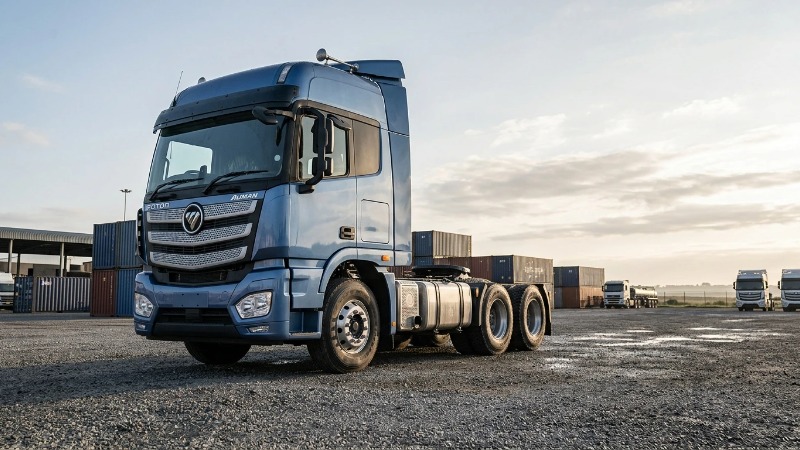
Foton Auman occupies a distinctive niche in the global commercial vehicle market. As the heavy-duty division of Foton Motor, the brand has grown from a domestic Chinese player into an internationally recognized name in freight and construction transport.
What sets Auman apart is its value engineering. The trucks deliver European-influenced design and drivetrain technology—thanks to long-standing technical partnerships—while remaining accessible for operators who need dependable workhorses without premium-brand overhead. That combination matters enormously in competitive freight markets.
For industry decision-makers, understanding where Auman sits helps frame realistic expectations. These are not budget throwaways, nor are they the most expensive rigs on the road. They aim squarely at the productive middle ground where total cost of ownership drives fleet profitability.
Who Should Read This Guide
This resource is written for professionals who make or influence truck purchasing decisions. If you fall into one of the following categories, you’ll find actionable value here:
- Fleet owners and managers evaluating replacement cycles and new acquisitions.
- Procurement managers comparing specifications, warranty terms, and lifetime costs.
- Owner-operators seeking a reliable single-truck investment.
- Maintenance technicians who need to understand common wear points and service intervals.
Whether you run a long-haul logistics operation or manage a construction fleet, the technical detail below is designed to support informed choices. You can also explore the full Auman truck category page for model-specific listings as you read.
What This Guide Covers
We’ve structured this article to move logically from the general to the specific. First, we introduce the brand and its model lineup. Next, we dig deep into engine specs, chassis design, and cab features.
From there, the focus shifts to real-world concerns: load capacity, application suitability, fuel efficiency, and total cost of ownership. Finally, we address maintenance realities—including common mechanical issues—and close with a buyer-focused comparison. Consider this your one-stop reference.
Auman Truck Brand Overview and Model Lineup
Foton Auman entered the heavy-duty segment with a clear mission: build robust trucks capable of handling demanding commercial freight transport applications at competitive operating costs. Over the years, the lineup has matured considerably.
The brand’s evolution reflects broader trends in the trucking industry. Emission standards tightened, driver comfort expectations rose, and fuel economy became a make-or-break metric. Auman has responded by upgrading powertrains, adopting automated transmissions, and refining aerodynamics across its flagship platforms.
The Foton Auman Heavy-Duty Truck Family
The Auman range spans several primary product categories, each engineered for distinct duty cycles. Understanding these categories is the first step toward matching a vehicle to your operation.
- Tractor units: Designed to haul semi-trailers over long and regional distances, these form the backbone of freight logistics fleets.
- Cargo trucks: Rigid-body configurations for general freight, ideal for distribution and mixed-load work.
- Dump trucks: Heavy-duty tippers built for construction, mining, and bulk material transport.
- Special-purpose vehicles: Tankers, mixers, and specialized chassis for niche transport requirements.
This breadth means a single manufacturer can supply most of a mixed fleet’s needs—an operational advantage when it comes to parts commonality and service relationships.
Flagship Models at a Glance
Among the many variants, a few core platforms define the Auman identity. The EST and GTL series represent the premium and mid-tier tiers respectively, and each targets a specific segment of the commercial market.
Auman EST Series
The Auman EST is the flagship long-haul platform. Positioned for demanding intercity and cross-border freight, it prioritizes fuel efficiency, driver comfort, and drivetrain durability.
EST tractors typically feature high-horsepower engines, aerodynamic cabs, and comprehensive sleeper amenities. For operators covering long distances daily, the reduced fatigue and lower fuel burn translate directly into stronger margins.
Auman GTL Series
The GTL series occupies the versatile middle ground. It’s engineered for regional freight operations where routes are shorter but frequency is higher.
GTL models balance capability and cost, making them popular with distribution companies and mixed-application fleets. They accept a range of body types, from cargo boxes to tipper beds, offering flexibility that single-purpose trucks cannot match. To compare current configurations, browse the complete model catalog.
Auman Truck Specifications and Features
This is the technical heart of the guide. Here we examine the core Auman truck specifications and features that determine performance, reliability, and suitability for your fleet.
Rather than list numbers in isolation, we explain what each figure means for day-to-day operations. After all, a torque rating only matters when you understand how it affects hill-climbing and payload handling.
Engine Performance and Powertrain Options
Engine choice is arguably the single most consequential spec on any heavy-duty truck. It dictates hauling capability, fuel consumption, and long-term reliability. The Auman truck engine performance profile is built around proven diesel platforms.
Displacement across the lineup generally ranges from roughly 7 liters in lighter configurations up to 13 liters in the heaviest tractor variants. Larger displacement engines deliver the sustained torque needed for full-weight highway hauling.
Horsepower tiers are structured to match duty cycles. Entry-level regional trucks may sit in the 280–360 hp band, while flagship EST tractors reach up into the 460–560 hp range for maximum gross combination weight operations.
Auman Truck Engine Specs Review by Model
When conducting an Auman truck engine specs review, it helps to see the variants side by side. Different models carry different emission compliance levels and power outputs, so buyers should confirm the exact configuration available in their market.
| Engine Class | Displacement | Power Range | Peak Torque | Typical Application |
|---|---|---|---|---|
| Light Heavy-Duty | ~7.0 L | 280–320 hp | 1,100–1,250 N·m | Regional distribution |
| Mid Heavy-Duty | ~9.0 L | 340–400 hp | 1,500–1,700 N·m | Mixed freight, GTL series |
| Full Heavy-Duty | ~11.0 L | 420–480 hp | 2,000–2,200 N·m | Long-haul tractors |
| Premium Heavy-Duty | ~13.0 L | 500–560 hp | 2,500+ N·m | Max-weight EST hauling |
Note that emission compliance—typically meeting the latest applicable standard for the destination market—affects aftertreatment hardware and, indirectly, maintenance routines. Always verify the certification relevant to your region.
Transmission and Drivetrain Configurations
Auman offers both manual and automated manual transmission (AMT) options. The choice significantly influences driver experience and fuel economy.
Manual gearboxes remain popular in cost-sensitive and rugged applications where simplicity is valued. AMT units, meanwhile, optimize shift points automatically, reducing driver fatigue and improving fuel efficiency on long routes.
Axle configurations range from 4×2 for lighter regional work to 6×4 for heavy tractor and construction duty. The 6×4 layout provides superior traction and load distribution, which proves essential when running near maximum weight.
Auman EST Tractor Specifications
The flagship deserves a dedicated breakdown. The Auman EST tractor specifications reflect a truck engineered for endurance and efficiency over long distances.
Dimensionally, the EST features a spacious high-roof cab designed for multi-day trips. The wheelbase and frame are optimized for standard semi-trailer coupling, ensuring compatibility across common trailer types.
Gross vehicle weight and gross combination weight ratings position the EST for full articulated operation. In typical 6×4 tractor form, it handles combination weights well into the heavy freight category, making it a genuine long-haul contender.
- Cab type: High-roof sleeper with ergonomic layout
- Drivetrain: 6×4 configuration for maximum traction
- Engine: Premium heavy-duty class, high torque output
- Transmission: AMT available for optimized long-haul economy
Chassis, Suspension, and Braking Systems
Underneath the sheet metal, structural integrity determines how a truck holds up over hundreds of thousands of kilometers. Auman frames use high-strength steel to resist the twisting stresses of heavy loads and rough roads.
Suspension options include traditional leaf-spring setups and, on premium models, air suspension. Air suspension delivers a smoother ride, better load protection for fragile cargo, and improved driver comfort—valuable features for long-haul and cold-chain applications.
On the safety side, braking technology has advanced considerably. Modern Auman heavy-duty trucks equip anti-lock braking systems and, on higher trims, electronic braking systems with stability control. These features reduce stopping distances and improve control during emergency maneuvers.
Cab Comfort and Driver-Focused Features
Driver retention is a real operational cost, and cab comfort plays a bigger role than many operators acknowledge. A well-designed cab keeps drivers alert, rested, and less likely to seek work elsewhere.
Auman flagship cabs incorporate adjustable air-suspended seats, climate control, and low-noise insulation. Sleeper configurations on EST models offer proper rest bunks, adequate storage, and living amenities for multi-day trips.
Driver-assistance technology is increasingly standard. Features such as lane departure warning, adaptive cruise control, and collision mitigation appear on premium trims, aligning Auman with global safety expectations. For deeper technical explainers on these systems, the knowledge base offers useful background reading.
Specification Comparison Table
To help buyers evaluate the best Auman truck models comparison at a glance, the table below summarizes key specifications across representative configurations.
| Model Series | Engine Class | Power | Peak Torque | Configuration | Fuel Tank |
|---|---|---|---|---|---|
| Auman EST | Premium HD | Up to 560 hp | 2,500+ N·m | 6×4 Tractor | Dual large-capacity |
| Auman GTL | Mid HD | 340–400 hp | 1,500–1,700 N·m | 4×2 / 6×4 | Standard capacity |
| Auman Cargo | Mid HD | 320–380 hp | 1,400–1,600 N·m | Rigid 6×2/6×4 | Standard capacity |
| Auman Dump | Full HD | 380–440 hp | 1,800–2,000 N·m | 6×4 / 8×4 | Compact rugged |
Use this comparison as a starting framework. Exact figures depend on market, model year, and optional equipment, so confirm details with a dealer before finalizing any purchase.
Auman Commercial Truck Load Capacity and Payload Analysis
Payload is where a truck earns its keep. This section examines Auman truck cargo capacity in practical terms, helping you translate spec sheet ratings into real operational planning.
Getting capacity right is critical. Overloading damages components and invites legal penalties, while underloading wastes earning potential on every trip. The goal is to match the vehicle precisely to your typical load profile.
Understanding GVW, GCW, and Payload Ratings
Three acronyms govern load capacity, and confusing them leads to costly mistakes. Let’s define them clearly.
- GVW (Gross Vehicle Weight): The maximum total weight of a single vehicle, including its own mass and cargo.
- GCW (Gross Combination Weight): The maximum combined weight of a tractor plus its loaded trailer.
- Payload: The actual usable cargo weight, calculated as rated weight minus the vehicle’s kerb weight.
For tractor operators, GCW is the number that matters most. For rigid cargo and dump trucks, GVW and net payload drive the calculation. Always subtract the body weight when estimating true payload.
Load Capacity by Model and Application
The table below organizes Auman commercial truck load capacity data by vehicle type and axle configuration. These figures represent typical ranges rather than fixed limits.
| Vehicle Type | Axle Setup | Typical GVW / GCW | Approx. Net Payload | Best For |
|---|---|---|---|---|
| EST Tractor | 6×4 | High GCW class | Full trailer load | Long-haul freight |
| GTL Tractor | 4×2 | Mid GCW class | Moderate trailer load | Regional freight |
| Cargo Rigid | 6×2 | Mid GVW class | General freight range | Distribution |
| Dump Truck | 8×4 | High GVW class | Heavy bulk range | Construction hauling |
The 8×4 dump configuration deserves special mention. Its four axles distribute heavy loads across more contact points, allowing higher legal payloads for bulk materials like aggregate and sand.
Real-World Payload Performance
Spec sheets tell one story; field data tells another. Operators running Auman fleets frequently report strong payload utilization when the vehicle is correctly matched to the route.
In practice, achievable payload depends heavily on body weight. A lighter body construction frees up more capacity for revenue-generating cargo, so specifying an efficient body pays dividends over the truck’s life.
Fleet feedback also highlights consistency. When loaded within rated limits and maintained on schedule, these trucks hold their payload capability without premature drivetrain strain. That reliability is exactly what freight operators need for predictable scheduling.
Auman Heavy-Duty Truck Applications
Versatility is a defining trait of the lineup. In this section, we survey the primary Auman heavy duty truck applications across industries, showing where each configuration excels.
Matching model to mission is the single biggest lever for operational efficiency. A truck that thrives in long-haul work may struggle in stop-start urban duty, and vice versa.
Long-Haul Freight and Logistics
Long-distance freight is the EST series’ natural habitat. High horsepower, aerodynamic cabs, and large fuel tanks all support extended runs with minimal downtime.
In commercial freight transport applications spanning hundreds or thousands of kilometers, fuel efficiency and driver comfort compound into major cost differences. The EST’s design directly addresses both, making it a logical choice for intercity logistics fleets.
AMT transmissions further enhance long-haul suitability by keeping the engine in its optimal efficiency band. Over a full year of operation, those fuel savings add up substantially.
Regional and Urban Distribution
Not every operation needs a flagship tractor. Regional and urban distribution favors nimbler, more economical trucks—territory where the GTL and rigid cargo models shine.
These routes involve frequent stops, tighter maneuvering, and shorter distances. A right-sized engine and manageable wheelbase improve maneuverability and reduce fuel waste from idling and constant gear changes.
For businesses handling last-mile and city-to-city distribution, matching a compact, capable Auman configuration keeps delivery costs lean. Our customer service team can help spec the right distribution vehicle for your routes.
Construction and Bulk Material Transport
Construction sites demand toughness above all else. Auman dump trucks answer that call with reinforced frames, rugged suspensions, and high-torque engines built for off-highway abuse.
Bulk material transport—aggregate, sand, demolition debris—punishes lesser vehicles. The 6×4 and 8×4 dump configurations spread loads across multiple axles and resist the constant stress of heavy tipping cycles.
Mixer applications also fit this category. Concrete mixer bodies mount on heavy-duty Auman chassis, delivering the durability needed for continuous jobsite service.
Specialized Industry Use Cases
Beyond mainstream freight and construction, Auman platforms adapt to specialized transport. These niche applications rely on purpose-built bodies mounted on proven chassis.
- Cold-chain transport: Refrigerated bodies paired with air suspension protect temperature-sensitive cargo.
- Tanker operations: Liquid and fuel transport requiring stable, low-center-of-gravity configurations.
- Container transport: Skeletal and flatbed setups for intermodal freight movement.
The ability to base multiple specialized bodies on shared chassis simplifies fleet management. Common parts and familiar service procedures reduce complexity when your fleet spans several use cases.
Application Suitability Matrix
The matrix below maps Auman models to industry-specific requirements, offering a quick reference for procurement teams.
| Application | Recommended Model | Key Feature Priority | Suitability |
|---|---|---|---|
| Long-haul freight | Auman EST Tractor | Fuel economy, comfort | Excellent |
| Regional distribution | Auman GTL | Versatility, agility | Excellent |
| Urban delivery | Auman Cargo Rigid | Maneuverability | Very Good |
| Construction hauling | Auman Dump 8×4 | Durability, payload | Excellent |
| Cold-chain | Auman Cargo + air susp. | Ride smoothness | Very Good |
| Container transport | Auman EST / GTL | GCW capacity | Excellent |
Use this matrix alongside your specific route and load data. It narrows the field quickly before you dive into detailed spec comparisons.
Fuel Efficiency and Total Cost of Ownership
Purchase price grabs attention, but total cost of ownership (TCO) determines profitability. For fleet operators, fuel and maintenance over a truck’s life dwarf the initial outlay.
This section provides an economic lens for procurement decisions. We look at fuel benchmarks, operating cost breakdowns, and how Auman stacks up against competitors on lifetime value.
Fuel Consumption Benchmarks
Fuel is typically the largest single operating expense for a heavy-duty truck. Even small percentage improvements compound into meaningful savings across a fleet.
Auman’s modern engines, combined with AMT transmissions and aerodynamic cab designs, deliver competitive fuel economy in the long-haul segment. Actual consumption naturally varies with load, terrain, and driving style.
The general pattern holds true: highway cruising at steady speeds yields the best economy, while stop-start urban work increases consumption. Matching model to duty cycle, once again, proves central to controlling fuel spend.
Operating Cost Breakdown
To plan budgets accurately, operators should model cost-per-kilometer across major categories. The illustrative breakdown below shows the relative weight of each cost driver.
| Cost Category | Relative Share | Notes |
|---|---|---|
| Fuel | Largest portion | Driven by economy and route profile |
| Maintenance & repairs | Moderate | Scheduled servicing plus wear parts |
| Depreciation | Moderate | Influenced by resale demand |
| Tires | Smaller | Dependent on load and road surface |
| Insurance & compliance | Smaller | Varies by region and operation |
Notice that fuel and maintenance together dominate the equation. This is precisely why fuel-efficient engines and manageable service costs make such a compelling case for the Auman lineup.
TCO vs. Competitor Brands
When measured against other heavy-duty manufacturers, Auman’s core advantage is value. The trucks deliver comparable capability at a lower acquisition point, which improves the TCO math from day one.
Maintenance costs also tend to favor accessible parts and straightforward servicing. For fleets operating in markets with established Auman support networks, this keeps unplanned downtime and repair bills in check.
That said, TCO is highly context-dependent. Resale values, local fuel prices, and parts availability all shift the calculation. We recommend running your own TCO model using region-specific data before committing—and our team is happy to assist with that analysis.
Maintenance, Reliability, and Common Issues
No truck is maintenance-free. Understanding service requirements and common failure points empowers technicians to keep vehicles running and prevents small issues from becoming expensive breakdowns.
This section blends preventive guidance with a focused look at specific mechanical concerns, including timing gear issues that fleet technicians should watch for closely.
Recommended Service Intervals
Adhering to scheduled maintenance is the foundation of reliability. Skipping intervals to save short-term costs almost always backfires with larger repair bills.
- Engine oil and filter: Change at manufacturer-specified intervals, adjusted for severe-duty use.
- Air and fuel filters: Inspect regularly; dusty environments demand more frequent replacement.
- Transmission and axle fluids: Service per the maintenance schedule to protect gears and bearings.
- Braking system: Inspect pads, linings, and air systems on a routine basis.
- Cooling system: Check coolant condition to prevent overheating and corrosion.
Severe-duty applications—construction, extreme heat, heavy loads—warrant shortened intervals. When in doubt, service more often rather than less.
Common Engine and Drivetrain Concerns
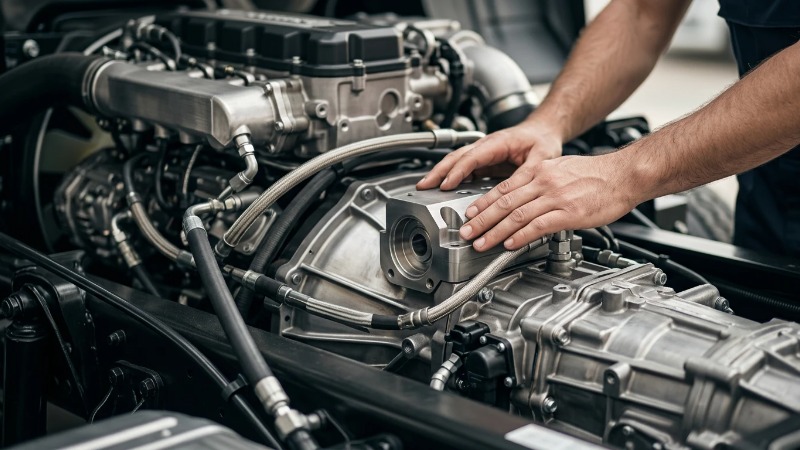
Every engine family has its known wear points, and awareness is the first line of defense. Among the issues technicians should monitor, timing gear condition stands out for its impact on engine health.
Timing gears synchronize the crankshaft and camshaft, ensuring valves open and close at precisely the right moments. When these gears wear, the consequences can escalate quickly if left unaddressed.
Timing Gear Wear Symptoms and Diagnosis
Catching wear early saves both money and engine components. Technicians should watch for these telltale timing gear wear symptoms:
- Timing gear noise: A whining, rattling, or grinding sound from the timing case, often changing with engine speed.
- Rough idle or misfires: Worn timing gears disrupt valve timing, causing uneven running.
- Reduced power: Loss of precise timing can sap performance and hurt fuel economy.
- Metal debris: Fine metal particles in the oil may indicate gear wear.
Diagnosis typically starts with a careful listen and inspection. If timing gear noise is present, technicians should inspect the gear train for backlash, chipped teeth, or excessive play. Early detection prevents catastrophic failure.
Camshaft Timing Gear Failure Causes
Understanding root causes helps prevent recurrence. Camshaft timing gear failure generally stems from a handful of identifiable factors:
- Inadequate lubrication: Poor oil quality or low oil pressure accelerates gear wear.
- Contamination: Debris in the oil abrades gear surfaces over time.
- Overloading and abuse: Sustained operation beyond rated limits stresses the gear train.
- Age and mileage: Normal wear eventually reaches the point of failure on high-mileage engines.
Preventive measures are straightforward but effective. Maintain clean, correct-grade oil, respect load limits, and address unusual noises promptly. These habits dramatically extend gear life.
Timing Gear Replacement Cost and Process
When replacement becomes necessary, planning ahead reduces surprises. The table below outlines a general framework for timing gear replacement cost considerations—expressed in relative terms rather than fixed figures, since costs vary by market and engine.
| Cost Component | Relative Weight | Notes |
|---|---|---|
| Replacement gears (parts) | Moderate | Depends on engine class and gear set scope |
| Related seals and gaskets | Smaller | Replaced during teardown as good practice |
| Labor hours | Significant | Timing case access is labor-intensive |
| Oil and fluids | Smaller | Refill after reassembly |
| Diagnostic time | Smaller | Confirming the fault before teardown |
The process involves accessing the timing case, removing worn gears, inspecting related components, and installing new parts with correct alignment. Labor tends to be the largest single factor because reaching the gear train requires substantial disassembly.
Because timing gear replacement cost is dominated by labor, addressing wear early—before it damages adjacent components—keeps the overall bill lower. Preventive attention truly pays off here.
Preventive Maintenance Best Practices
Reactive maintenance is always more expensive than proactive care. Building a disciplined preventive program extends component life and minimizes unplanned downtime.
- Follow the schedule religiously: Treat service intervals as non-negotiable.
- Use quality fluids and parts: Cheap consumables often cost more in the long run.
- Train drivers: Smooth driving reduces drivetrain stress and improves economy.
- Monitor and log: Track oil analysis and unusual symptoms to catch problems early.
- Address noises immediately: Timing gear noise and other warning signs deserve prompt investigation.
A well-run maintenance program transforms reliability from hope into predictability. For technical guides and servicing tips, revisit our knowledge base resources whenever you need a refresher.
Best Auman Truck Models Comparison for Buyers
With the technical groundwork laid, let’s turn to the decision itself. This section provides a buyer-focused framework for selecting the right configuration.
Every fleet has unique priorities, so there’s no universal “best” answer. Instead, we offer a structured way to match models to your specific operational profile.
Matching Models to Operational Needs
Start by defining your duty cycle honestly. Ask these questions before comparing specs:
- What distances do you typically cover? Long-haul favors the EST; regional work suits the GTL.
- What’s your typical load? Heavy bulk demands robust dump configurations; general freight suits cargo rigids.
- What terrain do you operate in? Hilly or off-road routes need higher torque and 6×4/8×4 traction.
- How important is driver retention? Premium cabs pay for themselves through reduced turnover.
Answering these clarifies which segment of the lineup deserves your focus. Only then does detailed spec comparison become meaningful.
Value Assessment by Segment
The table below evaluates price-to-performance across the lineup in relative terms, helping you weigh capability against investment.
| Segment | Best Model | Performance Strength | Value Rating |
|---|---|---|---|
| Long-haul | Auman EST | Efficiency + comfort | High |
| Regional freight | Auman GTL | Versatility | Very High |
| Urban distribution | Auman Cargo | Agility | High |
| Construction | Auman Dump | Durability | Very High |
The GTL and Dump models frequently score highest on value because they hit the sweet spot of capability versus cost for their intended roles. That said, an EST’s efficiency can deliver superior lifetime value in high-mileage long-haul work.
Buyer Recommendations by Use Case
To crystallize the analysis, here are targeted recommendations:
- Long-haul operators: Choose the Auman EST with AMT and air suspension. The fuel and comfort benefits justify the investment over high annual mileage.
- Regional freight fleets: The GTL series offers the flexibility to handle varied loads without overspending on capacity you won’t use.
- Construction companies: Opt for 6×4 or 8×4 dump configurations built for durability and maximum bulk payload.
- Urban distributors: A right-sized cargo rigid balances maneuverability with adequate capacity for city routes.
Whatever your use case, involve a knowledgeable dealer early. They can fine-tune the specification to your exact requirements and help you avoid over- or under-buying. Learn more about our approach on the about us page, or review proven deployments in our cooperative case studies.
Frequently Asked Questions
Below we address the questions industry professionals ask most often when evaluating the Auman truck range.
What engine options are available for Auman trucks?
Auman trucks offer a range of diesel engines spanning roughly 7 to 13 liters of displacement. Power outputs run from around 280 hp on light heavy-duty regional trucks up to 560 hp on premium long-haul tractors. Buyers can pair these engines with manual or automated manual transmissions, and axle configurations from 4×2 to 8×4 depending on the application. Always confirm the exact engine and emission specification available in your market.
What is the maximum load capacity of an Auman EST tractor?
The Auman EST tractor, in its typical 6×4 configuration, is engineered for high gross combination weight operation suited to full articulated long-haul freight. Actual usable payload depends on the trailer, body weight, and local weight regulations. Because true payload equals rated capacity minus vehicle mass, specifying an efficient trailer maximizes revenue-carrying capacity. Consult the specification data for your exact configuration to confirm precise ratings.
How do I identify worn timing gears in an Auman truck?
The clearest early sign is timing gear noise—a whine, rattle, or grind from the timing case that often changes with engine speed. Other symptoms include rough idling, misfires, reduced power, and fine metal particles appearing in the oil. If you notice any of these, inspect the gear train promptly for backlash, chipped teeth, or excessive play. Early diagnosis prevents worn timing gears from causing more serious engine damage.
What is the typical timing gear replacement cost?
Timing gear replacement cost is driven primarily by labor, since accessing the timing case requires significant disassembly. Parts include the gear set plus related seals and gaskets, while additional costs cover diagnostic time and fluid refills. Total cost varies by engine class, market, and shop rates. The key takeaway: addressing gear wear early—before it damages adjacent components—keeps the overall repair far more affordable.
Which Auman model is best for long-haul freight?
For long-haul freight, the Auman EST series is the strongest choice. It combines high-horsepower engines, aerodynamic sleeper cabs, and large fuel tanks specifically for extended intercity and cross-border runs. Pairing the EST with an AMT and air suspension maximizes fuel economy and driver comfort—two factors that compound into significant savings over high annual mileage. For heavy or hilly routes, specify the 6×4 configuration for the traction and load stability that full-weight hauling demands.
How does the Auman GTL differ from the EST series?
The two platforms target different duty cycles. The EST is a premium long-haul flagship built for maximum-weight, long-distance freight, prioritizing top-tier fuel efficiency and multi-day driver comfort. The GTL, by contrast, occupies the versatile mid-tier: it’s engineered for regional freight with shorter routes and higher stop frequency. The GTL accepts a wider range of body types and typically delivers a stronger value rating for mixed-application fleets, while the EST earns its premium in sustained high-mileage work.
Are Auman trucks reliable for construction and heavy-duty use?
Yes. Auman dump trucks are purpose-built for construction and bulk material transport, featuring reinforced high-strength steel frames, rugged suspensions, and high-torque engines designed for off-highway abuse. The 6×4 and 8×4 configurations spread heavy loads across multiple axles, resisting the constant stress of tipping cycles and allowing higher legal payloads for aggregate and sand. As with any heavy-duty vehicle, reliability depends on disciplined preventive maintenance and operating within rated load limits.
What maintenance is required to keep an Auman truck running reliably?
Core maintenance centers on adhering to manufacturer service intervals: regular engine oil and filter changes, air and fuel filter inspection, transmission and axle fluid servicing, routine brake checks, and cooling system monitoring. Severe-duty applications—construction, extreme heat, sustained heavy loads—warrant shortened intervals. Using quality fluids and parts, training drivers in smooth operation, logging oil analysis, and investigating unusual noises immediately all extend component life and minimize unplanned downtime.
Conclusion: Making the Right Auman Truck Decision
The Auman truck lineup earns its place in fleet conversations through disciplined value engineering—European-influenced drivetrain technology delivered at an accessible acquisition point. That combination reshapes the total cost of ownership math from day one.
Across this guide, one theme recurs: matching model to mission is the single biggest lever for operational efficiency. The EST rewards high-mileage long-haul work with fuel economy and driver comfort. The GTL delivers versatile value for regional freight. The dump configurations bring construction-grade durability, while cargo rigids keep urban distribution lean.
Sound procurement also demands attention to the long game. Payload accuracy, fuel efficiency, and preventive maintenance—including early attention to wear points like timing gears—determine whether a truck delivers its full economic potential over hundreds of thousands of kilometers.
Ultimately, the right choice comes from honest assessment of your own duty cycle, then careful specification with a knowledgeable partner. Define your distances, loads, terrain, and priorities first; let the spec comparison follow. Do that, and the Auman lineup offers a compelling, profitable answer for a wide range of commercial transport operations.
Ready to move forward? Browse the full Auman truck catalog to compare configurations, or contact our team for tailored guidance on matching the right model to your fleet.