




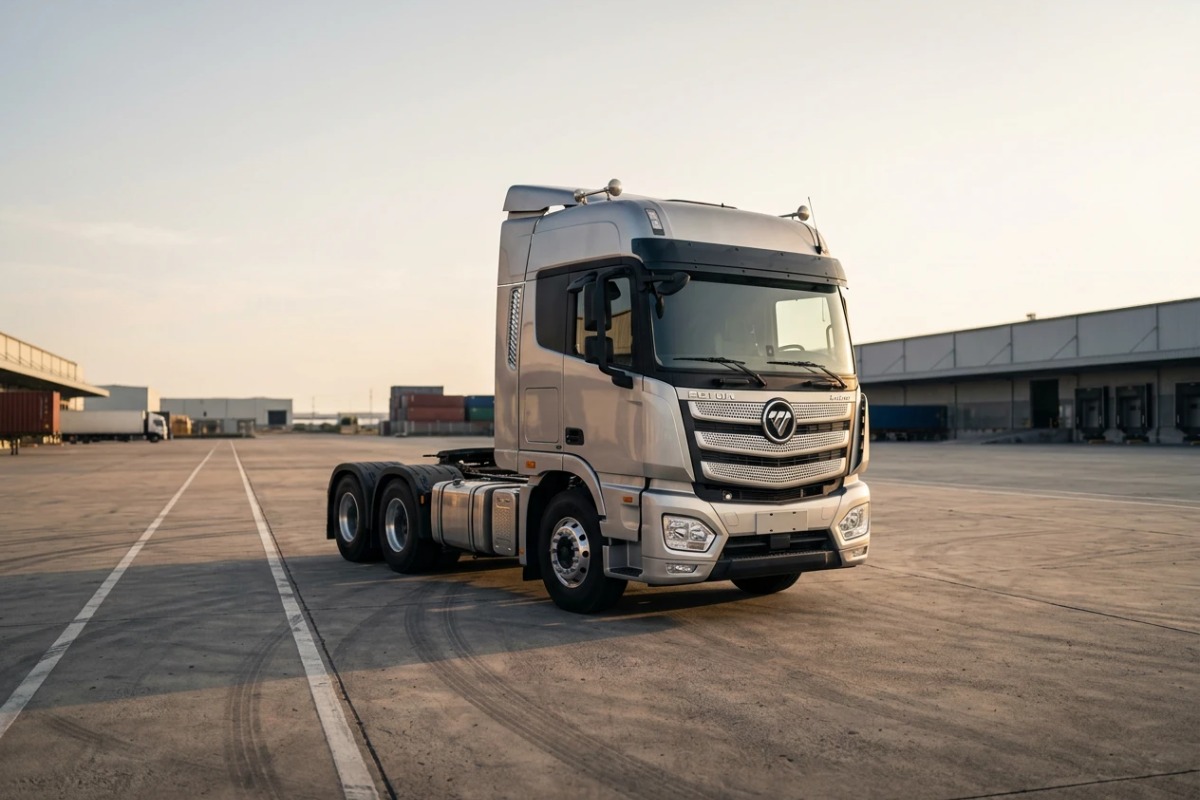
Foton Motor trucks reviewed: specs, models & real-world data to help fleets and owner-operators buy with confidence. Cut through the noise.
The commercial vehicle landscape has shifted dramatically over the past decade, and few manufacturers have driven that change quite like Foton Motor. For fleet operators, logistics professionals, and procurement specialists, understanding what this brand brings to the table is no longer optional—it’s essential to making informed capital decisions.
This guide cuts through the marketing noise. Instead, it delivers the technical depth, comparative context, and practical insight that industry professionals actually need when evaluating a purchase.
Whether you manage a growing distribution fleet or you’re an owner-operator weighing your next vehicle, the pages ahead will equip you with the knowledge to choose confidently.
Introduction: Positioning Foton in the Global Commercial Vehicle Market
Foton Motor, headquartered in Beijing, ranks among China’s largest commercial vehicle manufacturers by volume. Since its founding in 1996, the company has produced millions of vehicles spanning light-duty vans to heavy-haul tractors.
That scale matters. It translates into manufacturing efficiency, deep supplier relationships, and pricing that consistently undercuts many Western and Japanese rivals without sacrificing core capability.
Perhaps more importantly, Foton has built a genuine global footprint. The brand now operates across more than 110 countries, with assembly plants and distribution networks stretching from Southeast Asia to Latin America, Africa, and parts of Europe.
For fleet operators, this reach signals something reassuring: parts availability, service coverage, and long-term brand stability. These are the very factors that separate a smart procurement decision from a costly one.Foton produces over 400,000 commercial vehicles annually and has cumulatively sold more than 10 million units worldwide since inception—a figure that underscores its industrial maturity.
Who This Guide Is For
This resource is written for professionals, not casual browsers. If you spend your days balancing payload requirements against operating costs, you’re in the right place.
Specifically, this guide serves fleet managers seeking to standardize their vehicle mix, logistics operators optimizing last-mile efficiency, and owner-operators who need a dependable workhorse.
Procurement specialists comparing total cost of ownership across brands will also find the comparative tables particularly useful. In short, anyone evaluating Foton commercial vehicles for real work will benefit.
What You’ll Learn
Over the following sections, we’ll move methodically through the brand’s story, its complete model range, and its engineering fundamentals.
You’ll get detailed Foton truck specifications and features, a clear-eyed look at engine technology, and side-by-side model comparisons. We’ll also cover practical applications across industries.
Finally, we’ll examine real-world performance data, competitor positioning, and ownership guidance. By the end, you’ll have a complete framework for decision-making. For foundational reading before diving in, our knowledge base offers useful background primers.
Brand Overview: The Foton Motor Story
Understanding a manufacturer’s DNA helps you predict how its products will perform in the field. Foton’s trajectory reveals a company built on rapid scaling and strategic technology borrowing.
The company emerged from China’s agricultural machinery sector and quickly pivoted toward commercial trucks. This heritage in rugged, cost-conscious equipment still shapes the durability-first design philosophy visible across the current lineup.
Over the years, Foton has deliberately partnered with established global engineering firms rather than reinventing every wheel. That approach accelerated its climb up the quality curve considerably.
Foton’s Global Manufacturing Footprint
Foton operates a network of production facilities that extends well beyond its Chinese heartland. This distributed manufacturing model brings vehicles closer to end markets and reduces import friction.
Localized assembly operations exist in markets including the Philippines, India, Russia, Brazil, and several African nations. Consequently, buyers in these regions often benefit from faster delivery and locally tuned specifications.
The export strategy has proven especially effective in emerging economies. There, buyers prioritize value and serviceability—two areas where the brand traditionally excels.
| Region | Operation Type | Strategic Focus |
|---|---|---|
| China (Beijing, Weifang) | Full production | R&D, core manufacturing |
| Southeast Asia | Assembly (CKD) | Light-duty logistics vehicles |
| Latin America | Assembly & distribution | Pickups and medium-duty |
| Africa | Distribution & CKD | Durable rural transport |
| Europe/Russia | Localized assembly | Emissions-compliant fleets |
Key Technology Partnerships
The single most important factor in Foton’s quality leap has been its powertrain partnerships. These alliances gave the brand access to world-class components that would have taken decades to develop independently.
The Foton Cummins joint venture, established in 2008, stands out as the crown jewel. This partnership produces the ISF and ISG engine families that power a large share of Cummins engine trucks in the Foton catalog.
Beyond Cummins, the company has collaborated with Daimler and integrated ZF transmissions into higher-tier models. Together, these relationships deliver proven reliability, refined shifting, and emissions compliance across major markets. To see how these partnerships translate into deployed fleets, browse our cooperative case studies.
Foton Truck Model Range: A Complete Breakdown
Foton’s lineup is broad, spanning nearly every commercial weight class. For newcomers, this variety can feel overwhelming, so we’ll break it down segment by segment.
Broadly, the range divides into light-duty trucks, pickups, and medium-to-heavy platforms. Each serves distinct duty cycles and payload requirements.
Understanding where each series sits helps you narrow your options quickly. Let’s start with the segment most relevant to logistics and distribution fleets.
Light-Duty Trucks: The Aumark Series
The Aumark represents Foton’s flagship light-duty offering and arguably its best-known product globally. It’s a purpose-built workhorse for urban and regional transport.
In terms of Foton Aumark specifications, the series typically spans a gross vehicle weight (GVW) range from roughly 3.5 to 12 tonnes. This flexibility lets a single model line cover everything from courier vans to substantial box trucks.
Cab configurations include standard, crew, and extended options. Meanwhile, chassis lengths vary to accommodate refrigerated bodies, tippers, curtain-siders, and flatbeds.
The Aumark’s reputation rests on a straightforward promise: dependable daily performance at a compelling operating cost. For fleets running hundreds of stops per day, that consistency is invaluable.
Aumark S and Aumark C Variants
Within the Aumark family, the S and C variants target slightly different buyers. Recognizing the distinction helps you avoid over- or under-specifying your vehicle.
The Aumark S generally positions as the premium, higher-refinement option. It offers upgraded cabin comfort, more powerful engine choices, and enhanced payload ratings suited to demanding duty cycles.
The Aumark C, by contrast, emphasizes value and simplicity. It remains a robust choice for operators who need reliable capability without premium features.
| Attribute | Aumark S | Aumark C |
|---|---|---|
| Positioning | Premium light-duty | Value light-duty |
| Typical GVW range | 4.5–12 t | 3.5–8 t |
| Engine options | Cummins ISF 2.8/3.8 | Cummins ISF 2.8 / proprietary |
| Cabin refinement | Higher | Standard |
| Best fit | Intensive distribution | General regional haulage |
Pickup Trucks: The Tunland Series
The Tunland is Foton’s answer to the global appetite for capable, versatile pickups. It bridges the gap between lifestyle utility and genuine commercial workhorse.
The Foton Tunland pickup has evolved considerably, with the newer G7 and G9 generation marking a significant step up in refinement and technology. These models compete directly with established midsize pickups in many export markets.
Positioned for both work and daily driving, the Tunland offers four-wheel-drive options, respectable towing figures, and increasingly modern cabin appointments. For agricultural operators and small businesses, it’s an appealing dual-purpose vehicle.
Medium and Heavy-Duty: Auman Series
For operations requiring serious muscle, the Auman series delivers medium and heavy-duty platforms. This range extends into tractor units, tippers, and long-haul configurations.
The Auman benefits directly from the Daimler and ZF technology partnerships. As a result, higher-tier variants offer sophisticated powertrains and driver assistance features.
Regional availability varies significantly for the heavy segment, so buyers should confirm local support before committing. Where available, though, the Auman rounds out a genuinely comprehensive lineup.
Model Comparison Table
To bring the range into focus, the table below presents a structured Foton commercial truck models comparison. Use it as a quick reference when shortlisting candidates.
| Model | Class | Typical GVW | Payload (approx.) | Engine | Transmission | Typical Use Case |
|---|---|---|---|---|---|---|
| Aumark C | Light-duty | 3.5–8 t | 1.5–4.5 t | Cummins ISF 2.8 | 5/6-speed manual | Regional distribution |
| Aumark S | Light-duty | 4.5–12 t | 2.5–7 t | Cummins ISF 3.8 | Manual / AMT | Urban logistics, box body |
| Tunland G7/G9 | Pickup | 2.8–3.2 t | ~1 t bed | 2.0T diesel | Manual / automatic | Work + daily use |
| Auman EST | Heavy-duty | 18–49 t (GCW) | Varies | Cummins ISG / Weichai | ZF AMT | Long-haul, tipper |
Figures are indicative and vary by market specification. Always verify against the official spec sheet for your region. You can request current documentation through our contact page.
Foton Truck Specifications and Features in Detail
Now we get to the heart of the matter: the engineering that determines how these vehicles actually perform. This section unpacks the technical fundamentals that professionals scrutinize most closely.
We’ll examine powertrains, payload capacity, drivetrain options, and the chassis architecture beneath it all. Along the way, we’ll flag the details that matter most for real-world duty.
Keep in mind that specifications shift between model years and markets. The figures here reflect representative configurations rather than universal absolutes.
Engine Specifications and Powertrain Options
The engine is where Foton’s partnership strategy pays the clearest dividends. A thorough Foton truck engine specifications review reveals a lineup anchored by proven Cummins units alongside proprietary alternatives.
The Cummins ISF family dominates the light-duty segment. The ISF 2.8-litre four-cylinder and ISF 3.8-litre variants deliver a balance of efficiency and pulling power well suited to distribution work.
Moving up the range, the Cummins ISG series powers heavier applications with six-cylinder displacement and substantially higher torque. Proprietary Foton and Weichai engines fill out certain regional and budget configurations.
Emissions compliance spans Euro 5 and Euro 6 depending on the destination market. This range allows the brand to serve both stringent European standards and less regulated territories effectively.
Cummins Engine Trucks: Performance Data Table
The following table summarizes representative engine options across the Foton range. It highlights why the Cummins-powered variants command such strong buyer confidence.
| Engine | Displacement | Power (approx.) | Peak Torque | Fuel | Emissions |
|---|---|---|---|---|---|
| Cummins ISF 2.8 | 2.8 L | 140–154 hp | ~360 Nm | Diesel | Euro 5/6 |
| Cummins ISF 3.8 | 3.8 L | 156–168 hp | ~600 Nm | Diesel | Euro 5/6 |
| Cummins ISG 11/12 | 10.5–11.8 L | 360–460 hp | 1,800–2,300 Nm | Diesel | Euro 6 |
| Foton 2.0T (Tunland) | 2.0 L | 160–231 hp | 360–450 Nm | Diesel/Petrol | Euro 5/6 |
These figures illustrate the breadth on offer. From frugal light-duty fours to muscular heavy-duty sixes, there’s a powertrain matched to nearly every duty cycle.
Payload and Towing Capacity
Payload is the number that ultimately governs your revenue per trip. Getting it right prevents both overloading penalties and wasteful over-specification.
Across the Aumark range, Foton light duty truck payload capacity typically spans from around 1.5 tonnes on lighter chassis to roughly 7 tonnes on the heaviest S variants. This spread covers a remarkable range of applications.
Load ratings depend heavily on body type, axle configuration, and local regulations. Consequently, the same chassis may carry different legal maximums in different jurisdictions.
For towing, pickup and medium-duty models offer meaningful capacity, though light-duty trucks are primarily rated for carried rather than towed loads. Always match your ratings to the actual work ahead.
Transmission and Drivetrain
Transmission choice profoundly affects driver comfort, fuel economy, and maintenance costs. Foton offers a sensible spread of options across its range.
Manual gearboxes remain standard on value-focused models, prized for simplicity and low repair costs. Automated manual transmissions (AMT) increasingly appear on premium variants, easing driver fatigue in stop-start conditions.
Fully automatic transmissions feature on certain pickups and select applications. Meanwhile, drivetrain layouts include 4×2 for on-road efficiency, 4×4 for challenging terrain, and 6×4 for heavy-duty loads.
Chassis, Suspension and Braking
Beneath the bodywork, the chassis defines a truck’s durability and ride character. Foton employs proven ladder-frame construction across its commercial range for maximum strength.
Suspension typically uses leaf springs, with parabolic springs available on higher-tier models for improved ride quality. This gives operators a choice between rugged simplicity and enhanced comfort.
On the safety front, modern Foton trucks feature ABS as standard, with EBS available on premium and heavy-duty variants. These systems markedly improve stopping performance under load.
Cabin, Comfort and Technology
Driver retention increasingly hinges on cabin quality, and Foton has invested heavily here. Recent models feel worlds apart from the utilitarian interiors of a decade ago.
Ergonomics have improved substantially, with adjustable seating, better visibility, and reduced noise levels. These upgrades directly reduce fatigue on long shifts.
Technology has kept pace too. Many models now offer touchscreen infotainment, telematics integration, and fleet-management connectivity that lets managers monitor location, fuel use, and driver behavior remotely.
For fleet operators, this connectivity is a genuine operational advantage. It turns each vehicle into a data source that informs smarter scheduling and maintenance.
Fuel Efficiency and Total Cost of Ownership
For any professional buyer, the purchase price is just the beginning of the story. Total cost of ownership (TCO) tells the fuller truth.
Foton’s Cummins-powered light-duty models generally deliver competitive fuel consumption, often in the range of 8 to 12 litres per 100 km depending on load and duty cycle. Over years of operation, these numbers compound significantly.
Beyond fuel, TCO factors include maintenance intervals, parts pricing, resale value, and downtime. Foton’s traditional strengths in affordable parts and simple servicing tend to keep lifetime costs attractive.
When you tally everything together, the value equation often favors Foton against premium-badged rivals. That’s precisely why the brand has gained such traction among cost-conscious fleets.
Foton Light Duty Truck Applications and Use Cases
Specifications only matter in context, so let’s ground them in real work. The versatility of Foton light duty truck applications is one of the brand’s strongest selling points.
Across industries, the Aumark and its siblings adapt to an impressive variety of tasks. Body builders regularly transform the base chassis into specialized configurations.
Below, we walk through the most common deployment scenarios. Each highlights why a particular buyer might gravitate toward the brand.
Urban Logistics and Last-Mile Delivery
Last-mile delivery has exploded alongside e-commerce, and the Aumark fits this niche beautifully. Its maneuverability and payload balance make it ideal for congested city routes.
Compact turning circles help drivers navigate tight streets and loading docks. At the same time, generous cargo volume ensures each trip carries a full complement of parcels.
For distribution fleets running dense delivery schedules, these traits translate directly into efficiency. Fewer trips and easier access mean lower cost per drop.
Construction and Municipal Services
Construction and municipal work demand rugged, adaptable vehicles. Here, the Foton chassis shines when fitted with tipper, utility, or specialized service bodies.
Tipper configurations handle aggregate, waste, and demolition debris with ease. Meanwhile, refrigerated and insulated bodies serve food distribution and cold-chain municipal needs.
The frame’s inherent strength suits these heavier-duty applications well. For local governments and contractors watching budgets, the value proposition is compelling.
Agriculture and Rural Transport
Rural operations place unique demands on a vehicle: rough roads, variable loads, and limited service access. Foton’s agricultural heritage makes it naturally suited to this environment.
The durable chassis and simple, serviceable mechanicals stand up well to demanding rural conditions. Farmers value the ability to make basic repairs without specialized tooling.
Payload suitability rounds out the appeal, allowing operators to move produce, livestock feed, and equipment reliably. In many emerging markets, this ruggedness has cemented brand loyalty.
Choosing the Best Foton Truck for Hauling
Selecting the best Foton truck for hauling comes down to a disciplined matching process. Rather than chasing the biggest specification, focus on fit.
Start with your typical and peak load weights. Then factor in terrain, distance, and duty intensity to narrow the field sensibly.
A vehicle over-specified for its work wastes capital and fuel, while an under-specified one fails prematurely. The goal is precise alignment between capability and requirement.
Application-to-Model Matching Table
To simplify the decision, the table below maps common hauling scenarios to recommended configurations. Treat it as a starting point for your own analysis.
| Hauling Scenario | Recommended Model | Suggested Spec | Why It Fits |
|---|---|---|---|
| City parcel delivery | Aumark C | 3.5–5 t GVW, ISF 2.8 | Agile, efficient, low running cost |
| Regional box haulage | Aumark S | 7.5–12 t GVW, ISF 3.8 | Strong payload, refined cab |
| Construction tipper | Aumark S / Auman | 4×4 or 6×4, AMT | Rugged frame, off-road capability |
| Farm & mixed transport | Tunland / Aumark C | 4×4, manual | Durable, versatile, serviceable |
| Long-haul freight | Auman EST | 6×4, ISG, ZF AMT | High torque, driver comfort |
Use this matrix to shortlist, then confirm details with a specialist. Our team at customer service can help refine your selection based on local regulations.
Real-World Performance: Data and Operator Insights
Specifications tell you what a truck should do; field data tells you what it actually does. This section grounds our analysis in operational reality.
Operator feedback consistently emphasizes value, serviceability, and dependable daily performance. While no brand is flawless, the pattern of experiences reveals genuine strengths.
Below, we examine maintenance realities and a representative deployment scenario. Together, they paint a practical picture for prospective buyers.
Reliability and Maintenance Intervals
Reliability hinges as much on maintenance discipline as on inherent build quality. Foton’s Cummins-powered models benefit from the well-documented service requirements of those engines.
Typical service intervals for light-duty models fall around every 10,000 to 15,000 km, depending on operating conditions and oil specification. Adhering to these schedules is essential to longevity.
Parts availability is a notable strength, thanks to the brand’s extensive global network. Warranty terms vary by market but commonly cover two to three years or a defined mileage, whichever comes first.
| Maintenance Item | Typical Interval | Notes |
|---|---|---|
| Engine oil & filter | 10,000–15,000 km | Condition-dependent |
| Fuel filter | 20,000–30,000 km | Critical in dusty regions |
| Brake inspection | Every service | Heavier under load |
| Transmission service | 40,000–60,000 km | Varies by type |
| Major inspection | ~100,000 km | Comprehensive check |
Case Example: Fleet Deployment
Consider an illustrative regional distribution operator running a mixed fleet of 40 light-duty vehicles. Facing rising costs, the company trialed a batch of Aumark trucks to benchmark performance.
Over an 18-month evaluation, the operator reported fuel consumption roughly 6 to 9 percent lower than their aging incumbent vehicles. Downtime also fell, attributed to accessible parts and straightforward servicing.
The measurable outcome was a meaningful reduction in cost per kilometre across the trial fleet. Encouraged by these results, the operator expanded the Foton allocation in subsequent procurement cycles.
This scenario mirrors patterns seen across many value-driven fleets. It underscores how the brand’s TCO advantages materialize in practice rather than just on paper.
Foton vs. Competitors: How It Stacks Up
No purchase decision happens in a vacuum, so competitive context is essential. In the light-duty segment, Foton contends primarily with Isuzu, Dongfeng, and JAC.
Each rival brings distinct strengths. Isuzu enjoys a formidable reputation for reliability, while Dongfeng and JAC compete aggressively on price and features.
Foton’s differentiator is its combination of Cummins powertrains and keen value positioning. For many buyers, that pairing hits a compelling sweet spot.
Value Proposition Comparison Table
The table below distills the competitive landscape into key decision factors. Note that specifics vary considerably by market and configuration.
| Brand | Price Positioning | Typical Warranty | Payload Competitiveness | Engine Sourcing |
|---|---|---|---|---|
| Foton | Value | 2–3 years | Strong | Cummins JV / proprietary |
| Isuzu | Premium | 3 years | Strong | In-house (renowned) |
| Dongfeng | Value | 2 years | Competitive | Cummins JV / in-house |
| JAC | Budget-value | 2 years | Competitive | Navistar tech / in-house |
Isuzu typically leads on outright reputation but commands a premium. Foton, meanwhile, offers arguably the best balance of proven engine technology and accessible pricing—a decisive factor for cost-focused fleets.

Buying and Ownership Guidance
Once you’ve settled on the brand, sound procurement practice protects your investment. This final advisory section covers the practical mechanics of buying and owning.
Professional buyers should think in lifecycle terms rather than transaction terms. Every decision, from new-versus-used to service networks, shapes long-term returns.
Let’s address the two questions procurement teams raise most frequently. Getting these right sets the foundation for a successful deployment.
New vs. Used Considerations
The new-versus-used calculation depends on your capital position and risk tolerance. Both paths carry distinct advantages worth weighing carefully.
New vehicles offer full warranty coverage, the latest emissions compliance, and predictable reliability. For fleets prioritizing uptime, these benefits often justify the higher outlay.
Used trucks, on the other hand, sidestep the steepest depreciation and lower entry costs. If you go this route, inspect the frame for corrosion, verify service history, and scrutinize engine condition closely.
Parts, Service Networks and Aftermarket Support
A truck is only as good as the network supporting it. This is precisely where Foton’s global scale becomes a tangible ownership advantage.
Regional dealer coverage continues to expand across the brand’s key markets. Combined with the widely stocked Cummins parts ecosystem, this keeps spare-parts logistics manageable even in remote areas.
Before purchasing, confirm the strength of local support in your specific region. To explore available models and confirm coverage in your area, visit our full truck category page.
Frequently Asked Questions (FAQ)
Below, we address the questions industry professionals ask most often. These concise answers distill the key points from throughout this guide.
What engines do Foton trucks use?
Foton trucks predominantly use Cummins engines produced through the Foton Cummins joint venture, including the ISF 2.8 and 3.8 units in light-duty models and the larger ISG series in heavy-duty applications. Proprietary Foton and Weichai engines also appear in certain regional and value-focused configurations. This combination gives buyers proven powertrain reliability across the range.
What is the payload capacity of a Foton light duty truck?
Across the Aumark series, payload capacity typically ranges from around 1.5 tonnes on lighter chassis to roughly 7 tonnes on the heaviest S variants. The exact figure depends on body type, axle configuration, and local regulations. Always confirm the legal load rating for your specific market and application before purchase.
Is Foton a reliable truck brand for commercial fleets?
Foton has built a solid reliability reputation, particularly in its Cummins-powered models, and enjoys strong operator feedback on value and serviceability. Its global parts network and simple maintenance requirements further support fleet dependability. As with any brand, consistent maintenance and adherence to service intervals are essential to realizing that reliability.
Which Foton truck is best for hauling heavy loads?
For genuinely heavy loads, the Auman series with its Cummins ISG engines and ZF transmissions is the appropriate choice. Within light-duty work, the Aumark S delivers the strongest payload capacity. Match your typical and peak load weights to the model tier for the best result.
Where can I get Foton parts and service?
Foton operates an extensive global service network spanning over 110 countries, supported by the widely available Cummins parts ecosystem. Coverage is strongest in the brand’s core markets across Asia, Latin America, and Africa. Confirm local dealer support in your region, and reach out to a specialist supplier to verify parts logistics for your fleet.
Conclusion and Call to Action
Foton has earned its place among the world’s leading commercial vehicle manufacturers through a smart blend of value, proven powertrains, and global reach. For fleet operators and professional buyers, that combination represents a genuinely compelling proposition.
Throughout this guide, we’ve seen how the Aumark, Tunland, and Auman ranges address distinct duty cycles. We’ve also examined the Cummins engine technology, payload flexibility, and total cost advantages that define the brand.
The right choice ultimately depends on precisely matching capability to your real-world requirements. With the framework provided here, you’re well equipped to make that decision confidently.
Ready to take the next step? Request a detailed specification sheet, explore the complete lineup, or connect with a specialist to build a fleet-comparison tailored to your operation. Visit our homepage to browse available models, learn more about our team and expertise, or contact us today to discuss your next commercial vehicle investment. Your ideal Foton truck—and a stronger bottom line—is within reach.