




FAW Cargo Truck for Sale: Complete 2026 buyer’s guide to specs, pricing, engine specs & China export tips for fleet operators. Buy smart.
Choosing the right commercial vehicle partner can define the profitability of an entire fleet. For importers, fleet operators, and distributors evaluating a FAW cargo truck for sale, the decision goes far beyond the sticker figure. It involves engineering fit, total cost of ownership, and the reliability of the export channel behind the purchase.
This comprehensive procurement and technical reference walks you through every stage of sourcing FAW trucks from China. From understanding the brand’s manufacturing heritage to diagnosing engine components and negotiating logistics, this guide equips industry professionals with the practical knowledge needed to buy with confidence.
Whether you are building a mixed fleet or placing a single-unit order, the insights below reflect real-world procurement patterns observed across African, Southeast Asian, and Middle Eastern markets. Let’s begin with the foundation: who FAW is and why they matter.
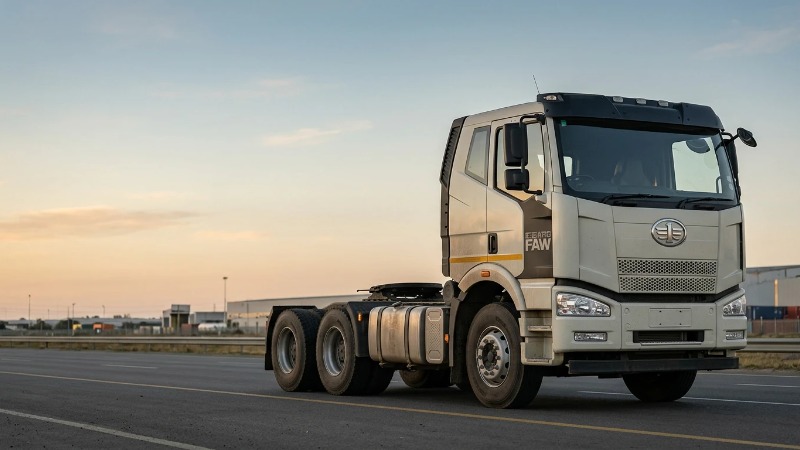
1. Understanding FAW: China’s Heavy Duty Truck Powerhouse
Before comparing specifications or price bands, savvy buyers first assess the manufacturer’s credibility. FAW, short for First Automobile Works, stands among the most established names in China’s commercial vehicle landscape. Understanding this backbone helps set realistic expectations for quality and support.
Moreover, brand heritage often signals long-term parts availability, a factor that directly affects fleet uptime years after the initial purchase. Let’s explore what makes FAW a dependable choice.
1.1 Company Heritage and Global Manufacturing Scale
FAW traces its origins to 1953, making it one of China’s oldest automotive enterprises. Over the decades, it has grown into a sprawling industrial group producing passenger cars, buses, and a formidable line of heavy commercial trucks.
The company’s annual production capacity runs into the hundreds of thousands of units. This scale allows FAW to maintain consistent component standardization, which benefits buyers who need reliable parts interchangeability across a fleet.
Just as importantly, FAW’s export footprint spans more than 80 countries. Its trucks are a familiar sight on freight corridors across Africa, throughout Southeast Asia, in the Middle East, and increasingly in South America. This global presence demonstrates proven adaptability to harsh operating conditions.
For buyers, this matters because a truck engineered for diverse climates and road surfaces translates into fewer breakdowns and lower maintenance surprises. To learn more about how a trusted exporter supports these markets, you can review the company background here.
1.2 The FAW Jiefang J6 Series Explained
The FAW Jiefang J6 heavy duty truck platform represents the flagship of the brand’s commercial lineup. Launched to consolidate FAW’s heavy-truck ambitions, the J6 series quickly became the workhorse across both cargo and tractor segments.
What sets the J6 apart is its balance of durability and driver comfort. The cab design incorporates improved ergonomics, better noise insulation, and a robust chassis frame rated for demanding loads. These qualities explain why the platform dominates long-haul applications.
Furthermore, the J6 shares many core components across its cargo, dump, and tractor variants. For buyers assembling a mixed fleet, this commonality reduces spare-parts complexity and simplifies technician training. It is a practical advantage that seasoned operators quickly appreciate.
1.3 Why Global Buyers Choose FAW Over Competitors
The Chinese heavy-truck market is competitive, with strong players such as Sinotruk, Shacman, and Foton trucks for sale all vying for export orders. So why do many buyers gravitate toward FAW?
The answer usually comes down to cost-to-value ratio. FAW trucks offer a compelling combination of durable engineering, widespread parts availability, and competitive pricing that appeals to budget-conscious fleet managers.
In addition, FAW’s long export history means many regional markets already have established service familiarity. Mechanics recognize the engines, and dealers stock common wear items. This ecosystem maturity reduces operational friction compared with newer entrants.
| Brand | Market Reputation | Parts Availability | Cost-to-Value |
|---|---|---|---|
| FAW Jiefang | Very strong globally | Extensive | Excellent |
| Sinotruk | Strong | Good | Very good |
| Shacman | Strong in mining | Good | Good |
| Foton | Growing | Moderate | Good |
Ultimately, the choice depends on your specific application. However, for buyers prioritizing proven reliability and a mature support network, FAW consistently ranks near the top.
2. FAW Cargo Truck Model Lineup and Configurations
Matching the right truck to the right job is the essence of smart procurement. FAW offers a broad range of cargo configurations, each engineered for distinct duty cycles. Understanding these variants prevents costly mismatches.
Below, we break down the primary cargo models available for export, followed by related commercial lines that help buyers build complete fleets. Browse the full range on the truck category page for detailed listings.
2.1 FAW 6×4 Cargo Truck Specifications
The FAW 6×4 cargo truck specifications make it the most popular configuration for medium-to-heavy freight. The 6×4 layout means six wheels with four driven, delivering strong traction for loaded operation.
Typical payload capacity ranges from around 15 to 25 tonnes depending on the body and chassis rating. Wheelbases are configurable to accommodate different cargo bed lengths, from standard freight boxes to extended flatbeds.
Body options include high-side cargo boxes, curtain-side units, and open flatbeds. This flexibility allows a single chassis platform to serve general freight, agricultural haulage, or bulk goods transport.
Drivers benefit from the J6 cab’s spacious interior on long routes. Meanwhile, fleet managers appreciate the balance between payload and fuel economy that the 6×4 configuration reliably delivers.
2.2 FAW 4×2 and 8×4 Cargo Variants
Not every operation needs a heavy 6×4. For lighter distribution work, the 4×2 cargo variant offers lower purchase and running costs. Its two-axle layout suits urban delivery and regional distribution where loads are moderate.
On the other end of the spectrum, the 8×4 configuration adds a second front axle, distributing weight across four axles. This design excels in heavy long-haul freight where maximum legal payload matters most.
The 8×4 layout also reduces axle loading, which helps operators comply with road-weight regulations in markets with strict enforcement. Consequently, it protects both the truck and the road infrastructure.
Choosing between these variants comes down to route profile and cargo weight. A distribution fleet serving cities will lean 4×2, while a mining or bulk operation will favor 8×4.
2.3 Related FAW Commercial Vehicle Lines
Many buyers assemble mixed fleets rather than single-purpose ones. To that end, FAW’s broader lineup includes the FAW heavy duty tractor truck, the FAW dump truck, and the FAW tipper truck for sale. These share engineering DNA with the cargo range.
Building a mixed fleet from one manufacturer streamlines maintenance and parts inventory. It also strengthens your negotiating position for volume orders and after-sales support.
2.3.1 FAW J6 Dump Truck Models and Specifications
The FAW J6 dump truck models are engineered for construction, mining, and bulk-material transport. Reinforced tipping bodies and hydraulic lift systems handle sand, gravel, ore, and demolition debris.
For export markets, FAW 6×4 dump truck export configurations are the most requested. They balance payload capacity with maneuverability on unpaved construction sites. Heavy-duty rear suspension absorbs the punishment of rough terrain.
Typical use cases include quarry operations, road building, and infrastructure projects where reliability under continuous cycling is essential. The reinforced chassis extends service life in these punishing conditions.
2.3.2 FAW 6×4 Tractor Head and Prime Mover Options
For long-distance haulage with trailers, the FAW 6×4 tractor head price and specification often top the inquiry list. These prime movers pair with semi-trailers to move containers, tankers, and flatbed freight over long routes.
The FAW J6 tractor truck for export features high-torque engines and multi-speed transmissions optimized for sustained highway cruising. Fifth-wheel couplings are rated for heavy trailer loads.
As a leading FAW prime mover supplier channel, reputable exporters offer sleeper and day-cab options to match regional trip lengths. This adaptability makes the tractor line a cornerstone of international freight fleets.
3. Technical Specifications Deep Dive
Engineering data drives informed procurement. In this section, we consolidate the core specifications into comparison tables so professionals can evaluate models side by side. These figures reflect typical export configurations rather than a single fixed build.
Always confirm exact specifications with your supplier, as configurations vary by market and order. Nonetheless, these benchmarks provide a solid planning foundation.
3.1 Engine, Transmission, and Drivetrain Comparison Table
The heart of any truck is its powertrain. FAW cargo models offer several engine and transmission combinations to match duty cycles. The table below compares typical configurations.
| Model Type | Engine Displacement | Power Output | Peak Torque | Gearbox | Axle Config |
|---|---|---|---|---|---|
| 4×2 Cargo | ~7.0 L | 240–280 hp | 1,000+ N·m | 6–8 speed | 4×2 |
| 6×4 Cargo | ~11.0 L | 350–420 hp | 1,700+ N·m | 9–12 speed | 6×4 |
| 8×4 Cargo | ~11.0–13.0 L | 380–460 hp | 1,900+ N·m | 12 speed | 8×4 |
| 6×4 Tractor | ~11.0–13.0 L | 420–500 hp | 2,100+ N·m | 12–16 speed | 6×4 |
Higher horsepower ratings suit hilly terrain and heavy trailer loads. Meanwhile, lower ratings improve fuel economy for flatter distribution routes. Match the engine to your topography and load profile.
3.2 Payload, GVW, and Cargo Body Dimension Table
Payload capacity determines how much revenue each trip can generate. The following table outlines typical gross vehicle weight, load capacity, and body dimensions across cargo variants.
| Configuration | GVW | Payload Capacity | Wheelbase | Cargo Bed Length |
|---|---|---|---|---|
| 4×2 Cargo | 16–18 t | 8–10 t | 4,700–5,200 mm | 6.5–7.5 m |
| 6×4 Cargo | 25–31 t | 15–20 t | 5,000–5,800 mm | 7.8–9.6 m |
| 8×4 Cargo | 31–41 t | 20–25 t | 5,800–6,600 mm | 9.5–11 m |
When selecting a body length, remember to account for local road regulations and turning-radius limits. An oversized bed may boost capacity but complicate maneuverability in tight delivery zones.
3.3 Fuel Efficiency and Emission Standard Overview
Operating costs hinge heavily on fuel consumption. FAW engines have improved efficiency significantly across recent generations. The table below summarizes benchmarks and emission compliance for export variants.
| Variant | Typical Fuel Consumption | Emission Standard | Target Market Fit |
|---|---|---|---|
| Standard Export | 22–28 L/100 km | Euro III | Markets with older fuel standards |
| Upgraded Export | 21–26 L/100 km | Euro IV / V | Mid-tier regulated markets |
| Domestic Spec | 20–25 L/100 km | China VI | Strict-emission markets |
Emission compliance is critical. Importing a truck that fails local standards can result in customs rejection. Therefore, always confirm the emission tier required by your country before ordering.
For guidance on matching emission specs to your region, the knowledge base resources offer helpful background reading.
4. Understanding FAW Truck Pricing and Total Cost of Ownership
Budgeting accurately requires looking beyond the headline figure. Total cost of ownership includes freight, duties, maintenance, and fuel over the truck’s lifespan. This section clarifies how pricing structures work.
Because market prices fluctuate with steel costs, currency rates, and demand, we present relative comparisons rather than fixed figures. This approach keeps your planning realistic.
4.1 FAW Cargo Truck Price Ranges by Configuration
The FAW cargo truck price varies according to tonnage, engine output, cab type, and body specification. Generally, a light 4×2 sits at the lower end, while a high-horsepower 8×4 commands the upper range.
Rather than quoting fixed numbers, the table below illustrates relative price positioning. This helps buyers understand how configuration choices influence the final quote.
| Configuration | Relative Price Tier | Key Cost Drivers |
|---|---|---|
| 4×2 Cargo | Entry level | Smaller engine, two axles |
| 6×4 Cargo | Mid range | Larger engine, three axles |
| 8×4 Cargo | Upper mid | Four axles, heavy chassis |
| 6×4 Tractor | Higher | High-power engine, fifth wheel |
For a precise, up-to-date quotation tailored to your specification, it is best to request pricing directly. Custom builds and volume orders significantly affect the final figure.
4.2 FAW Heavy Duty Truck Price vs. Dump and Tractor Models
Buyers assembling mixed fleets often compare the FAW heavy duty truck price against dump and tractor variants. Each serves a different role, and each carries distinct cost drivers.
Dump trucks add a hydraulic tipping system and reinforced body, which influences their positioning. The FAW dump truck price therefore reflects these heavy-duty additions compared to a flatbed cargo unit.
Similarly, the FAW Jiefang tractor head price tends to sit higher due to more powerful engines and the fifth-wheel coupling. However, tractors generate higher revenue per trip when paired with high-capacity trailers.
The key takeaway is to evaluate cost against earning potential, not purchase figure alone. A more expensive unit that hauls more can deliver a faster return on investment.
4.3 Hidden Costs: Shipping, Duties, and Import Fees
When you buy FAW truck from China, the FOB figure is only the starting point. Several additional costs shape the landed price at your destination.
- Ocean freight: RoRo or container shipping charges vary by route and season.
- Import duties: Tariff rates depend on your country’s classification for heavy vehicles.
- Port handling and clearance: Fees for unloading, inspection, and documentation.
- Localization: Costs for registration, plates, and any required modifications.
Factoring these early prevents budget shocks. Experienced exporters can help estimate total landed costs, so ask for a full breakdown during quotation.
4.4 Wholesale and Bulk Purchasing Economics
For distributors and large fleet operators, buying in volume unlocks meaningful savings. When you buy FAW commercial trucks wholesale, per-unit costs drop and shipping efficiency improves.
Consolidating multiple units into container or RoRo shipments reduces per-truck freight. Additionally, bulk cargo truck wholesale orders often qualify for priority production scheduling and enhanced after-sales terms.
Volume buyers should negotiate not just on price but also on spare-parts kits, warranty extensions, and training. These value-added components often matter more than a marginal discount over the fleet’s life.
| Order Volume | Typical Benefits |
|---|---|
| Single unit | Standard terms, flexible spec |
| 5–10 units | Modest volume discount, consolidated shipping |
| 10+ units | Better pricing, priority production, parts packages |
| Fleet contract | Best terms, dedicated support, training included |
5. Key Engine Components and Common Maintenance Points
Technical fluency separates the informed buyer from the vulnerable one. Understanding common maintenance points protects fleet uptime and strengthens your negotiating position. This section dives into critical engine components.
Knowing how these systems behave also helps you spot quality issues during inspection. Let’s examine the areas that most often affect heavy-truck reliability.
5.1 Diesel Engine Timing Cover and Front Cover System
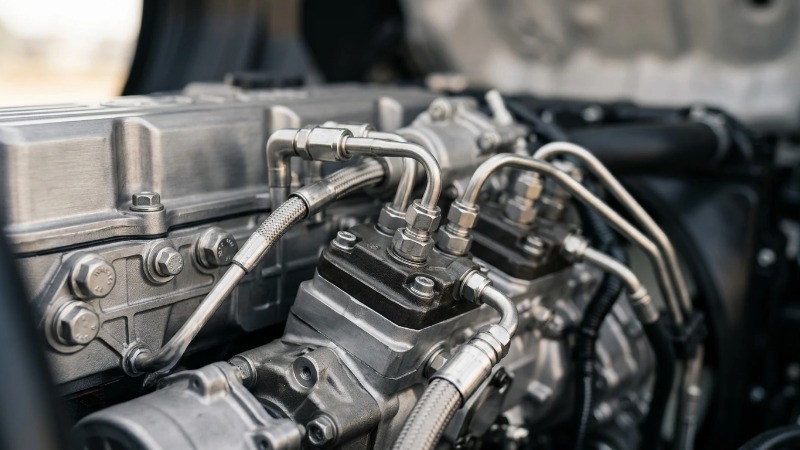
The diesel engine timing cover protects the timing gears and chains at the front of the engine. It seals critical components from contamination while retaining lubricating oil.
Many FAW engines use an aluminum front cover gasket to seal the timing cover against the block. This gasket must maintain a tight seal under heat cycling and vibration. Over time, gaskets can degrade.
Adjacent to this system, the crankshaft seal housing keeps oil from escaping around the rotating crankshaft. A failed seal here is one of the most common sources of front-end oil leaks in heavy truck engine components.
Understanding these parts helps buyers evaluate maintenance demands. Well-maintained sealing systems keep the engine clean and extend service intervals.
5.1.1 Diagnosing and Repairing Front Cover Oil Leaks
Front cover oil leaks often reveal themselves through oil residue at the lower front of the engine. Drivers may notice drops on the ground after parking or a burning smell from oil contacting hot surfaces.
Common causes include a degraded aluminum front cover gasket, a hardened crankshaft seal, or loosened cover bolts from vibration. Diagnosis involves cleaning the area, running the engine, and tracing the leak to its source.
The front cover oil leak repair procedure typically requires removing the fan, belts, and pulley to access the cover. Technicians then replace the gasket or seal, clean mating surfaces thoroughly, and torque bolts to specification.
Prompt repair prevents oil loss and protects the timing components. Ignoring a minor leak can escalate into serious engine damage, so early action pays off.
5.2 Engine Cooling Fan System Failures
The cooling fan system prevents the engine from overheating under load. When it fails, the consequences can be severe and costly. Recognizing early warning signs is essential.
Two components deserve close attention: the fan blade and the fan clutch. Both wear over time and require periodic inspection during routine service.
Identifying cracked fan blade symptoms early can prevent catastrophic failure. Warning signs include unusual vibration, a rattling noise near the front of the engine, or visible cracks on the blades during inspection.
Meanwhile, worn fan clutch diagnosis focuses on whether the clutch engages properly. A clutch that fails to engage leaves the fan spinning too slowly, while one stuck engaged wastes fuel and creates excess noise.
The most serious risk is engine overheating from fan damage. Insufficient airflow across the radiator drives coolant temperatures up, potentially warping the cylinder head or causing gasket failure. This is why cooling maintenance is non-negotiable.
5.2.1 Fan Blade Replacement Cost and Prevention
Addressing engine cooling fan blade failure proactively is far cheaper than repairing overheating damage. A cracked blade can shatter at high rpm, sending fragments into the radiator and surrounding components.
The fan blade replacement cost is modest when handled as preventive maintenance. In contrast, the downstream expense of a warped head or blown gasket from overheating is many times higher.
Prevention comes down to regular visual inspection, checking for hairline cracks, and confirming the fan clutch operates correctly. Replacing a suspect blade during scheduled service avoids roadside failures.
For sourcing genuine components, work with a verified customer service and parts channel to ensure quality and fitment.
5.3 Preventive Maintenance Schedule
A disciplined maintenance schedule is the single best predictor of fleet longevity. The table below outlines recommended service intervals for critical components on FAW heavy-duty trucks.
| Component | Inspection Interval | Service Action |
|---|---|---|
| Engine oil & filter | Every 15,000–20,000 km | Replace |
| Front cover gasket / seals | Every 60,000 km | Inspect for leaks |
| Cooling fan & clutch | Every 20,000 km | Inspect for cracks / engagement |
| Coolant system | Every 40,000 km | Check level & condition |
| Air filter | Every 15,000 km | Clean or replace |
| Brake system | Every 10,000 km | Inspect pads & lines |
| Transmission fluid | Every 60,000 km | Replace |
Adjust these intervals based on operating severity. Trucks working dusty construction sites or extreme climates may require more frequent servicing than highway units.
6. Sourcing from a Reliable Chinese FAW Truck Supplier
The supplier you choose can make or break your procurement experience. A reliable partner delivers quality trucks on time, while a poor one creates costly delays and quality disputes. This decision framework guides your selection.
Due diligence here protects your capital and your reputation with end customers. Let’s examine what defines a trustworthy export partner.
6.1 What Defines a Reputable FAW Commercial Truck Exporter
A reputable FAW commercial truck exporter demonstrates several clear signals. First, they hold proper export licenses and business registration. Second, they maintain factory authorization or a verifiable relationship with the manufacturer.
A legitimate FAW heavy duty truck manufacturer or authorized dealer will readily provide documentation. Transparency about sourcing, quality control, and after-sales terms is a hallmark of professionalism.
Track record also matters greatly. Established exporters can share references, case studies, and shipment history. You can review verified project examples on the cooperative case page to gauge experience.
6.2 Verifying Supplier Credentials and Export Licenses
Before committing, run through a due diligence checklist. This protects you when evaluating any Chinese FAW lorry for export supplier.
- Confirm business license and registration validity.
- Verify export licensing and customs credentials.
- Request factory authorization or dealership proof.
- Check quality certifications relevant to your market.
- Ask for recent shipment references and client contacts.
- Confirm the physical address and, if possible, arrange a visit or video tour.
Reputable suppliers welcome this scrutiny. Reluctance to provide documentation is itself a warning sign worth heeding.
6.3 Direct Manufacturer vs. Trading Company: Pros and Cons
Buyers often wonder whether to source directly from a manufacturer or through a trading company. Each channel has distinct advantages. The table below weighs the trade-offs.
| Factor | Direct Manufacturer | Trading Company |
|---|---|---|
| Pricing | Potentially lower | Slightly higher margin |
| Product range | Single brand focus | Multiple brands & models |
| Order flexibility | Larger MOQ often | More flexible MOQ |
| Export expertise | Variable | Usually strong |
| After-sales coordination | Direct but formal | Often more responsive |
For many international buyers, a professional trading partner with strong export expertise offers the best balance. They handle logistics complexity while sourcing across models to build your ideal fleet.
6.4 Red Flags and How to Avoid Procurement Scams
Unfortunately, the export market attracts some bad actors. Recognizing red flags protects your investment when dealing with any unverified Chinese commercial vehicle exporter.
- Prices dramatically below market with no clear explanation.
- Pressure to pay large deposits to personal accounts.
- Refusal to provide company documentation or references.
- Vague or evasive answers about specifications and warranty.
- No verifiable physical address or web presence.
Always use secure payment methods and insist on pre-shipment inspection. When something feels off, trust that instinct and verify further before sending funds.
7. After-Sales Support, Spare Parts, and Warranty
The purchase is just the beginning of a multi-year relationship. Long-term serviceability determines whether your fleet stays profitable or becomes a liability. This section covers the support factors that matter most.
Strong after-sales backing is often what separates a good supplier from a great one. Prioritize it in your evaluation.
7.1 FAW Truck Parts and Dealer Network Access
Reliable access to FAW truck parts and dealer networks is essential for minimizing downtime. When a truck breaks down, the speed of parts supply directly affects revenue loss.
A well-connected FAW Jiefang spare parts supplier maintains stock of common wear items and can source specialized components quickly. Ask potential suppliers about their parts logistics and typical lead times.
Regional dealer coverage adds another layer of security. Trucks sold in markets with established FAW service presence enjoy easier maintenance and better resale value. Consider this when choosing configurations.
7.2 Warranty Terms and Technical Training
Warranty coverage varies by supplier and market, so negotiate terms explicitly. Clarify what components are covered, for how long, and what the claim process involves.
Beyond warranty, technical training is a valuable inclusion. Well-trained mechanics diagnose issues faster and perform repairs correctly the first time. This reduces both downtime and repeat failures.
For volume buyers especially, insist on operator and maintenance training as part of the contract. It multiplies the value of every truck in your fleet over its service life.
7.3 Building a Long-Term Supply Relationship
The best procurement outcomes come from durable partnerships, not one-off transactions. A supplier who knows your fleet can anticipate parts needs and prioritize your servicing.
Consistent ordering builds trust and often unlocks better terms over time. Suppliers reward loyalty with faster response, stock reservations, and flexible payment arrangements.
To begin building such a relationship, start with a clear conversation about your long-term fleet plans. Explore how the main platform supports ongoing partnerships and repeat orders.
8. Ordering, Payment, and Logistics Process
A smooth procurement process depends on clear steps and secure methods. Understanding the workflow ahead of time prevents confusion and delays. This section maps the journey from inquiry to delivery.
Each stage carries important checkpoints. Follow them carefully to ensure a trouble-free import experience.
8.1 The Complete Order Workflow
The typical order workflow follows a logical sequence. Knowing each phase helps you plan timelines and prepare documentation.
- Inquiry and RFQ: Submit your requirements and request a quotation.
- Specification confirmation: Finalize configuration, color, and body options.
- Contract and deposit: Sign the sales agreement and pay the agreed deposit.
- Production: The truck is built to your confirmed specification.
- Pre-shipment inspection: Verify quality before the balance is paid.
- Shipping and documentation: The truck departs with full export papers.
- Delivery and clearance: Receive and clear the truck at your port.
Clear communication at each step keeps the process on track. A professional supplier will guide you through every phase transparently.
8.2 Payment Terms and Secure Transaction Methods
Protecting your funds is paramount. Several secure payment methods are standard in international truck trade.
- Letter of Credit (L/C): Bank-guaranteed payment tied to shipment documents, offering strong security.
- Telegraphic Transfer (T/T): Common for deposits and balances, usually split before and after inspection.
- Escrow services: A neutral third party holds funds until conditions are met.
Always insist on paying company accounts, never personal ones. Structuring payment so the balance follows successful pre-shipment inspection adds a valuable safeguard.
8.3 Shipping Methods and Delivery Timelines
Two main shipping methods dominate truck export: RoRo and container. Each suits different situations.
RoRo (Roll-on/Roll-off) lets the truck drive onto and off the vessel. It is cost-effective for complete, drivable units and common for single or small-batch orders.
Container shipping protects the truck inside a container, ideal for high-value units or markets requiring extra protection. Some trucks ship partially disassembled to fit containers.
| Method | Best For | Typical Transit |
|---|---|---|
| RoRo | Drivable complete units | Varies by route |
| Container | High-value or protection needs | Varies by route |
Delivery timelines depend on production lead time plus ocean transit. Confirm both when planning, and build in a buffer for customs clearance at your destination.
9. Real-World Application Case Studies
Theory is useful, but real-world performance is what buyers ultimately care about. These illustrative case studies demonstrate how FAW cargo trucks perform in demanding operational fleets.
The scenarios below reflect common deployment patterns across major export markets. They highlight the durability and value that drive repeat orders.
9.1 Long-Haul Freight Operations in Africa
African freight corridors test any truck to its limits. Long distances, variable fuel quality, and challenging road conditions demand robust engineering.
Fleets deploying the FAW heavy duty cargo truck on these routes report strong reliability and manageable maintenance. The 6×4 configuration handles heavy loads while maintaining acceptable fuel economy over long distances.
Operators particularly value the availability of common spare parts along established trade routes. When a component needs replacement, quick access keeps trucks earning rather than idle.
Over multi-year deployment, these trucks have demonstrated the durability that makes them a favored choice for regional long-haul work.
9.2 Construction and Bulk Material Transport
Construction sites punish equipment mercilessly. Rough terrain, heavy loads, and continuous cycling demand purpose-built machines.
In this segment, FAW 6×4 dump truck export units have proven their worth on infrastructure and mining projects. Reinforced tipping bodies and heavy-duty suspension absorb the constant strain of loading and unloading.
Site managers report that these dump trucks maintain productivity even on unpaved access roads. The robust chassis withstands the vibration and impact that would fatigue lesser vehicles.
This reliability under harsh conditions translates directly into project timelines met and budgets protected.
9.3 Regional Distribution Fleet Deployment
For distribution businesses, total cost of ownership drives fleet decisions. A wholesale purchase of multiple 4×2 and 6×4 cargo units allows optimized deployment across route types.
One typical outcome from a bulk fleet acquisition is improved per-unit economics through volume pricing and consolidated shipping. Standardizing on one manufacturer simplifies parts inventory and technician training.
Fleet managers who buy wholesale also benefit from negotiated support packages. Combined, these advantages produce a favorable cost-per-kilometer that strengthens the operation’s competitiveness.
10. Frequently Asked Questions (FAQ)
10.1 What is the average FAW cargo truck price for export?
The export price depends heavily on configuration, tonnage, engine output, cab type, and body specification. A light 4×2 sits at the entry level, while a high-horsepower 8×4 or tractor commands more. Because prices shift with material costs and demand, the most accurate figure comes from a direct quotation based on your exact specification and order volume.
10.2 How long does shipping from China take?
Total lead time combines production time and ocean transit. Production varies by whether the truck is in stock or built to order, while transit depends on your destination route and shipping method. Always confirm both figures with your supplier and add a buffer for customs clearance at your port.
10.3 Are FAW trucks compatible with local emission regulations?
FAW offers export variants meeting Euro III, IV, and V standards, plus China VI domestic spec. Compatibility depends on your country’s requirements. Confirm the emission tier your market mandates before ordering, since a non-compliant truck may face customs rejection or registration problems.
10.4 What is the minimum order quantity for wholesale purchases?
Minimum order quantities vary by supplier and channel. Trading companies often accommodate smaller and mixed orders, while direct manufacturers may require larger volumes. Wholesale and bulk programs unlock better per-unit pricing, consolidated shipping, and enhanced support, so discuss your target volume early in negotiations.
10.5 How do I source genuine FAW Jiefang spare parts?
Source parts through an authorized FAW Jiefang spare parts supplier or your original exporter. Genuine parts ensure correct fitment and durability. Ask about parts logistics, stock availability of common wear items, and typical lead times when selecting your supplier, since fast parts access minimizes fleet downtime.
10.6 Which is better: FAW cargo truck or Foton trucks for sale?
Both are capable Chinese brands, and the right choice depends on your application. FAW is often favored for its long export history, extensive parts availability, and strong cost-to-value ratio in heavy-duty roles. Foton trucks for sale also serve many markets well. Evaluate parts support and service familiarity in your specific region before deciding.
10.7 What warranty do FAW trucks come with?
Warranty terms vary by supplier, model, and market. Coverage typically addresses major components for a defined period or mileage. Always clarify exactly what is covered and the claim process before signing. For volume orders, negotiate warranty extensions and technical training into your contract to maximize long-term value.
11. Get Your FAW Cargo Truck Quote Today
Sourcing the right commercial vehicle is a strategic decision that shapes your operation for years. Armed with the technical knowledge, pricing insight, and supplier-vetting framework in this guide, you are ready to move forward with confidence.
Whether you need a single unit, a mixed fleet, or a wholesale volume order, working with a verified Chinese FAW truck supplier ensures quality, transparent pricing, and dependable after-sales support. The difference between a smooth import and a costly headache comes down to choosing the right partner.
Ready to take the next step? Request a customized proposal tailored to your specification, market, and budget. Get accurate specifications, transparent pricing, and expert guidance on shipping and compliance for your region.
Contact our team now to request your personalized FAW cargo truck quote. Reach out through the contact page for pricing and proposals, explore the complete truck lineup to compare models, or connect with customer service for parts and technical support. Your reliable fleet starts with the right partner today.