




Introduction
Heavy-duty trucks remain the backbone of global construction, mining, overland freight and municipal works. As infrastructure investment expands across Africa, Central Asia, the Middle East, Southeast Asia and Latin America, more fleet operators and independent importers search for durable heavy vehicles with manageable long-run operating costs.
Many buyers compare premium European and American heavy truck brands first. While those established names deliver proven performance, their upfront outlay and ongoing spare parts expenses create heavy pressure for medium and large fleet projects. For that reason, Chinese heavy-duty OEMs have gained steady traction in emerging and mid-market regions over the last two decades.
Shacman sits among China’s most seasoned heavy truck manufacturers. Its export-focused heavy-duty lineup is built to withstand rough terrain, high dust, extreme heat and cold, and low-grade fuel supplies common in remote project zones. Even so, first-time overseas buyers often struggle to separate legitimate factory-backed supply channels from middleman traders. They also face confusion around model selection, regional certification, export paperwork and port logistics.
This practical export guide walks you through the full buying journey. We cover Shacman heavy-duty model families, core technical specifications, factory customization options, supplier vetting rules, step-by-step export procedures, required certificates, ocean shipping choices, common procurement pitfalls and long-term fleet maintenance advice. Short paragraphs and transitional phrasing are used throughout to keep readability high for Google and human readers alike.
What Makes Shacman Heavy-Duty Trucks Popular for Overseas Importers
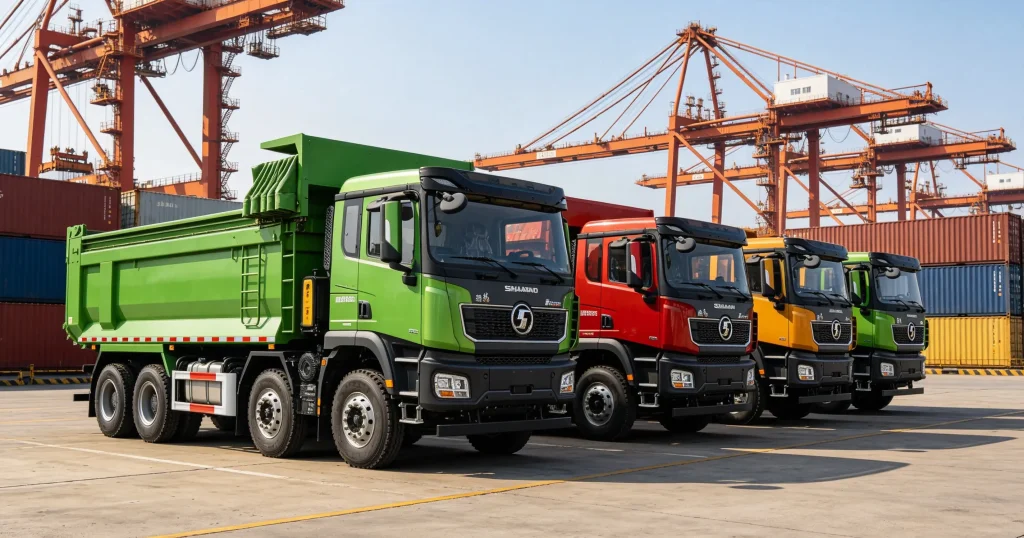
Before diving into models and export formalities, it helps to understand why repeat international buyers keep ordering Shacman heavy-duty units. Real-world field reliability is the main driver of repeat orders, rather than marketing claims alone.
To start with, Shacman builds export heavy trucks around mature, widely supported core assemblies. Most overseas-spec heavy-duty trucks pair Weichai diesel engines, Fast manual or automated gearboxes and Hande heavy axles. This three-major assembly setup has accumulated millions of operating hours across tough global sites. One practical upside is broad aftermarket compatibility; service teams across many developing markets already know how to service these components.
Beyond core powertrain reliability, export chassis receive targeted reinforcement. Heavy-duty Shacman frames use thicker high-tensile steel. Suspension, steering and air brake systems are reinforced for continuous heavy loads and unpaved site roads. This matters because many overseas heavy trucks spend most of their working life off paved highways, not on smooth intercity routes.
Factory-level customization is another major advantage. Shacman can adjust driving position, emission calibration, cab layout, cooling packages, air filtration and body configurations before shipment. Proper factory modification avoids risky post-arrival rework that can invalidate registration or local vehicle compliance.
A final practical benefit is the brand’s established export infrastructure. Authorized export partners follow fixed inspection checklists, standardized document packages and scheduled loading processes for RoRo or container shipment. For fleet buyers, that structure lowers the chance of missing paperwork, delivery hold-ups or configuration mismatches.
If you want to verify the formal export background and service capacity of our supply channel, review our company profile to see our factory cooperation framework and global service footprint.
Shacman Heavy-Duty Product Families Built for Export
Shacman’s heavy-duty export portfolio covers haulage, earthmoving, bulk transport and special engineering work. Each model family serves distinct duty cycles and site conditions. Picking the wrong axle layout or chassis rating will raise downtime and hurt project economics, so matching vehicle type to work profile is critical.
Shacman Heavy-Duty Dump Trucks
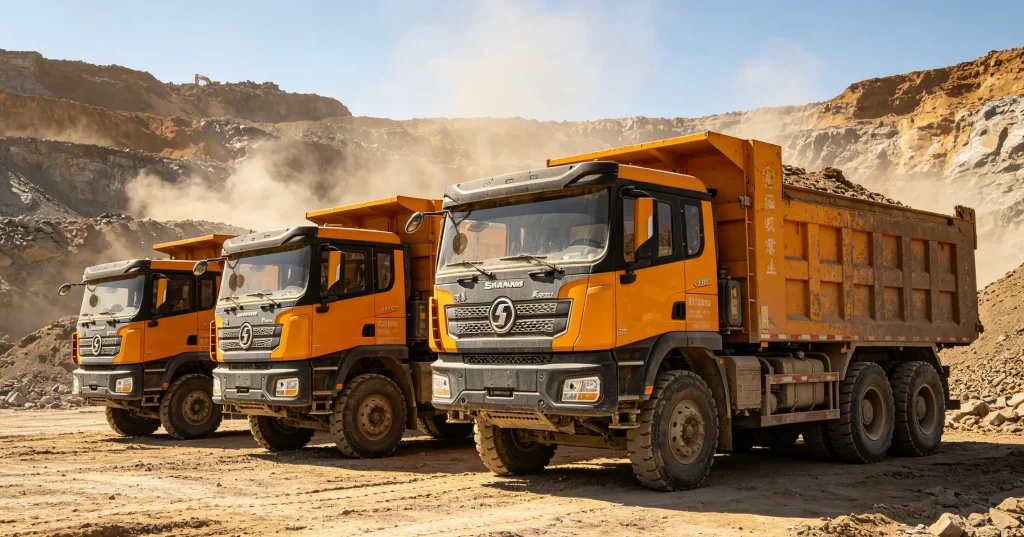
Heavy-duty dump trucks form the highest-volume Shacman export category. These units serve mine sites, quarry operations, road construction, land reclamation and urban demolition waste haulage. The most common export heavy-duty layouts are 6×4 and 8×4.
The 6×4 heavy-duty dump configuration balances maneuverability and load capacity. It suits medium mines, feeder haul roads, building sites and locations with tight turning areas. It remains the default choice for many mid-sized contractors and municipal earthwork teams.
On the other hand, the 8×4 heavy-duty dump variant targets high-volume mining and large quarry fleets. Its extra axle spreads the load, protects the chassis under repeated maximum weight cycles and raises per-trip material volume. Buyers running continuous high-tonnage cycles often prefer this layout for long mine campaigns.
Export heavy-duty dump trucks come with reinforced cargo body options. Plate thickness, wear liners and hydraulic cylinder capacity can be adjusted at the factory. The export hydraulic system is tuned to resist dust ingress and thermal cycling, lowering leakage risk in hot, abrasive working environments.
Shacman Heavy-Duty Tractor Heads
Shacman heavy-duty tractor heads are designed for container transport, bulk grain haulage, fuel tank trailers and overland cross-border freight. Export tractor heads mainly include 4×2 and 6×4 heavy-duty variants.
The 6×4 heavy-duty tractor is the standard pick for heavy trailer weights, mountain corridors and poor secondary roads. Its dual rear drive axle delivers traction on wet, muddy or graded haul roads. Long-haul cross-border fleets often specify this heavy-duty layout for reliability across variable terrain.
Meanwhile, 4×2 heavy-duty tractors fit port shuttle work, lighter container runs and highway-focused fleets where overall weight limits are tighter. They consume less fuel in highway cruise cycles and cost less to maintain for pure on-pavement operations.
Export heavy-duty tractor cabs focus on long-shift comfort. Factory options include suspended driver seats, sleeper berths, upgraded air conditioning and improved sound deadening. Braking systems follow heavy-duty export standards, with auxiliary retarder options for persistent downhill routes.
Shacman Heavy-Duty Cargo and Flatbed Trucks
Heavy-duty rigid cargo and flatbed chassis serve machinery transport, construction material delivery and general bulk goods distribution. These heavy-duty base chassis can accept box bodies, stake sides, flat decks and some specialized superstructures.
This heavy-duty rigid range works well when local rules restrict trailer access or height and width limits are strict. Many regional logistics firms and equipment rental contractors rely on these heavy-duty rigids for daily scheduled runs.
Shacman Heavy-Duty Special Engineering Chassis
Beyond standard haul and dump models, Shacman heavy-duty export chassis support professional superstructure fit-out. Common export builds include concrete mixers, heavy-duty water bowsers, fuel tankers, garbage compactors and truck-mounted cranes. All special heavy-duty vehicles start from a validated export chassis, with superstructure work completed by certified fabricators.
To filter the full heavy-duty lineup and compare body options across Shacman export variants, visit our product category page for structured model browsing.
Key Technical Specifications for Export-Spec Shacman Heavy-Duty Trucks
Heavy-duty truck performance hinges on powertrain, chassis strength, brake architecture and filtration upgrades for overseas duty cycles. Export-spec Shacman heavy trucks are not identical to domestic Chinese market units. Several systems receive upgrades for cross-border operation.
Heavy-Duty Engine Options for Export
Most export Shacman heavy-duty trucks use Weichai heavy-duty diesel engines across a wide horsepower band. The engine platform is built for sustained heavy load and is calibrated to tolerate lower-quality diesel often found in remote regions.
Air intake protection is a key export upgrade. Heavy-duty units bound for mining and desert zones get multi-stage air filtration to trap fine dust before it reaches cylinder liners. This simple upgrade drastically cuts abrasive engine wear on dusty sites.
Cooling packages are also customizable. Buyers operating in persistent high-temperature zones can specify larger radiators and heavy-duty fan assemblies to avoid overheating during continuous slow, heavy work.
Transmission and Clutch for Heavy-Duty Cycles
Fast heavy-duty gearboxes are the standard fitment. Buyers can select 10-speed, 12-speed or 16-speed manual units depending on terrain and load weight. The heavy-duty gear ratios are tuned to deliver strong low-end torque for climbing while maintaining efficient cruising on open highways.
Automated manual transmission, or AMT, is available for heavy-duty tractor fleets. AMT reduces driver fatigue on long overland routes and can help maintain consistent fuel use in highway haulage operations.
Heavy-Duty Axles, Frame and Suspension
Hande heavy-duty axles underpin export Shacman heavy trucks. These axles are built for repeated heavy loads and shock loads common on unmaintained site roads. Heavy-duty axle housing and reinforced wheel hubs reduce premature failure in high-cycle mining work.
Standard heavy-duty export suspension uses multi-leaf heavy-duty springs. Reinforced shock absorbers are an option for sites with constant rough travel. For highway-focused heavy-duty tractor fleets, air suspension can be specified to protect sensitive cargo and improve ride quality.
Heavy-Duty Brake and Safety Systems
All export Shacman heavy-duty trucks use dual-circuit air brake systems as standard. This heavy-duty brake layout maintains stopping capability even if one circuit develops a fault. Heavy-duty downhill operations can add engine or hydraulic retarders to reduce brake fade and lining wear.
Additional heavy-duty safety features include overspeed protection, overload limiting and tire pressure monitoring on selected export builds. These features help fleet managers reduce accident risk and extend service intervals in remote sites where roadside service is scarce.
How to Match Shacman Heavy-Duty Trucks to Your Project or Fleet Workflow
Many new importers make the mistake of ordering based only on advertised power or visual appearance. The most economical heavy-duty fleet comes from matching axle configuration, chassis rating and body type to actual working conditions.
For short-cycle earthmoving, quarry run-of-mine haul and small-to-medium construction sites, the 6×4 heavy-duty dump truck usually delivers the best balance. It turns well on cramped sites and does not carry extra chassis weight that would raise fuel use on moderate loads.
For large open-pit mines, high-volume quarries and long heavy haul cycles, the 8×4 heavy-duty dump truck is the logical choice. Its extra axle spreads load stress and raises volumetric output per shift, which directly lowers the cost per tonne moved.
For container and bulk trailer haulage over long cross-border routes, the 6×4 heavy-duty tractor head is preferred for traction and stability under heavy trailer loads. If your work stays mostly on paved port and highway routes with moderate trailer weights, a 4×2 heavy-duty tractor may cut running costs.
For specialized jobs such as concrete delivery, water suppression, fuel transport or crane work, start with the required superstructure weight and operating rules. Then select a heavy-duty export chassis rated for that permanent fitted equipment.
Factory Customization for Global Heavy-Duty Import Compliance
One of the biggest advantages of buying Shacman heavy-duty trucks direct for export is factory modification. Trying to rework steering, emissions or wiring after arrival often creates compliance headaches and registration delays.
Left-Hand Drive and Right-Hand Drive Factory Build
Shacman can produce heavy-duty export trucks in either left-hand drive or right-hand drive from the assembly line. This is a full OEM adjustment covering steering, pedal layout, wiper geometry, mirrors and dash controls. It is not a simple aftermarket conversion, which is critical for registration in many countries.
Emission Calibration for Regional Import Rules
Export heavy-duty trucks can be built to meet Euro 2, Euro 3, Euro 4, Euro 5 or Euro 6 standards. Before locking in an order, confirm the emission tier your destination country enforces for commercial vehicle import and registration. Choosing the wrong emission spec can leave units stuck at port or unable to be licensed for road use.
Climate and Site-Specific Heavy-Duty Upgrades
Heavy-duty trucks for hot, dusty regions get upgraded air filtration, heavy-duty cooling and heat-resistant electrical components. Units bound for cold mountain or high-latitude areas can include cold-start aids, battery thermal protection and low-temperature lubrication preparation.
Functional Heavy-Duty Body and Component Selection
Buyers may specify dump body plate thickness, hydraulic cylinder brands, cab roof style, tire brands, paint schemes and spare parts bundling. All these heavy-duty custom items should be captured in the signed technical specification sheet before production begins.
Full Step-by-Step Export Process to Buy Shacman Heavy-Duty Trucks from China
Cross-border heavy-duty truck procurement follows a defined workflow. Skipping steps or relying only on verbal agreements creates risk. The sequence below applies to most direct export orders for Shacman heavy-duty units.
Step 1: Define Heavy-Duty Technical and Compliance Requirements
Start by documenting your non-negotiable items: heavy-duty model type, axle configuration, drive side, emission standard, body specs, destination port and local certification rules. A reliable export team will use this list to filter viable heavy-duty configurations and flag compliance risks early.
Step 2: Formal Quotation Review and Contract Signing
Once the heavy-duty specification is settled, the supplier issues a detailed quotation. It should state the heavy-duty configuration list, trade term, production lead time, loading window, warranty scope and document package. After mutual confirmation, a formal export sales contract is signed.
The contract must attach the heavy-duty technical appendix. This appendix locks in engine, axle, transmission, body and optional extras. It serves as the reference for pre-shipment inspection and prevents substitution of lower-spec components.
Step 3: Production Scheduling and Progress Updates
After deposit confirmation, the factory schedules heavy-duty chassis production. Many export buyers request periodic photos or short video updates covering chassis assembly, powertrain fitment, body fabrication and paintwork. Each stage carries internal factory quality checks before moving downstream.
Step 4: Pre-Shipment Inspection for Heavy-Duty Units
Finished heavy-duty trucks undergo a full pre-shipment check before loading. Inspectors verify appearance, starting performance, brake function, hydraulic operation, electrical circuits, tire condition and accessory completeness. Only heavy-duty trucks passing inspection move to shipment preparation.
Step 5: China Export Documentation and Customs Declaration
The export supplier prepares the complete document pack: commercial invoice, packing list, certificate of origin, factory quality certificate and vehicle conformity documents. The team completes China export customs clearance so heavy-duty units can be released to the port for loading.
For deeper guidance on regional certification rules and document checklists for heavy-duty commercial vehicle imports, refer to our knowledge base.
Step 6: Ocean Transport and Cargo Tracking
Based on order size and port infrastructure, heavy-duty trucks ship via RoRo vessel, flat rack container or bulk carrier. RoRo is the most common for new heavy-duty fleets because vehicles are driven aboard without disassembly. During transit, you can receive vessel tracking updates until arrival at the destination port.
Step 7: Destination Customs Clearance and Vehicle Collection
Once heavy-duty trucks arrive, the buyer or appointed customs broker submits the import paperwork, settles applicable duties and completes local customs formalities. After clearance, the heavy-duty units can be collected, inspected locally and registered for operation.
Mandatory Certification for Imported Heavy-Duty Commercial Vehicles
Nearly every country enforces type or conformity certification for imported heavy-duty trucks. Without the correct certification, heavy-duty units cannot be registered or legally driven on public roads.
Shacman heavy-duty export trucks can be prepared for several widely requested schemes. Examples include SONCAP for Nigeria, COC systems for many East African markets, GCC conformity for Middle Eastern nations, plus region-specific emissions and safety paperwork for Southeast Asia and Latin America.
Certification must be planned at the order stage. Some heavy-duty configurations require specific labeling, test reports or documentation formatting. The supplier can coordinate the required certification work while heavy-duty trucks are still in production, rather than trying to retroactively fix paperwork after shipment.
Shipping Choices for Exported Shacman Heavy-Duty Trucks
Ocean shipping is a major part of the total import workflow. Each heavy-duty shipping method balances cost, transit time and risk of cosmetic or mechanical damage.
RoRo Vessel Shipping
RoRo is the preferred method for new heavy-duty truck fleets. Heavy-duty units drive onto the vessel under their own power and are secured inside the weathertight cargo deck. There is no disassembly, which preserves factory condition. RoRo schedules are stable for many major trade lanes and suit medium to large heavy-duty orders.
Flat Rack Container Shipping
Flat rack containers work well for smaller heavy-duty orders or ports without regular RoRo calls. Heavy-duty trucks are fixed to the flat rack with professional lashing plans. This method protects against collision and saltwater exposure, though loading and securing take more preparation time than RoRo.
Bulk Carrier Charter for Large Heavy-Duty Fleets
For very large heavy-duty fleet procurements supporting major construction or mining projects, custom bulk carrier charter may be viable. Per-unit freight can become more economical at scale, though this option needs longer lead times and higher minimum order volumes.
How to Vet Trusted Shacman Heavy-Duty Export Suppliers
Supplier quality directly shapes heavy-duty truck condition, document correctness, on-time loading and after-sales spare parts support. Many importers encounter trouble when they select brokers without stable factory access or heavy-duty export experience.
First, confirm the supplier holds proper export qualifications and long-standing factory cooperation. Credible heavy-duty export partners can share factory visit footage, workshop imagery and past heavy-duty shipment records for similar destination markets.
Second, assess their technical capacity. A competent heavy-duty export team should ask detailed questions about local certification, terrain, fuel quality and duty cycle before suggesting a chassis or body. Avoid suppliers who push generic heavy-duty builds without verifying your local import rules.
Third, evaluate spare parts logistics. A heavy-duty truck fleet loses money when waiting for critical components. Reliable export suppliers maintain organized spare parts pipelines for wear items and heavy-duty core assemblies, with options for sea or air freight when urgent.
You can review real heavy-duty shipment references and international project deliveries in our cooperative cases to see how we support fleet buyers across multiple regions.
Common Heavy-Duty Truck Import Mistakes and Risk Mitigation
Even experienced fleet managers can face avoidable setbacks when importing heavy-duty trucks from China. Understanding these recurring issues helps you build safeguards into your buying process.
The first frequent error is relying on verbal configuration promises. Heavy-duty specs must be written into the contract appendix. Every key item — engine rating, axle layout, emission level, drive side and body thickness — should be listed and mutually acknowledged.
The second common risk is ignoring local import certification and tariff rules. Some buyers focus only on the heavy-duty truck itself and overlook conformity requirements, resulting in port detention, extra fees or inability to register vehicles.
Third, skipping formal pre-shipment inspection creates exposure. A structured check confirms heavy-duty truck function, accessory kits and appearance before the unit leaves China. It is far easier to resolve issues at the factory than after arrival overseas.
Fourth, weak after-sales agreements hurt fleet uptime. The heavy-duty purchase contract should clearly define warranty coverage, claim procedures, spare parts lead times and remote technical support channels.
Global After-Sales and Spare Parts Support for Shacman Heavy-Duty Trucks
Heavy-duty trucks are capital assets meant to operate for years. After-sales support and spare parts availability define the total lifecycle value of your fleet, not just the initial purchase.
Genuine export Shacman heavy-duty trucks carry factory-backed warranty coverage for core powertrain components such as engine, gearbox and heavy axles. This warranty addresses manufacturing defects, not damage from improper operation or poor maintenance.
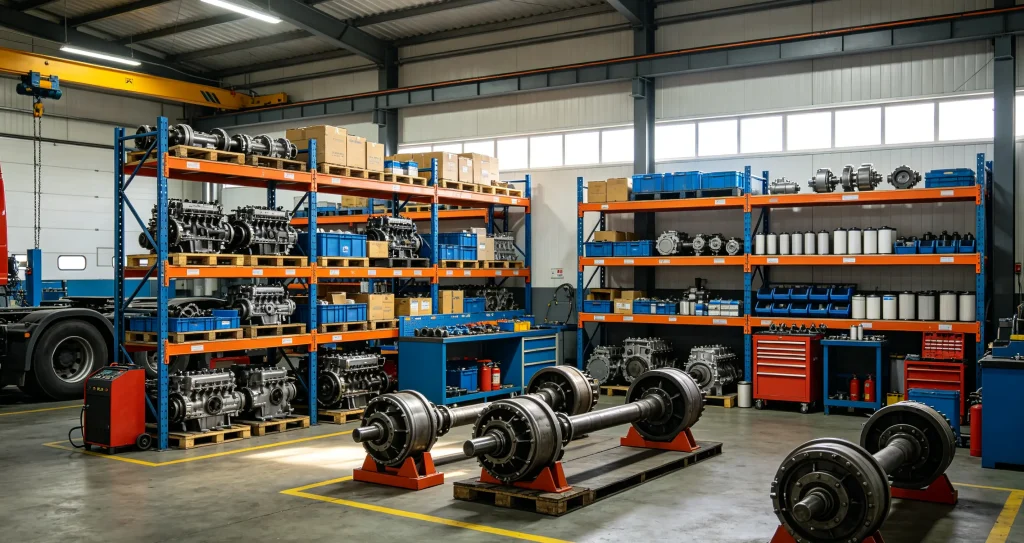
For routine and emergency parts supply, established heavy-duty export suppliers maintain stocked warehouses for common wear parts and heavy-duty assemblies. Standard spare parts move by sea, while critical components can be prioritized for air freight to reduce fleet downtime.
Technical support also includes remote video diagnostics and maintenance guidance. This helps local mechanics learn heavy-duty service routines, fault isolation and proper rebuild procedures without waiting for an overseas technician to travel to site.
To read the full service framework and warranty terms for heavy-duty export vehicles, go to our customer service page.
Heavy-Duty Fleet Maintenance Best Practices for Long Service Life
Good maintenance directly extends heavy-duty truck service life and cuts unplanned downtime. For fleet operators running multiple Shacman heavy-duty units, standardized service schedules create predictable operating costs.
Stick to scheduled fluid and filter changes. Heavy-duty engines working in dusty, hot environments consume filters faster. Following factory intervals protects cylinder bores, bearings and fuel injectors from accelerated wear.
Inspect the heavy-duty brake system, tire condition and suspension components at regular intervals. Heavy loads and rough roads place high stress on brake linings, drums, leaf springs and shock absorbers. Early replacement prevents roadside failures and serious safety incidents.
Preserve air intake and cooling system integrity in high-dust or high-heat locations. Cleaning air filters and radiators prevents power loss, overheating and premature heavy-duty engine wear.
Create fleet logs for each heavy-duty unit. Record operating hours or mileage, service work, parts replaced and fault events. These records help forecast component replacement, evaluate driver operating habits and support resale or fleet renewal planning later.
Conclusion
Shacman heavy-duty trucks represent a practical option for global fleet buyers seeking robust, customizable heavy commercial vehicles backed by a mature Chinese OEM and established export workflows. Their heavy-duty chassis, proven powertrain combinations and factory modification capacity suit mining, construction, overland freight and municipal heavy transport across many emerging markets.
Success in importing Shacman heavy-duty trucks depends less on negotiation alone and more on careful planning: matching the heavy-duty configuration to your site conditions, confirming local certification rules before production, locking specs into a written contract, completing pre-shipment inspection and securing a reliable spare parts pipeline.
When managed properly, direct import of Shacman heavy-duty trucks lets contractors and fleet operators build capable working fleets with manageable long-run maintenance and parts access.
If you need heavy-duty model matching, configuration consultation, export document guidance or bulk fleet procurement support, reach out to our export team through our contact page to receive a tailored heavy-duty export plan.