




Introduction
Heavy-duty commercial vehicles form the backbone of modern infrastructure and logistics across every continent. From open-pit mines in Africa to construction sites in Southeast Asia, from long-haul fleets in the Middle East to agricultural operations in South America, reliable trucks keep economies moving.
Among Chinese heavy truck brands, Shacman has built a strong international reputation over the past two decades. The brand traces its roots to the former Shaanxi Automobile Manufacturing Company, which began producing heavy trucks in the 1960s. Today, Shacman exports to more than 100 countries and regions worldwide.
Many international buyers want to import Shacman trucks directly from China, but the process can feel overwhelming at first. Language barriers, complex trade documentation, shipping logistics, and supplier verification all create potential hurdles.
This guide breaks down the entire import process into clear, actionable steps. It covers model selection, configuration understanding, price calculation, shipping methods, customs clearance, and after-sales support. Whether you are a first-time importer or an experienced fleet manager, you will find practical information here.
By the end of this guide, you will have a complete roadmap for sourcing genuine Shacman trucks from China with confidence and minimal risk.
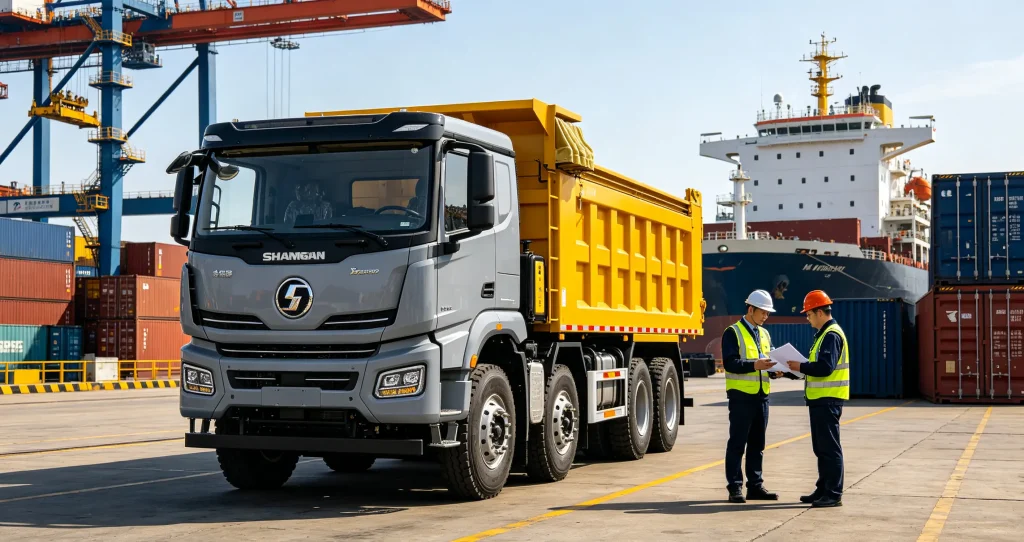
Why Global Buyers Choose Shacman Trucks
Shacman trucks have earned trust in overseas markets for several compelling reasons. Understanding these advantages helps you make an informed purchasing decision.
First and foremost, Shacman offers exceptional value for money. The trucks deliver heavy-duty performance at a price point significantly lower than comparable European or American brands. This price advantage does not come at the cost of quality, as Shacman uses proven powertrain components from established suppliers.
Secondly, Shacman trucks are engineered for harsh operating conditions. Many export markets feature unpaved roads, extreme temperatures, and heavy payload requirements. Shacman designs its vehicles with reinforced chassis, robust suspension systems, and high-ground-clearance configurations specifically for these environments.
Thirdly, parts availability is a major strength. Shacman has established extensive parts distribution networks across Africa, the Middle East, Southeast Asia, and Central Asia. This means downtime for maintenance and repairs stays minimal, which directly impacts your operational profitability.
Furthermore, Shacman offers extensive customization options. Different markets have different regulations, fuel qualities, and operational needs. Shacman can configure trucks for left-hand or right-hand drive, various emission standards, specific body types, and climate-specific adaptations.
Finally, the brand benefits from strong government support for export. China Belt and Road Initiative has expanded trade infrastructure in many developing regions, making it easier to ship Chinese vehicles and establish local service networks.
Full Range of Shacman Truck Models for Export
Shacman produces a comprehensive lineup of heavy commercial vehicles. Understanding the available categories helps you select the right model for your specific application.
Dump Trucks
Dump trucks, also called tipper trucks, are among Shacman most popular export models. They are used extensively in mining, construction, infrastructure development, and bulk material transportation.
Shacman dump trucks are available in 6×4 and 8×4 configurations. The 6×4 model typically offers a 20 to 30 cubic meter cargo capacity, while the 8×4 model can handle 30 to 40 cubic meters. Both configurations come with various engine power options ranging from 340 to 460 horsepower.
The hydraulic tipping system uses either a front-mounted or mid-mounted cylinder design. Front-mounted cylinders provide greater lifting force and are preferred for heavy-duty mining applications. Mid-mounted cylinders are more common for standard construction use.
Tractor Heads
Tractor heads, also known as prime movers or haulage trucks, are designed for long-distance freight transportation. They pull semi-trailers carrying containers, bulk goods, or specialized cargo.
Shacman tractor heads are available in 4×2 and 6×4 configurations. The 6×4 version is the most popular for international export due to its superior traction and load capacity. Engine options typically range from 380 to 500 horsepower.
Cab options include standard day cabs, sleeper cabs, and high-roof sleeper cabs. Long-haul operators generally prefer sleeper cabs with comfortable bunks, air conditioning, and ample storage space.
Cargo Trucks
Cargo trucks, also called rigid trucks, feature an integrated cargo body mounted directly on the chassis. They are commonly used for medium-distance freight delivery, building material transportation, and distribution operations.
Shacman cargo trucks come in 4×2, 6×2, 6×4, and 8×4 configurations. Cargo body options include flatbed, stake, box van, and refrigerated designs. Payload capacities range from 10 to 40 tons depending on the configuration.
Specialized Trucks
Shacman also manufactures a range of specialized vehicles for specific industries. These include concrete mixer trucks, water tank trucks, fuel tankers, garbage compactor trucks, and truck-mounted cranes.
Specialized trucks typically use a standard Shacman chassis with custom upper body equipment installed by certified body builders. This modular approach ensures reliable base vehicle performance while meeting specific operational requirements.
Shacman Dump Trucks: Detailed Configurations and Applications
Dump trucks represent the largest segment of Shacman export sales. Understanding the available configurations helps you match the right truck to your operational needs.
6×4 Dump Truck Configuration
The 6×4 dump truck is the most versatile option for medium to heavy-duty operations. It features three axles total, with the rear two axles providing driving force. This configuration balances maneuverability with load capacity.
Standard engine options include the Weichai WP10 series at 340 to 380 horsepower, and the WP12 series at 400 to 430 horsepower. These engines are known for their durability and fuel efficiency under heavy load conditions.
The transmission is typically a Fast 10-speed or 12-speed manual gearbox. Fast transmissions are widely used in Chinese heavy trucks and have a proven track record for reliability. Some models offer an optional 16-speed transmission for specialized applications.
The cargo body typically ranges from 18 to 25 cubic meters in standard configuration. High-volume bodies can reach up to 30 cubic meters. Body materials include high-strength steel, abrasion-resistant steel, and lightweight aluminum alloy options.
Typical applications for the 6×4 dump truck include construction site material hauling, road building projects, quarry operations, and general earthmoving. It performs well on both paved roads and improved unpaved surfaces.
8×4 Dump Truck Configuration
The 8×4 dump truck is designed for maximum payload capacity. It features four axles, with the middle two axles providing driving force and the front and rear axles for steering and load distribution.
Engine options are generally higher powered, ranging from 380 to 460 horsepower. The Weichai WP13 series at 430 to 460 horsepower is a common choice for heavy mining applications.
The cargo body ranges from 25 to 35 cubic meters in standard configuration, with custom options available up to 40 cubic meters. The reinforced chassis frame handles the additional weight without flexing or deformation.
The 8×4 configuration is ideal for large-scale mining operations, major infrastructure projects, and high-volume bulk material transportation. It is the preferred choice when maximizing payload per trip is the primary operational goal.
It is worth noting that the 8×4 configuration has a larger turning radius than the 6×4. This makes it less suitable for confined work sites or narrow mountain roads. Consider your site conditions carefully before selecting this configuration.
Shacman Tractor Heads: Long-Haul Logistics Solutions
Tractor heads are the second most popular Shacman export category. They are essential for container transportation, long-haul freight, and logistics operations across all regions.
6×4 Tractor Head Configuration
The 6×4 tractor head is the workhorse of international freight operations. It offers excellent traction for heavy loads and performs reliably on both highways and secondary roads.
Engine options range from 380 to 500 horsepower. The Weichai WP13 series at 480 to 500 horsepower is popular for long-haul applications where consistent highway speed is important. Lower horsepower options offer better fuel economy for regional distribution.
The transmission is typically a Fast 12-speed manual or 16-speed manual. Automated manual transmissions (AMT) are available as an option on newer models, reducing driver fatigue on long routes.
Cab options include the standard X3000 cab and the premium X6000 cab. The X6000 features aerodynamic design, improved fuel efficiency, and a more comfortable interior with advanced driver assistance features.
Sleeper cab configurations include a single bunk or double bunk design. The double bunk is useful for team driving operations where two drivers alternate shifts to maximize route efficiency.
4×2 Tractor Head Configuration
The 4×2 tractor head is lighter and more fuel-efficient than the 6×4. It is suitable for medium-load freight, container transportation on paved roads, and regional distribution operations.
Engine options typically range from 340 to 400 horsepower. The lower weight and smaller engine translate directly to better fuel economy, which is important for cost-sensitive logistics companies.
This configuration is popular in markets with well-developed highway infrastructure and weight regulations that favor lighter vehicles. It is also commonly used for port drayage operations where containers are moved short distances between ports and warehouses.
Key Technical Specifications Explained
Understanding technical specifications helps you compare models accurately and avoid purchasing a truck that does not meet your operational requirements.
Engine Power and Torque
Engine power is measured in horsepower (HP) or kilowatts (kW). Higher horsepower provides better acceleration, higher top speed, and improved ability to climb steep grades with heavy loads.
Torque, measured in Newton-meters (Nm), is equally important. Torque determines the pulling force available at low engine speeds. High torque at low RPM is essential for heavy-load starting and climbing.
For dump trucks operating in hilly mining areas, prioritize high torque over peak horsepower. For tractor heads running on flat highways, horsepower is more important for maintaining consistent speed.
Transmission Options
The transmission controls how engine power is delivered to the wheels. More gears provide better flexibility across different driving conditions, but also require more driver skill and attention.
10-speed transmissions are standard for basic applications. 12-speed transmissions offer a good balance for general use. 16-speed transmissions are preferred for specialized heavy-haul or mountainous terrain operations.
AMT (Automated Manual Transmission) options are becoming more popular. They combine the fuel efficiency of a manual transmission with the ease of an automatic, reducing driver fatigue on long routes.
Axle Configuration
Axle configuration is described using two numbers. The first number indicates the total number of axles, and the second indicates the number of driven axles. For example, 6×4 means three axles total with two driven axles.
More driven axles provide better traction in slippery or off-road conditions. More total axles allow for higher gross vehicle weight (GVW) and better load distribution.
Select the axle configuration based on your typical load weight, road conditions, and local weight regulations. Using an overloaded truck damages components and creates safety risks.
Suspension System
Shacman trucks offer both leaf spring suspension and air suspension options. Leaf spring suspension is standard for most export models due to its durability and low maintenance requirements.
Air suspension provides a smoother ride and better load protection. It is commonly used for tractor heads pulling fragile cargo or for high-end long-haul applications. Air suspension also allows adjustable ride height for easier trailer coupling.
For dump trucks operating in rough mining conditions, heavy-duty leaf spring suspension with additional shock absorbers is the recommended choice.
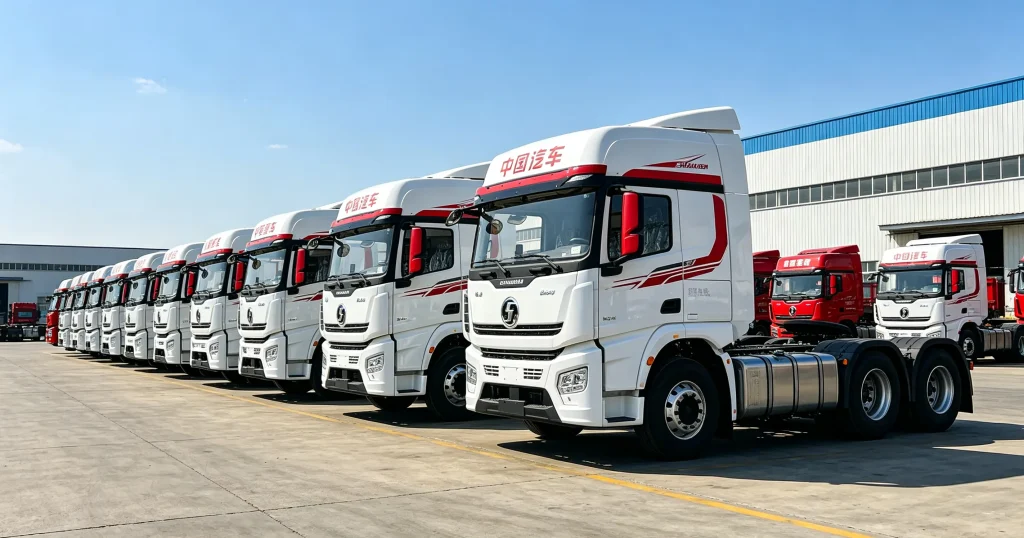
Step-by-Step Import Process for Shacman Trucks
Importing trucks from China follows a structured process. Understanding each step helps you plan timelines and avoid costly delays.
Step 1: Define Your Requirements
Before contacting any supplier, clearly define your requirements. This includes the truck type, configuration, quantity, target delivery date, and any special customization needs.
Create a detailed specification sheet listing engine power, transmission type, axle configuration, cargo body dimensions, drive side (left or right), and any climate adaptations needed for your market.
Having clear requirements from the start helps suppliers provide accurate quotes and reduces the risk of configuration errors. It also makes it easier to compare quotes from different suppliers on an apples-to-apples basis.
You can browse the full range of available models on the truck category page to get a better sense of what configurations are available.
Step 2: Supplier Selection and Quotation
Research and identify potential suppliers. Look for companies with proven export experience, positive customer references, and proper business licensing. Avoid suppliers that offer prices significantly below market average, as this often indicates used components or quality shortcuts.
Request detailed quotations from at least two to three suppliers. Each quotation should clearly list the truck configuration, unit price, payment terms, delivery time, warranty terms, and any additional costs such as inspection or documentation fees.
Carefully review each quotation line by line. Make sure you are comparing equivalent configurations. A lower price might mean a smaller engine, fewer features, or shorter warranty coverage.
Learning about your supplier is important. You can read the about us page to understand the company background, export experience, and service capabilities before making contact.
Step 3: Contract Negotiation and Deposit
Once you select a supplier, negotiate the sales contract in detail. The contract should specify all technical configurations, price, payment terms, delivery timeline, warranty conditions, penalty clauses for late delivery, and after-sales support commitments.
Standard payment terms for Chinese truck exports are typically 30% deposit upon contract signing and 70% balance payment before shipment. Some suppliers may offer letter of credit (L/C) terms for large orders or established customers.
Never make a full payment upfront before production is complete and inspected. The deposit should be sufficient to cover raw material costs, while the balance payment protects your interests until the vehicles are ready and verified.
Make sure the contract includes a detailed technical specification annex. This annex serves as the reference standard for pre-shipment inspection and helps resolve any disputes about configuration accuracy.
Step 4: Production and Quality Inspection
After receiving your deposit, the supplier begins production. Standard production lead time is typically 20 to 35 working days for stock configurations and 35 to 50 working days for customized orders.
Request regular production updates from your supplier. They should be able to provide photos or videos at key production milestones, including chassis assembly, body installation, painting, and final testing.
Before shipment, conduct a thorough pre-shipment inspection. This can be done in person or through a third-party inspection service. The inspection should verify configuration accuracy, build quality, fluid levels, tire condition, paint finish, and operational testing of all systems.
Document any issues found during inspection and require the supplier to correct them before balance payment and shipment. A professional inspection is the best protection against receiving vehicles that do not meet your specifications.
Step 5: Balance Payment and Shipping Arrangement
Once inspection is passed and any issues are resolved, make the balance payment. The supplier then prepares the vehicles for shipment and arranges export documentation.
Shipping options include roll-on/roll-off (RoRo) vessel, flat rack container, and bulk carrier. The best option depends on your destination port, order quantity, and budget. RoRo shipping is generally the most cost-effective for driveable vehicles.
The supplier handles export customs clearance in China and provides you with the original bill of lading, commercial invoice, packing list, certificate of origin, and any other documents required for import clearance in your country.
Step 6: Destination Clearance and Delivery
When the vessel arrives at your destination port, you or your appointed customs broker handles import clearance. This involves paying import duties and taxes, submitting required documentation, and passing any local vehicle inspections or registration requirements.
After clearance, arrange inland transportation from the port to your facility. For large orders, you may need to hire a specialized vehicle transport company or hire drivers to drive the trucks directly.
Upon receipt, conduct a final delivery inspection. Check for any transport damage, verify all accessories and documents are present, and confirm the vehicles match your order specifications.
Required Documents and Certification for Import
Proper documentation is essential for smooth customs clearance. Missing or incorrect documents can cause costly delays and even result in customs penalties or vehicle seizure.
Core Export Documents from China
The supplier must provide several standard export documents. The commercial invoice lists the buyer, seller, vehicle description, unit price, total value, and trade terms. It must be signed and stamped by the exporter.
The packing list provides detailed information about each vehicle, including VIN number, engine number, chassis number, color, and configuration. It also lists any spare parts or accessories shipped with the vehicles.
The bill of lading is the key shipping document issued by the shipping line. It serves as the receipt of goods, the contract of carriage, and the document of title. The consignee information on the bill of lading must match your import entity exactly.
The certificate of origin certifies that the vehicles were manufactured in China. It is issued by the China Council for the Promotion of International Trade (CCPIT) or a similar authorized body. Many countries offer preferential tariff rates for Chinese-origin goods under various trade agreements.
Vehicle-Specific Certificates
The vehicle conformity certificate (also called the quality certificate) is issued by the manufacturer. It confirms that the vehicle meets the manufacturer quality standards and includes detailed technical specifications.
For some destination markets, additional certification may be required. This can include SONCAP certification for Nigeria, COC certification for East African countries, GCC certification for Gulf states, or DOT/EPA certification for certain markets.
Confirm the certification requirements for your specific country before placing your order. Some certifications must be applied for during the production process and cannot be added after the vehicles are built.
You can find more detailed information about documentation requirements on the knowledge base page, which covers import procedures for various destination markets.
Shipping and Logistics Options
Choosing the right shipping method affects both cost and vehicle condition upon arrival. Understanding the available options helps you make the best decision for your order.
Roll-on/Roll-off (RoRo) Shipping
RoRo shipping is the most common method for transporting new trucks. Vehicles are driven onto the vessel at the origin port and driven off at the destination port. This method is cost-effective and efficient for large orders.
RoRo vessels are purpose-built for carrying wheeled cargo. They have built-in ramps and spacious cargo decks designed to accommodate heavy commercial vehicles. The vehicles are secured to the deck during transit to prevent movement.
One advantage of RoRo shipping is that the vehicles remain fully assembled during transit. This eliminates the risk of damage from disassembly and reassembly. It also means the trucks are ready for immediate use upon arrival.
RoRo shipping rates are typically calculated per unit or per cubic meter. Transit time varies by route, but common routes from China to Africa take 25 to 40 days, to the Middle East 15 to 25 days, and to Southeast Asia 7 to 15 days.
Container Shipping
Container shipping is an alternative for smaller orders or destinations without RoRo service. Trucks can be shipped in flat rack containers, open top containers, or standard containers with partial disassembly.
Flat rack containers have collapsible sides and are suitable for oversized vehicles. The truck is secured to the flat rack base and loaded onto the vessel like a standard container.
Standard container shipping may require partial disassembly, such as removing the cargo body or mirrors, to fit the vehicle inside. This adds complexity and risk, but may be necessary for certain destinations.
Container shipping generally costs more per unit than RoRo for large orders. However, it offers better protection from the elements and may be more reliable for destinations with infrequent RoRo vessel calls.
Bulk Carrier Shipping
For very large orders of 50 or more vehicles, bulk carrier shipping may be the most economical option. The vehicles are loaded directly into the hold of a bulk cargo vessel using cranes or ramps.
Bulk carrier shipping requires chartering an entire vessel or a significant portion of one. This is only cost-effective for large volume shipments. The supplier or freight forwarder can help arrange this type of shipping for large orders.
Pricing Structure and Cost Calculation
Understanding the full cost structure helps you budget accurately and avoid unexpected expenses. The total landed cost includes several components beyond the truck unit price.
EXW, FOB, and CIF Price Terms
Suppliers typically quote prices under standard international trade terms. EXW (Ex Works) means the price covers only the vehicle cost at the factory gate. You are responsible for all transportation, export clearance, and shipping costs.
FOB (Free on Board) means the price includes delivery of the vehicle to the port of export and export customs clearance. You are responsible for ocean freight and destination charges. FOB is the most common quotation term for truck exports.
CIF (Cost, Insurance, and Freight) means the price includes the vehicle cost, ocean freight, and marine insurance to your destination port. You are responsible for destination clearance and inland transportation. CIF quotes are convenient but may include higher freight margins than arranging shipping independently.
Always confirm which trade term a quote is based on before comparing prices. An EXW price will always be lower than a CIF price for the same vehicle, but they represent very different total costs.
Additional Costs to Consider
Beyond the vehicle price and shipping, several additional costs contribute to the total landed cost. Import duties and taxes are typically the largest additional expense and vary significantly by country.
Import duty rates for heavy trucks range from 0% to 35% depending on the country and vehicle type. Value-added tax (VAT) or goods and services tax (GST) may also apply, typically ranging from 5% to 20%.
Other costs include port handling fees, customs brokerage fees, inland transportation from port to facility, vehicle registration and licensing fees, and any required local modifications or inspections.
For accurate budgeting, add approximately 30% to 60% of the FOB vehicle price to cover all additional costs, depending on your country import duty structure. Consult a local customs broker for a precise estimate.
Bulk Order Discounts
Suppliers typically offer volume discounts for larger orders. A single unit order pays the standard list price, while orders of 5 to 10 units may receive a 3% to 5% discount. Orders of 20 or more units can negotiate discounts of 8% to 15% or more.
Discounts may also be available for repeat orders or long-term supply agreements. If you anticipate ongoing fleet replacement needs, discuss a framework agreement with your supplier to lock in favorable pricing.
How to Verify a Reliable Shacman Supplier
Supplier verification is one of the most critical steps in the import process. Working with an unreliable supplier can lead to quality issues, delayed delivery, or even financial loss.
Check Business Credentials
Start by verifying the supplier business registration. Request a copy of their business license and verify it through the official Chinese enterprise credit information system. Confirm the company is legally registered and has been operating for several years.
Check whether the company is an authorized Shacman dealer or distributor. Authorized dealers have direct access to factory pricing, genuine parts, and manufacturer warranty support. Unauthorized traders may source vehicles through intermediaries at higher cost.
Review the company export history. Ask for references from previous customers in your region or similar markets. Contact these references directly to ask about their experience with product quality, delivery timeliness, and after-sales support.
You can review the cooperative case page to see real examples of completed export orders and customer feedback from different international markets.
Evaluate Technical Capability
A reliable supplier should have in-depth technical knowledge of Shacman products. They should be able to answer detailed questions about configurations, compatibility, and customization options without hesitation.
Ask the supplier to provide a detailed technical proposal for your specific requirements. This proposal should include a complete configuration list, technical drawings if applicable, and explanations for why certain components are recommended for your operating conditions.
Suppliers with strong technical capability can also help you optimize your specification to reduce cost without sacrificing performance. For example, they might recommend a more efficient engine-gearbox combination for your typical route profile.
Assess After-Sales Support Capacity
After-sales support is often overlooked during the purchasing process but becomes critical once the trucks are in operation. Evaluate the supplier ability to provide spare parts, technical support, and warranty service.
Ask about their spare parts inventory and typical delivery time for replacement parts. A supplier that maintains a large parts warehouse can ship critical components quickly, minimizing your vehicle downtime.
Inquire about technical support channels. Can they provide remote troubleshooting via phone or video? Do they offer on-site service technician dispatch for complex issues? These support capabilities directly impact your operational efficiency.
You can learn more about support offerings on the customer service page, which outlines the standard service process, response times, and support coverage.
Common Import Pitfalls and How to Avoid Them
Even experienced importers can encounter problems when sourcing trucks from China. Being aware of common pitfalls helps you take preventive measures.
Configuration Mismatch
One of the most common problems is receiving a truck with a different configuration than what was ordered. This can happen due to miscommunication, translation errors, or supplier substitution of components.
To avoid this, create a detailed written specification sheet and have the supplier confirm it in writing. Include part numbers for critical components where possible. Conduct a thorough pre-shipment inspection to verify the actual configuration matches your order.
Pay special attention to items that are easy to substitute, such as tire brands, battery specifications, hydraulic pump manufacturers, and interior trim levels. These substitutions may seem minor but can affect performance and resale value.
Quality Issues with Custom Bodies
Many Shacman trucks are sold as chassis cab units with custom cargo bodies installed by third-party body builders. Body quality can vary significantly between different body builders.
Request detailed information about the body builder, including their factory location, years of experience, and quality control process. Ask for photos of completed bodies from previous orders to assess the build quality.
Specify body construction details in your contract, including steel grade, thickness, welding standards, paint process, and hydraulic system brand. Vague specifications leave room for cost-cutting that compromises durability.
Shipping Damage
Vehicles can sustain damage during ocean transit, particularly from saltwater corrosion or improper securing. While RoRo shipping is generally safe, damage can occur, especially on long routes with rough sea conditions.
Purchase comprehensive marine insurance that covers vehicle damage during transit. The insurance should cover the full CIF value of the vehicles plus any additional costs.
Upon arrival, inspect the vehicles thoroughly before signing the delivery receipt. Document any damage with photos and file a claim with the shipping line and insurance company immediately. Signed receipts without noted damage can invalidate insurance claims.
Delayed Delivery
Production and shipping delays are common in the truck export business. Peak production seasons, component shortages, and port congestion can all cause delays beyond the estimated timeline.
Build buffer time into your project schedule. If you need the trucks by a specific date, place your order at least two to three months in advance. Include penalty clauses in the contract for excessive delays, though these are difficult to enforce across borders.
Maintain regular communication with your supplier during production. Request weekly progress updates and photos. Early awareness of potential delays gives you time to adjust your plans or arrange alternative solutions.
After-Sales Support and Spare Parts Supply
Reliable after-sales support is essential for maximizing the return on your truck investment. A truck that sits idle waiting for parts or repairs generates no revenue and incurs ongoing costs.
Warranty Coverage
New Shacman trucks typically come with a manufacturer warranty covering 12 months or 100,000 kilometers, whichever comes first. Some suppliers offer extended warranty options for an additional cost.
The warranty covers manufacturing defects in major components including the engine, transmission, axles, and chassis frame. Wear items such as brake pads, filters, tires, and clutch discs are generally not covered under warranty.
Understand the warranty claim process before you need it. Warranty claims typically require documentation including the vehicle identification number, maintenance records, fault description, and photos or videos of the issue. The supplier or manufacturer then evaluates the claim and provides replacement parts or repair instructions.
Spare Parts Sourcing
Establish a reliable spare parts supply chain before your trucks enter operation. Critical wear items should be kept in stock to minimize downtime. These include oil filters, fuel filters, air filters, brake pads, clutch components, and common electrical parts.
For large fleets, consider ordering an initial spare parts package along with your truck order. Suppliers often offer discounted parts packages at the time of vehicle purchase. This ensures you have the right parts on hand from day one.
For ongoing parts needs, work with your supplier to establish a regular ordering process. Many suppliers can ship parts via air express for urgent items or by sea freight for bulk orders. Air express is faster but significantly more expensive.
You can browse available parts and request quotations directly through the main website, which provides access to the full product catalog and parts inquiry system.
Technical Support and Training
Proper maintenance and operation significantly extend truck service life and reduce breakdowns. Many suppliers offer operator and maintenance training as part of the sales package, especially for large orders.
Training can be conducted at the supplier facility in China before shipment, or on-site at your facility after delivery. On-site training is more effective because it takes place in your actual operating environment.
For ongoing technical support, establish a direct contact person at your supplier. This person should be able to answer technical questions, provide troubleshooting guidance, and coordinate warranty claims. Having a single point of contact streamlines communication and speeds up issue resolution.
When you need immediate assistance, you can reach the support team through the contact us page, which provides multiple channels including email, phone, and instant messaging.
Customization Options for Different Markets
Shacman trucks can be customized to meet the specific requirements of different markets and applications. Understanding available customization options helps you configure trucks that perform optimally in your conditions.
Left-Hand and Right-Hand Drive
Shacman offers both left-hand drive (LHD) and right-hand drive (RHD) configurations. Select the drive side based on the traffic regulations in your destination country.
RHD configurations are available for most popular models, including dump trucks and tractor heads. The RHD conversion includes the steering system, dashboard layout, mirror positioning, and wiper orientation. It is a factory-level conversion, not a post-production modification.
Note that some specialized models may only be available in LHD configuration due to lower RHD demand. Confirm RHD availability early in the specification process if your market requires it.
Emission Standard Adaptations
Different countries enforce different vehicle emission standards. Shacman can configure engines to meet Euro II, Euro III, Euro IV, Euro V, or Euro VI emission standards depending on the destination market requirements.
Higher emission standards generally require more complex engine technology, including electronic fuel injection, turbocharging, and exhaust aftertreatment systems. This increases the vehicle cost but may be mandatory for registration in your country.
Some markets with lower fuel quality may not support higher emission standard engines. Euro IV and above engines require ultra-low sulfur diesel fuel. Using high-sulfur fuel in these engines causes damage and voids the warranty. Match the emission standard to your local fuel quality.
Climate-Specific Adaptations
For hot climate markets, Shacman offers enhanced cooling systems with larger radiators, additional cooling fans, and high-capacity air conditioning. These adaptations prevent engine overheating and maintain cab comfort in extreme temperatures.
For cold climate markets, options include engine block heaters, battery thermal blankets, cold-weather lubricants, and heated cab features. These ensure reliable starting and operation in sub-zero temperatures.
For dusty environments such as mining sites, upgraded air filtration systems with pre-cleaners and dual-stage filtration protect the engine from abrasive dust. Heavy-duty cabin sealing and pressurized cabin options also reduce dust ingress.
Application-Specific Customization
Beyond standard configurations, Shacman and its body builder partners can create application-specific solutions. This includes reinforced dump bodies for abrasive mining materials, insulated bodies for hot asphalt transport, and lightweight bodies for maximum payload.
For specialized operations, discuss your requirements in detail with the supplier technical team. They can recommend component upgrades, body modifications, or accessory installations that improve performance and durability in your specific application.
Conclusion
Importing Shacman trucks from China offers significant value for international buyers seeking reliable heavy-duty vehicles at competitive prices. The brand proven track record, extensive model range, and growing global support network make it a strong choice for construction, mining, logistics, and specialized transport operations.
Success requires careful planning at every stage. Start by clearly defining your technical requirements based on actual operating conditions. Research and verify suppliers thoroughly before committing to a purchase. Negotiate detailed contracts that protect your interests on configuration, quality, delivery, and warranty.
Conduct rigorous pre-shipment inspection to ensure the vehicles meet your specifications. Plan for all costs beyond the unit price, including shipping, duties, taxes, and registration. Establish a spare parts and technical support relationship before the trucks arrive.
By following the steps outlined in this guide, you can navigate the import process with confidence and build a long-term supply relationship that supports your fleet needs for years to come. The key is thorough preparation, clear communication, and working with established, reliable partners who understand both the product and the international trade process.
Whether you are importing a single truck or a fleet of fifty, the principles remain the same. Take the time to do it right, and your Shacman trucks will deliver dependable service and strong return on investment for your business.