


Introduction
Chassis choice is the first big decision in any heavy truck purchase. It decides how much you can carry, where you can drive, and how much the truck costs to run. Get it right, and the truck works for years. Get it wrong, and every trip becomes a compromise.
6×4 and 8×4 are the two most common heavy-duty layouts in construction and mining work. Both are proven designs. Both are exported in large numbers from China. Yet they serve different jobs.
Many buyers pick one based on price alone. Others copy what a neighbor bought. Neither approach accounts for the real difference in load capacity, traction, and running cost.
This guide compares 6×4 and 8×4 chassis in plain language. You will learn how each layout works, where each one shines, and how to match the chassis to your work site. If you want to browse available models directly, visit our truck product category page.
What Is a 6×4 Chassis?
A 6×4 chassis has three axles. The front axle steers and carries load. The rear two axles drive the truck and support most of the payload weight.
The first number, 6, refers to the total number of wheel positions on the chassis. The second number, 4, tells you how many of those positions are driven wheels.
In a typical 6×4 layout, you get one steering axle up front and two drive axles at the rear. This is the classic tractor and dump truck arrangement used across the world.
Load ratings vary by brand and specification. In general, a 6×4 chassis can legally carry a gross vehicle weight in the range of 30 to 40 tons, depending on local regulations.
This layout is simple, proven, and relatively light. It costs less to build and less to run than a chassis with more axles.
What Is an 8×4 Chassis?
An 8×4 chassis has four axles. Two steering axles sit at the front, and two drive axles sit at the rear. All four rear wheels are driven.
The layout spreads the vehicle weight across more axles and more tires. That means a higher legal gross weight in most jurisdictions.
An 8×4 chassis commonly supports gross vehicle weights in the range of 40 to 50 tons, again depending on local road rules. Some configurations go higher with special permits.
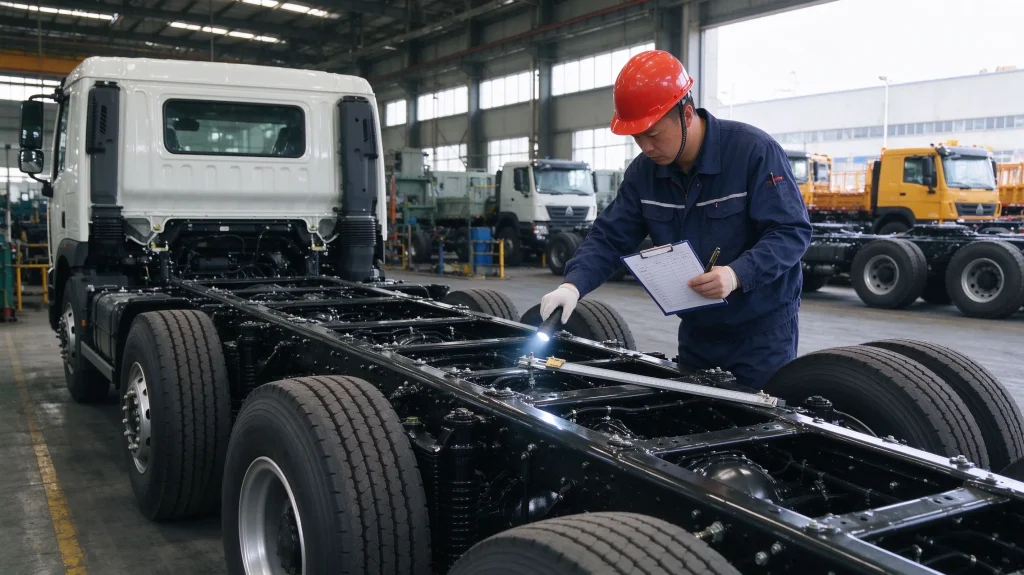
The extra front axle adds steering capacity and stability. It also allows the body to be longer without overloading the front tires.
8×4 trucks are the standard choice for heavy dump work, bulk cement transport, and high-capacity mixers. They are heavier, more expensive, and more capable than 6×4 trucks.
Axle Layout at a Glance
The difference between 6×4 and 8×4 is not just one extra axle. The whole weight distribution changes. Here is a quick comparison of the two layouts.
| Feature | 6×4 Chassis | 8×4 Chassis |
|---|---|---|
| Total axles | 3 | 4 |
| Steering axles | 1 | 2 |
| Drive axles | 2 | 2 |
| Typical gross weight | 30-40 tons | 40-50 tons |
| Front axle load | Lower | Spread across two axles |
| Body length | Shorter options | Longer options |
| Cost | Lower | Higher |
As the table shows, the extra front axle in an 8×4 truck buys you capacity and stability. It also adds weight, cost, and complexity.
Neither layout is universally better. Each one fits a different job. The rest of this guide explains how to match them.
Load Capacity: The Core Difference
Load capacity is the main reason buyers look at 8×4 trucks in the first place. The extra axle allows a higher legal payload.
In most markets, a 6×4 dump truck carries a payload in the range of 20 to 25 tons. An 8×4 dump truck commonly carries 30 to 40 tons.
That extra 10 to 15 tons per trip is significant. On a long project, it means fewer trips, less fuel, and shorter project timelines.
However, the higher payload only matters if your roads and loading equipment can handle it. A larger truck is useless if the site access is too narrow or the ground is too soft.
Meanwhile, a 6×4 chassis is easier to load and unload in tight spaces. Its shorter wheelbase and lighter weight make it more maneuverable on urban and small-site work.
So the question is not which chassis carries more. It is whether your operation can use that extra capacity every day.
Traction and Off-Road Performance
Both 6×4 and 8×4 trucks have two drive axles. In theory, the traction systems are similar. In practice, the weight distribution makes them feel different.
An 8×4 truck puts more weight on the front axles and more total weight on the ground. That extra downward force helps the tires grip in mud, sand, and loose gravel.
For heavy mining work and rainy-season construction, an 8×4 truck usually climbs better with a full load. The larger contact area keeps the wheels from sinking.
A 6×4 truck, being lighter, can actually perform better on very soft ground when empty or lightly loaded. Too much weight can make a truck sink rather than float.
On hard, dry roads, the difference is small. Both chassis pull a loaded trailer or body without drama.
That said, the 8×4 chassis shines on steep inclines with heavy loads. The combination of more weight on the drive axles and longer wheelbase keeps power on the ground.
Weight Distribution and Stability
Weight distribution affects steering, braking, and tire wear. The 8×4 layout spreads the load more evenly across the chassis.
In a 6×4 truck, a heavy front-mounted body can push too much weight onto the single front axle. That overloads the front tires and makes steering heavy.
The 8×4 chassis solves this with two front axles. Each axle carries a smaller share, so the front tires stay within their load rating more easily.
Stability is another point in favor of the 8×4. A longer wheelbase and wider stance reduce body roll when the truck is loaded and turning.
For drivers working on uneven ground, this stability translates into safer operation and less stress on the frame.
On the other hand, the 6×4 chassis is more nimble. It turns in a tighter radius, which matters in cities, quarries, and crowded loading areas.
Fuel Consumption
Fuel is the largest ongoing cost in any truck fleet. The heavier the truck, the more it drinks.
An 8×4 truck weighs more empty and carries more when loaded. Both factors raise fuel use per trip.
However, fuel per ton of cargo tells a different story. Because an 8×4 carries more per trip, its fuel consumption per ton can actually be lower on big jobs.
A 6×4 truck uses less fuel per kilometer. It is the better choice when trips are short, loads are moderate, and the truck runs often.
So the fuel question depends on your metric. Per kilometer, the 6×4 wins. Per ton moved, the 8×4 often wins on heavy, long-haul work.
Buyers should calculate both numbers before choosing. Fuel cost is rarely the deciding factor on its own, but it is always part of the picture.
Price Difference
Initial price is where most buyers start the comparison. The gap between the two chassis is real and worth understanding.
A new 8×4 truck costs more than a 6×4 model with the same cab and body type. The extra axle, additional tires, stronger frame, and bigger brakes all add up.
The price premium typically sits in the range of 15 to 25 percent, depending on the brand and specification. Custom bodies widen the gap further.
For buyers on a tight budget, the 6×4 chassis is the easier entry point. It delivers most of the capability at a lower initial cost.
For buyers who need maximum payload, the 8×4 premium pays for itself through higher earning capacity per trip.
The right answer depends on your revenue model. A truck that earns more per load can justify a higher purchase price.
Maintenance and Tire Costs
Running costs go beyond fuel. Tires, brakes, suspension, and routine service all follow the chassis layout.
An 8×4 truck has more tires, more brake components, and more suspension points. That means higher parts cost and longer service time.
Tire wear is a major item. With eight wheels on the ground, the 8×4 chassis wears more tires, but each tire carries less weight. In theory, tire life can be longer per tire.
A 6×4 truck uses six tires. Replacement cost is lower, and tire rotation is simpler. In practice, many operators find 6×4 trucks cheaper to maintain.
On the other hand, an 8×4 truck that is not overloaded places less strain on each component. Correctly loaded, it can outlast a 6×4 truck running near its limit.
So maintenance cost is not fixed. It follows how the truck is loaded and how the operator maintains it.
When a 6×4 Chassis Makes Sense
Some jobs are simply better suited to a 6×4 truck. Choosing the smaller chassis is not a downgrade. It is a match.
Short-haul dump work in urban areas suits a 6×4. Tight streets, limited site access, and moderate payloads are its natural environment.
General logistics and container hauling also favor the 6×4. A tractor head with a 6×4 chassis handles standard containers and trailers well.
Buyers who run many trucks on mixed routes often prefer the 6×4. Lower cost per truck means more trucks for the same budget.
Small contractors starting out usually begin with a 6×4. It keeps the entry investment low while still doing real work.
If your average load stays under 25 tons and your roads are decent, a 6×4 chassis is the sensible choice.
When an 8×4 Chassis Makes Sense
Other jobs need the extra capacity and stability of an 8×4. This is where the larger chassis earns its premium.
Large earthworks and road construction projects move thousands of tons daily. An 8×4 dump truck cuts the number of trips dramatically.
Bulk cement transport demands a heavy chassis. An 8×4 tanker carries more powder per trip and rides more stable.
Mining operations, with their heavy ore and rough roads, are a classic 8×4 application. The extra traction and load rating matter on every cycle.
Concrete mixer trucks in high-volume markets also favor the 8×4 layout. The chassis carries the drum and the wet load without strain.
If your loads regularly exceed 25 tons and the site can handle a longer truck, the 8×4 chassis pays off quickly.
Common Body Types for Each Chassis
The body you mount on the chassis changes what the truck can do. Some body types suit one chassis better than the other.
A dump body is the classic match for both. 6×4 dump trucks handle standard earthmoving and municipal work. 8×4 dump trucks carry bigger loads on large projects.
Bulk cement tankers almost always use an 8×4 chassis. The tank length and payload demand the longer, stronger frame.
Mixer trucks follow the same rule. Wet concrete is heavy, and the rotating drum adds constant stress. The 8×4 chassis carries the combination safely.
Tractor heads, which pull semi-trailers, are most common on a 6×4 chassis. The lighter weight leaves more payload room for the trailer.
Flatbed trucks appear on both chassis. A 6×4 flatbed suits general freight. An 8×4 flatbed carries steel coils, machinery, and oversized loads.
Refrigerated vans and box trucks normally use a 6×4 chassis. The payload range matches logistics work without needing the extra axle.
In short, the body type and the chassis must be planned together. A good match gives you a truck that works as a system, not just a vehicle with parts bolted on.
How to Verify Chassis Specifications
Specifications on a brochure can look identical across brands. The real difference hides in details you need to verify before signing.
Ask for the chassis gross vehicle weight rating, not just the nominal payload. The rating defines the legal maximum the frame can carry.
Check the axle load ratings individually. Each axle has its own limit, and the front axle is often the first to overload on heavy bodies.
Confirm the frame rail thickness and material. Heavy-duty chassis use reinforced box-section rails that resist bending under load.
Review the suspension configuration. The number of leaf springs, the spring thickness, and the shock absorption all affect durability.
Ask about the tire load index. Tires must be rated for the axle load with a safety margin, especially on an 8×4 chassis.
Request the axle ratio and differential type. These values determine speed, pulling power, and fuel use on your typical route.
Finally, check the brake specification. Heavier chassis need larger brake drums or discs to stop the extra mass safely.
For more technical reading on chassis parts and maintenance, visit our truck knowledge base. It covers axles, suspension, and frame topics in depth.
Axle Ratio and Performance Matching
The axle ratio controls the relationship between engine speed and wheel speed. It shapes how the truck feels on the road.
A lower ratio, such as 4.11 or 4.44, suits highway work. The engine turns slower at cruising speed, which saves fuel.
A higher ratio, such as 5.26 or 5.73, suits heavy loads and slopes. It multiplies torque for strong starts and steep climbs.
On an 8×4 dump truck used in mining, a higher ratio is common. The truck spends its life starting loaded on inclines.
On a 6×4 tractor running long distances, a lower ratio fits better. The engine stays in the efficient range at highway speeds.
Manufacturers offer multiple ratio options for the same chassis. Discuss your route profile with the supplier before choosing.
Matching the ratio to the job improves fuel economy, reduces drivetrain stress, and extends component life.
Construction and Mining Applications
Construction and mining are where the two chassis meet the hardest work. The choice shapes daily productivity.
In road construction, both chassis appear. 6×4 trucks handle base material and short hauls. 8×4 trucks move the heavy bulk and long hauls.
In quarry work, 8×4 dump trucks dominate. The steep ramps, heavy rocks, and continuous loading demand maximum capacity and traction.
In urban renewal projects, 6×4 trucks are more practical. Narrow streets and limited space favor the shorter chassis.
Mining operations with large haul distances usually run 8×4 trucks. The fuel per ton advantage becomes significant over thousands of kilometers.
In practice, many large fleets run both. The 6×4 handles support work and short runs. The 8×4 handles the heavy lifting.
Logistics and Highway Applications
On the highway, the chassis choice follows a different logic. Payload per trip and fuel efficiency fight for attention.
A 6×4 tractor head is the standard for container and general freight work. It balances power, weight, and cost for most routes.
Long-distance haulers prefer the lighter 6×4 chassis. Less empty weight means more payload headroom within the legal limit.
An 8×4 chassis on a highway truck is less common. It is used for specialized heavy freight, oversized loads, and equipment transport.
Cross-border operators often stick with 6×4 tractors. The simpler chassis is easier to service in remote regions.
For heavy equipment carriers, the 8×4 chassis provides the stability needed for wide, heavy machinery loads.
Regional Preferences
Different regions have different habits when it comes to chassis choice. Understanding these helps you buy for the right market.
In Africa, the 6×4 and 8×4 both sell well. 6×4 trucks dominate general transport. 8×4 trucks appear in mining and large construction.
In the Middle East, 8×4 dump trucks are common in infrastructure projects. The high payload matches the scale of desert construction work.
In Southeast Asia, 6×4 trucks are more popular. Roads, bridges, and site access often limit the size of vehicles.
In South America, both layouts appear, with 6×4 leading in logistics and 8×4 in mining regions.
European operators favor 6×4 tractors for freight and use 8×4 mainly for construction and special applications.
Chinese domestic fleets run both. The 8×4 is the backbone of bulk construction, while the 6×4 covers long-haul freight.
Chinese Truck Export Perspective
Chinese manufacturers build both chassis in large volumes. Export buyers can choose from proven platforms at competitive prices.
Sinotruk HOWO offers both 6×4 and 8×4 models. The HOWO 6×4 is a popular tractor and dump truck. The 8×4 version is widely exported for heavy work.
Shacman builds rugged 6×4 and 8×4 chassis for tough conditions. Many African and Middle Eastern buyers prefer these for mining and construction.
FAW and Dongfeng also supply both layouts. Their 6×4 tractors are common in logistics, and their 8×4 trucks serve bulk industries.
Export trucks can be customized for the destination. Axle ratios, suspension, tire sizes, and body types are configured to local needs.
To understand our factory and export process, visit our about us page. It explains how we structure chassis options for different markets.
Key Specifications to Compare
Beyond the axle count, several specifications decide how the chassis performs. Compare these carefully before you order.
Engine power and torque matter. An 8×4 truck needs enough torque to move its heavier weight from a standstill.
Drive axle ratio affects speed and pulling power. A lower ratio suits highway work. A higher ratio suits heavy loads and slopes.
Frame thickness and material determine durability. Heavy-duty work needs a reinforced frame that resists bending.
Tire size and load rating must match the gross weight. Undersized tires fail early under heavy loads.
Suspension type matters. Leaf springs are simple and cheap. Air suspension rides better but costs more and suits highway work.
Braking capacity is critical. An 8×4 chassis carries more weight and needs stronger brakes to stop safely.
Comparing Total Cost of Ownership
Price per truck is only the start. Total cost of ownership includes fuel, tires, service, and resale value.
A 6×4 truck usually wins on annual running cost. It uses less fuel, fewer tires, and simpler parts.
An 8×4 truck wins on revenue potential. Each trip carries more payload, so fewer trips are needed per project.
Depreciation differs by market. In regions that value payload, 8×4 trucks hold resale value well. In logistics markets, 6×4 trucks are easier to resell.
Operators should build a simple cost model: purchase price, fuel per year, tires per year, service per year, and expected resale.
Only then can you compare the two chassis on fair terms. A cheaper truck that earns less may cost more in the long run.
For help structuring a fleet purchase, our customer service team can walk you through the calculation.
Common Mistakes When Choosing
Buyers repeat the same mistakes when choosing between 6×4 and 8×4 chassis. Here are the ones to avoid.
Buying the biggest chassis because it sounds stronger. If your site cannot handle it, the extra capacity is wasted.
Buying the cheapest chassis to save money. If your loads exceed its rating, breakdowns will cost more than the savings.
Ignoring local axle weight limits. A chassis that is legal in one country may be illegal in another.
Forgetting about maneuverability. A long 8×4 truck struggles in tight sites, regardless of its load capacity.
Copying a competitor without checking your own work. Their site, roads, and loads may be completely different from yours.
Planning ahead avoids these errors. Define your loads, routes, and site conditions first, then choose the chassis.
Frequently Asked Questions
Buyers ask the same questions about 6×4 and 8×4 chassis. Here are clear answers to the most common ones.
Which chassis is better for a dump truck? For heavy construction and mining, the 8×4. For urban and small-site work, the 6×4.
Can a 6×4 truck carry the same load as an 8×4? No. The 8×4 chassis supports a higher gross weight by design.
Is an 8×4 truck harder to drive? It is longer and heavier, but the extra stability makes it steady under load. Most drivers adapt quickly.
Which chassis uses less fuel? The 6×4 uses less per kilometer. The 8×4 can use less per ton of cargo on heavy jobs.
Are 8×4 trucks more expensive to maintain? Generally yes, because of more tires and components. Correct loading reduces the gap.
Can I change a 6×4 chassis to 8×4 later? Practically no. The frame, suspension, and axle positions are built at the factory.
Which chassis resells better? It depends on the market. Heavy construction regions favor 8×4. Logistics regions favor 6×4.
Do 6×4 and 8×4 trucks use the same engine? Often the same engine family, but with different calibration. The 8×4 may get a higher-torque version for its extra weight.
Are spare parts harder to find for an 8×4 truck? Not in heavy construction regions. The extra parts are standard across the industry.
Can an 8×4 truck work on normal roads? Yes, within the legal weight limits. Many 8×4 trucks travel between project sites on public highways.
Which chassis is better for snow or sand? The 8×4, thanks to more weight on the drive axles and better traction. Tire choice still matters.
Does an 8×4 truck need special driving skills? No, but it takes practice for tight maneuvers because of the longer wheelbase.
Used Market: 6×4 vs 8×4
The used truck market treats the two chassis differently. Resale value and demand follow the regional economy.
Used 6×4 trucks sell steadily across most markets. They are affordable, easy to inspect, and quick to put to work.
Used 8×4 trucks have a smaller but stronger pool of buyers. Mining and construction operators specifically search for them.
In regions with active infrastructure programs, used 8×4 dump trucks move fast. In slower markets, they can sit longer because fewer buyers need that capacity.
Age and condition matter more than the chassis type. A well-maintained 6×4 can outlast a neglected 8×4 by a wide margin.
Check the chassis frame for cracks, the axle seals for leaks, and the suspension for wear before buying either type used.
In practice, the used market rewards buyers who understand local demand. Match the chassis to what your region actually uses.
For examples of how other fleets matched chassis to their work, see our cooperative case page. Real projects show both chassis working in different conditions.
Regional Import Rules and Weight Limits
Local regulations decide what a chassis can legally do. The same truck is legal in one country and overweight in another.
Most countries set per-axle and total gross weight limits. The 8×4 layout exists because it fits within those limits while carrying more.
Some markets calculate taxes and tolls by axle count. An 8×4 truck may pay higher registration or toll fees than a 6×4.
Other markets restrict the total vehicle length. A longer 8×4 body may require special permits on certain roads.
Import duties sometimes depend on vehicle category and weight. Confirm the tariff classification before you commit to a chassis.
The safest approach is to check with the local transport authority and a customs broker before ordering.
Many exporters can adjust the specification to stay within your country’s limits. Share the local rules with your supplier early in the process.
Real-World Selection Examples
Real projects show how the chassis choice plays out on the ground. Here are typical scenarios that buyers face.
A contractor building rural roads in West Africa started with 6×4 dump trucks. Loads stayed under 25 tons, and site roads were narrow. The 6×4 kept costs low and maintenance simple.
When the same contractor won a larger highway project, he added 8×4 dump trucks. The longer hauls and heavier daily volumes made the extra capacity worth the price.
A quarry operator in East Africa runs a fleet of 8×4 trucks. The steep ramps and dense rock loads demand maximum traction. The 6×4 trucks were reassigned to support work.
A logistics company in Southeast Asia runs 6×4 tractor heads for container work. The lighter chassis leaves more payload room and cuts fuel on daily runs.
A Middle East construction group uses 8×4 dump trucks for bulk earthmoving. The scale of the project makes the higher payload essential to the schedule.
In each case, the buyer matched the chassis to the actual work. That matching, more than brand or price, decided the outcome.
How to Work With Your Supplier
The supplier you choose affects the chassis specification, the paperwork, and the after-sales support. Work with them as a partner.
Share your load data and route details before asking for a quote. A supplier who knows your work can recommend the right chassis.
Ask for the chassis drawing and specification sheet. Review the frame, axles, suspension, and tire ratings in detail.
Confirm the export documents, including the certificate of origin and chassis certification. These matter for customs clearance.
Agree on the warranty scope for the frame, axles, and suspension. Heavy chassis components need clear warranty terms.
Plan the spare parts list. Common wear items should be available from the supplier or local distributors.
For help with your specific project, contact our contact page. The team can review your application and recommend a chassis configuration.
Decision Guide: Which Should You Choose?
Here is a practical decision path that covers most buyers.
- Define your average payload. Under 25 tons points to 6×4. Over 25 tons points to 8×4.
- Check your site access. Tight sites favor 6×4. Open sites can use 8×4.
- Look at road conditions. Good roads work with either. Rough, steep roads favor 8×4 traction.
- Calculate fuel per ton, not just per kilometer.
- Compare total cost of ownership, including tires and resale.
- Verify local axle weight limits before ordering.
- Choose a supplier who can configure the chassis to your market.
This path is simple, but it covers the factors that actually decide success.
Conclusion
6×4 and 8×4 chassis are both excellent designs. They serve different jobs, and the right choice depends on your operation.
Choose a 6×4 chassis for moderate loads, tight sites, and lower running costs. It is the workhorse of general transport and small construction.
Choose an 8×4 chassis for heavy payloads, rough terrain, and high-volume work. It earns its premium through capacity and stability.
Whichever you choose, match the specification to your market. Verify the legal limits, plan the running costs, and buy from a supplier who understands your conditions.
If you are ready to compare real models, start from our homepage.
For more buying guides and technical comparisons, check our blog page.