


Introduction
Buying a heavy-duty truck for your fleet is one of the most impactful investments you can make for your logistics business. Every fleet owner wants reliable performance, long service life, and minimal daily operating costs. Even so, many international buyers pick the wrong axle configuration simply because they lack clear industry guidance.
In recent years, global freight costs have continued to rise. Fuel prices, routine maintenance fees, and road compliance fines all eat into fleet profits. For this reason, smart fleet managers no longer prioritize raw power alone. Instead, they focus on matching truck specifications to real working conditions.
6×2 trucks have become a mainstream option for modern highway logistics. They fill a critical gap between lightweight 4×2 trucks and heavy-duty 6×4 models. Unlike underpowered light trucks or overpriced full-drive trucks, 6×2 setups deliver balanced performance for most medium and medium-heavy transportation tasks.
This detailed buyer’s guide covers everything you need to know before purchasing a 6×2 truck. We break down axle logic, core advantages, real use cases, brand comparisons, export customization, and professional procurement tips. By the end of this article, you will be able to select a fully compliant, cost-effective 6×2 truck for your local market.
If you are looking for factory-verified 6×2 truck solutions for export, you can consult reliable heavy truck manufacturers with extensive global shipping experience.
What Is a 6×2 Truck? Basic Axle Configuration Explained
Before comparing truck models and prices, you must understand what a 6×2 truck actually is. Most purchasing mistakes happen due to vague knowledge of commercial vehicle axle standards. Once you master this basic rule, all model comparisons become straightforward.
Commercial truck axle naming follows a universal global standard. The first number represents the total number of wheel groups on the chassis. The second number indicates how many wheel groups receive power from the engine. This rule applies to all 4×2, 6×2, and 6×4 heavy trucks.
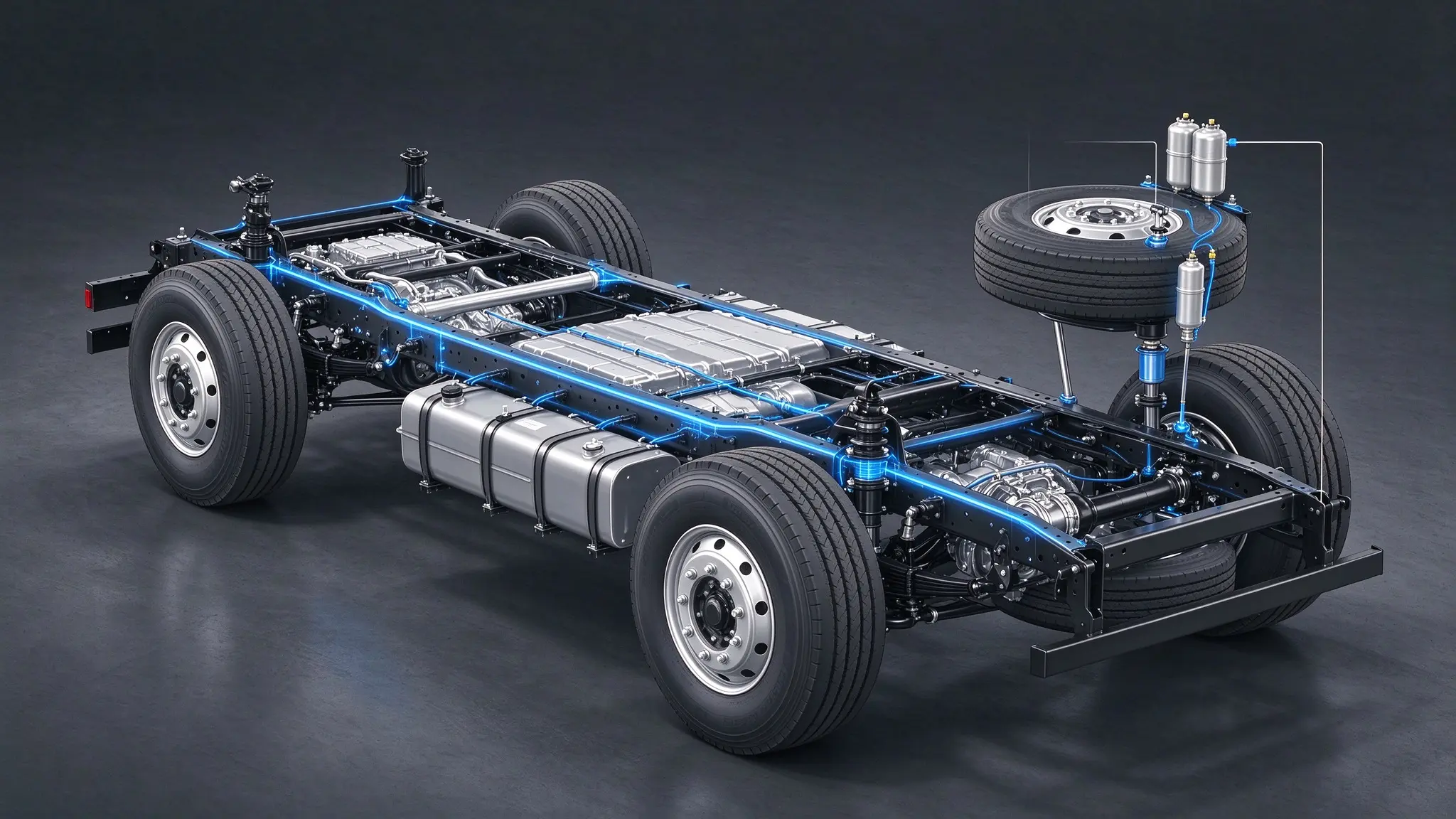
A standard 6×2 truck features six wheel groups in total. Only two of these wheel groups work as drive axles. Meanwhile, the remaining axle acts as a liftable load-bearing axle. This unique three-axle structure creates the core advantages of 6×2 trucks.
Front Steering Axle and Rear Dual Axle Layout
Every standard 6×2 truck includes one front steering axle and two rear axles. The front axle controls vehicle direction and ensures flexible turning performance. It supports stable driving on urban roads, highways, and gentle curves.
Among the two rear axles, one serves as the main drive axle. It provides all engine power for forward movement. The second rear axle works as a passive lift axle with no driving function. Its entire purpose is weight distribution and road regulation compliance.
This structural design differs greatly from full-drive 6×4 trucks. It removes redundant mechanical parts and reduces overall vehicle weight. As a result, 6×2 trucks achieve better fuel economy and lower failure rates for daily highway use.
How the Lift Axle System Works on 6×2 Trucks
Nearly all modern export-grade 6×2 trucks come with a pneumatic lift axle system. This system is the key reason why 6×2 fleets save massive amounts of operational costs every year. It adapts automatically to different load conditions.
When the truck runs empty or carries light cargo, drivers can lift the auxiliary axle. This action reduces tire contact area with the road. It minimizes friction loss and cuts down fuel consumption significantly during return trips.
Conversely, the axle drops completely when the truck carries full loads. It disperses heavy cargo weight across three axles. This design prevents single-axle overload penalties and protects chassis structural integrity.
Thanks to this flexible switching function, 6×2 trucks suit variable cargo volumes perfectly. They work well for sporadic small-batch orders and consistent full-load transportation tasks alike. You can learn more about axle configuration differences on our professional truck knowledge base.
Core Components That Define a High-Quality 6×2 Truck
Not all 6×2 trucks deliver the same performance. Low-quality models cut corners on core components, leading to frequent breakdowns and short service life. Premium export-grade 6×2 trucks rely on four optimized core parts to ensure long-term stability.
Lightweight Reinforced Chassis
High-quality 6×2 trucks use reinforced lightweight chassis materials. Manufacturers balance structural strength and overall vehicle weight. Thickened steel beams resist torsion and deformation under continuous full-load pressure.
At the same time, the optimized lightweight design reduces dead weight. Lighter empty weight creates larger effective payload space. Fleet owners can carry more legal cargo per trip without violating road weight limits.
High-Torque Single Drive Axle
6×2 trucks adopt low-speed high-torque drive axles. This tuning method focuses on steady power output instead of explosive speed. It matches highway cruising scenarios perfectly and avoids unnecessary power waste.
Compared with dual-drive 6×4 structures, the single drive axle reduces transmission loss. Fewer moving parts mean less mechanical wear. It also lowers daily maintenance difficulty for overseas fleet operators.
Sensitive Pneumatic Control System
The pneumatic system controls the entire lift axle operation. Premium export trucks use imported or high-grade domestic pneumatic components. They ensure fast response, stable air pressure, and no air leakage during long-term use.
Low-quality trucks often suffer from slow axle lifting or stuck components. These faults affect normal driving and even cause overweight fines. Reliable pneumatic systems avoid such hidden operational risks.
Fuel-Efficient Engine and Transmission Matching
Top-tier 6×2 trucks feature precisely calibrated power assemblies. Engine horsepower, gearbox ratios, and torque output are all optimized for long-distance highway driving. This professional matching creates the best balance between power reserve and fuel economy.
Well-matched power systems reduce engine fatigue during continuous operation. They also extend engine service life and decrease long-term replacement costs.
6×2 vs 4×2 vs 6×4 Truck Configurations: Full Comparison
Most procurement confusion comes from unclear configuration differences. Each axle layout targets distinct working scenarios. Choosing the wrong model will either limit your transport capacity or waste excessive operational funds.
Payload Capacity Differences
4×2 trucks belong to the light-duty category. They support 15 to 18 tons of payload at maximum. These models only fit small-batch urban distribution and short-distance delivery tasks.
6×2 trucks sit in the medium-heavy duty range. Their standard payload spans 25 to 40 tons. This capacity covers container transport, bulk cargo delivery, and most cross-border logistics needs.
6×4 heavy trucks support 35 to 50 tons of ultra-heavy loads. They are built for mining, construction, and off-road engineering projects instead of regular highway logistics.
Road Adaptability and Traction Performance
4×2 trucks have weak traction performance. They can only run smoothly on flat paved roads. Steep slopes, muddy ground, and gravel roads easily cause wheel slipping.
6×2 trucks provide moderate and practical traction. They handle highways, urban roads, and gentle mountain routes perfectly. However, they cannot adapt to harsh off-road working environments.
6×4 dual-drive trucks deliver the strongest traction. Their dual drive axles provide stable grip on all terrain. Even so, this powerful structure brings higher fuel consumption and maintenance costs.
Operational Cost and Profitability
4×2 trucks have low fuel consumption but limited single-trip revenue. Their small payload makes them unsuitable for large-scale fleet profit expansion.
6×2 trucks achieve the best cost-performance ratio. They maintain reasonable fuel usage while supporting large payloads. For most global logistics fleets, this configuration generates the highest net profit margin.
6×4 trucks consume massive amounts of fuel. Their complex structures require frequent maintenance. They are only cost-effective for special heavy-duty engineering scenarios.
Best Scenario Selection Guide
Choose 4×2 trucks if your business focuses solely on urban light cargo distribution.
Choose 6×2 trucks if you run highway long-haul logistics, container transport, and medium-heavy bulk cargo delivery.
Choose 6×4 trucks if your daily work involves mining, construction haulage, and harsh off-road transportation.
Key Advantages of Investing in a 6×2 Truck Fleet
The growing popularity of 6×2 trucks in global fleets is not accidental. Every design advantage solves real pain points for modern logistics operators. These benefits directly improve fleet profitability and operational stability.
Outstanding Fuel Economy for Long-Haul Operations
Fuel expenses account for over 60% of total fleet operational costs in most regions. Reducing fuel waste is the most effective way to increase annual profits. 6×2 trucks excel in this critical area.
Unlike 6×4 trucks that consume fuel to drive two rear axles, 6×2 models only power one drive axle. This simple structural difference greatly reduces mechanical friction and power transmission loss.
Additionally, the lift axle function optimizes fuel usage during empty return journeys. Lifting the passive axle cuts down tire resistance significantly. Real fleet data proves that 6×2 trucks save 8% to 15% fuel compared with equivalent 6×4 models.
Full Compliance With Strict Road Weight Regulations
Most countries have strengthened highway weight inspection standards in recent years. Single-axle overload fines have become a major hidden cost for logistics companies. Many fleets suffer huge annual losses due to unreasonable truck configurations.
The three-axle layout of 6×2 trucks disperses cargo weight evenly. It avoids excessive pressure on a single axle. Therefore, 6×2 vehicles easily pass highway weight checks without violations.
Moreover, the flexible lift axle adapts to dynamic load changes. It supports both medium and heavy cargo tasks. Fleet owners do not need to purchase multiple truck models for different order types.
Lower Purchase and Maintenance Threshold
6×2 trucks feature simpler mechanical structures than 6×4 heavy trucks. Fewer drive components reduce manufacturing costs. This makes the initial purchase price much more affordable for small and medium-sized fleets.
Daily maintenance work also becomes easier. With fewer gears, bearings, and friction parts, wear and tear decreases obviously. Routine repair costs and downtime losses reduce significantly.
Chinese 6×2 truck spare parts enjoy high global universality. Overseas buyers can easily source replacement parts locally or through factory supply channels. You can check reliable product resources through our product category page.
Higher Effective Cargo Revenue
All countries enforce strict total weight limits for heavy vehicles. Under fixed weight caps, lighter truck bodies allow larger cargo loads. This principle directly determines single-trip revenue.
6×2 trucks remove redundant drive structures found on 6×4 models. Their self-weight remains lightweight without sacrificing structural strength. As a result, fleet owners can load more cargo legally per trip.
This advantage stands out greatly in container logistics and high-density bulk cargo transport. It maximizes profit within legal road limits.
Improved High-Speed Driving Stability
Compared with 4×2 trucks, the extra rear axle of 6×2 models suppresses body jitter and lateral swinging. It delivers smoother and more stable driving during high-speed highway cruising.
Stable vehicle performance protects cargo safety effectively. It also reduces driver fatigue during long-distance missions. Lower fatigue rates decrease traffic accident risks for your entire fleet.
Limitations and Unsuitable Working Scenarios for 6×2 Trucks
Although 6×2 trucks excel in standard logistics scenarios, they are not universal for all environments. Understanding their limitations helps you avoid improper purchases and asset waste.
Technical Limitations of 6×2 Axle Layout
First, off-road traction remains limited. The single drive axle cannot provide enough grip on muddy, sandy, or rugged construction roads. Wheel slipping often occurs under harsh terrain conditions.
Second, ultra-heavy load capacity is restricted. 6×2 trucks suit medium-heavy transport only. Long-term haulage beyond 45 tons causes chassis deformation and accelerated component aging.
Third, continuous steep slope performance is weaker. Single-drive structures lack sufficient power reserve for frequent uphill climbing on complex mountain routes.
Scenarios to Avoid With 6×2 Trucks
Do not use 6×2 trucks for mining transportation and earthwork projects. These scenarios require strong off-road traction that only 6×4 trucks can provide.
Avoid 6×2 configurations if your business involves long-term ultra-heavy cargo exceeding 45 tons.
Skip 6×2 models for plateau mountain routes with continuous steep slopes and sharp curves.
Main Types of 6×2 Export Trucks for Global Buyers
The 6×2 chassis supports diverse modification options. Manufacturers can build different functional truck bodies to meet various industry demands. Below are the most popular export models.
6×2 Tractor Truck (Top-Selling Export Model)
6×2 tractor trucks rank first in global export volume. They connect with multiple semi-trailers, including container trailers, flatbed trailers, and tank trailers.
Optimized for highway cruising, these tractors balance fuel economy and stability perfectly. They serve container terminals, cross-border logistics companies, and large-scale fleet operators.
6×2 Enclosed Van Truck
Enclosed van bodies protect goods from dust, rain, and theft. This model suits electronic products, daily commodities, packaged industrial goods, and high-value cargo.
It works well for medium-distance regional distribution and large-batch e-commerce logistics transportation.
6×2 Flatbed Truck
Open flatbed designs simplify loading and unloading. They adapt to oversized equipment, steel materials, construction supplies, and irregular bulk goods.
The stable 6×2 chassis provides reliable load-bearing capacity without excessive fuel consumption.
Customized Special 6×2 Trucks
Factories can customize refrigerated trucks, fuel tank trucks, bulk cement trucks, and sanitation trucks based on 6×2 chassis. Flexible modification meets personalized industry needs.
For customized solution details, you can contact our professional sales team for one-on-one guidance.
Top Chinese 6×2 Truck Brands for Global Export
Chinese heavy truck brands dominate the global export market. They deliver stable quality, cost-effective pricing, and mature after-sales support. Three brands stand out for 6×2 models.
SINOTRUK HOWO 6×2 Series
HOWO remains the most exported Chinese heavy truck brand worldwide. Its 6×2 series earns a reputation for ultra-stable performance and low failure rates.
Equipped with 371HP to 420HP fuel-saving engines, HOWO 6×2 tractors suit long-haul highway transport perfectly. The pneumatic lift axle system operates sensitively and durably.
FAW 6×2 Logistics Trucks
FAW 6×2 models focus on driving comfort and intelligent fuel-saving technology. Low vibration and low noise designs reduce driver fatigue during continuous missions.
Global spare part universality makes overseas maintenance convenient and affordable.
Shacman 6×2 Heavy-Duty Trucks
Shacman adopts military-grade chassis technology. Its 6×2 trucks feature strong structural stability and long service life. Optimized suspension systems ensure smooth high-speed transportation.
These models export widely to Africa, the Middle East, Southeast Asia, and Central Asia. You can verify brand qualifications on our company introduction page.
Must-Check Parameters Before Buying a 6×2 Truck
Parameter matching determines long-term fleet performance. Many buyers only compare prices and ignore core configurations, leading to poor vehicle adaptability.
Engine Horsepower and Calibration
371HP to 400HP engines work best for flat highway routes. They balance fuel economy and power sufficiently.
Choose 420HP high-torque engines for routes with occasional slopes and complex terrain.
Mechanical pump engines are recommended for most overseas markets due to strong environmental adaptability.
Lift Axle Quality and Control System
The lift axle is the core functional component of 6×2 trucks. Always check pneumatic sensitivity, load limit, and lifting stability before purchase.
High-quality axles support automatic induction and manual switching. Inferior axles easily jam or leak air, causing operational troubles.
Wheelbase and Body Size
3800mm to 4000mm wheelbase represents the standard for 6×2 tractors. It balances flexibility and stability perfectly.
Short wheelbases suit urban multi-turn routes. Long wheelbases improve straight-line high-speed stability.
Chassis Strength and Suspension
Export-grade 6×2 trucks use thickened reinforced chassis to resist torsion and deformation.
High-strength leaf spring suspensions provide durability and cost-effectiveness for paved road scenarios.
Tire Specifications and Load Grade
12R22.5 high-load tires serve as the standard configuration. Wear-resistant and heat-dissipating tires reduce burst risks during long-distance driving.
Emission Standards and Certification
African, Middle Eastern, and Central Asian markets adapt to Euro 2 and Euro 3 standards.
European and Southeast Asian regions require Euro 5 or Euro 6 configurations.
Professional Export Customization for 6×2 Trucks
Standard domestic trucks cannot fully adapt to overseas harsh environments. Targeted factory customization ensures stable long-term operation abroad.
High-Temperature Heat Dissipation Upgrade
Oversized thickened radiators prevent engine overheating in tropical and desert regions. Enhanced cooling systems maintain stable power output under extreme heat.
Dust and Sand Prevention Modification
Three-stage dust filtration systems block fine sand and dust particles. They protect engine internal components and extend service life in dusty areas.
Chassis Anti-Corrosion Treatment
Professional sandblasting, anti-rust spraying, and chassis undercoating resist salt spray and coastal humidity. This treatment avoids chassis rust during ocean transportation and local operation.
LHD and RHD Free Switching
Factories support left-hand drive and right-hand drive conversion to match local traffic rules. All modifications use original factory assembly standards.
Regional Certification Matching
Customized configurations meet SONCAP, GSO, and other regional certification requirements. Pre-production matching avoids customs clearance failures.
How to Screen Reliable 6×2 Truck Suppliers
Supplier quality directly determines vehicle quality, document completeness, and after-sales service. Avoid middleman traps with professional screening methods.
Verify Official Brand Authorization
Reliable export suppliers hold genuine authorization from SINOTRUK, FAW, and Shacman. This guarantees original factory vehicles.
Check Complete Export Qualifications
ISO, CE, and SGS certifications ensure formal global trade compliance.
Confirm Local Market Experience
Suppliers with rich experience in your target region understand local customs clearance rules and road policies.
Avoid Common Procurement Pitfalls
Ultra-low prices always mean reduced configurations or unqualified stock vehicles.
Never trust verbal promises; confirm all terms in formal contracts.
Request full production videos and pre-shipment inspection reports before delivery.
Standard Export Order Process for 6×2 Trucks
Standardized processes prevent configuration errors, delayed delivery, and document missing issues.
First, confirm your road conditions, load capacity, certification standards, and climate environment.
Second, obtain a transparent formal quotation with no hidden fees.
Third, sign a legal export contract with clear parameter and warranty clauses.
Fourth, track real-time production progress throughout manufacturing.
Fifth, complete full QC inspection before shipment.
Shipping, Customs Clearance and Overseas Landing Guide
Professional logistics arrangements ensure smooth global delivery.
Ro-ro shipping suits bulk fleet orders for fast and cost-effective transportation.
Container shipping provides better protection for small-batch customized trucks.
Suppliers provide complete export documents for smooth declaration.
After arrival, complete tariff payment, inspection, and vehicle registration for legal operation.
After-Sales Warranty and Maintenance Support
Perfect after-sales service guarantees long-term fleet stability.
Core components including engine, gearbox, and drive axle enjoy long factory warranty.
Regular filter replacement, pneumatic system inspection, and radiator cleaning extend truck service life greatly.
Global spare part inventory supports fast overseas delivery to reduce fleet downtime.
For technical support and after-sales help, visit our customer service page.
Common 6×2 Truck Buying Mistakes to Avoid
Many buyers encounter losses due to avoidable simple mistakes.
Do not blindly pursue ultra-low prices at the cost of configuration quality.
Do not mismatch engine power with actual road conditions.
Do not ignore lift axle quality inspection before shipment.
Do not skip environmental customization for overseas harsh climates.
Do not neglect document verification to avoid customs clearance failures.
Final Conclusion
6×2 trucks represent the most cost-effective medium-heavy transportation solution for modern highway logistics. They fill the gap between underpowered light trucks and over-cost heavy trucks perfectly.
With excellent fuel economy, flexible load adaptability, stable high-speed performance, and low maintenance costs, 6×2 trucks create sustainable profits for global fleet owners.
Successful procurement depends on accurate scenario matching, precise parameter selection, professional export customization, and reliable supplier cooperation.
By following this guide, you can avoid common pitfalls and build a high-efficiency, low-cost 6×2 truck fleet suitable for your local market.