Introduction
For small and medium-sized logistics companies, local distribution teams, and municipal engineering fleets across the Middle East, Africa, and Southeast Asia, 4×2 trucks stand out as the most cost-effective commercial vehicle option. Unlike heavy multi-axle trucks, 4×2 models feature a lightweight structure, flexible operation, and outstanding fuel economy.
In addition, 4×2 trucks have lower purchase costs and simpler daily maintenance requirements. This makes them ideal for short-to-medium distance transportation, urban cargo delivery, and light-duty construction tasks. For fleet buyers with limited budgets and fixed daily operation scenarios, 4×2 trucks can significantly improve overall project profitability.
However, the global 4×2 truck market features countless brands, configurations, and customized versions. Many first-time buyers struggle to distinguish parameter differences, resulting in mismatched models, excessive fuel consumption, or frequent mechanical failures after purchase.
Furthermore, many buyers blindly follow market trends without matching truck performance to actual working conditions. This common mistake leads to unnecessary operational losses and short vehicle service life.
To solve these pain points, this complete buying guide explains everything you need to know about selecting, verifying, and purchasing high-quality 4×2 trucks for sale. Whether you need a single unit for daily delivery or bulk fleet orders, this step-by-step guide helps you make data-driven decisions. For reliable sourcing support, you can work with professional Chinese truck export suppliers to avoid common procurement risks.
Chapter 1: What Is a 4×2 Truck? Core Definition & Working Principles
Before starting your purchase, it is essential to fully understand the basic definition and structural advantages of 4×2 trucks. Many buyers confuse 4×2, 6×4, and 8×4 configurations, which directly affects model selection accuracy.
Simply put, the numbers in truck axle configurations represent total wheel groups and driving wheel groups respectively. A 4×2 truck means four total wheel groups and two driving wheel groups. Specifically, it adopts one steering front axle and one driving rear axle layout.
Compared with multi-axle heavy trucks, this structure has fewer accessory parts and a lighter chassis weight. As a result, 4×2 trucks deliver more flexible steering and a smaller turning radius, which is perfect for narrow urban roads and crowded warehouse access routes.
Meanwhile, the simplified mechanical structure reduces operational resistance and fuel consumption. For long-term high-frequency daily transportation, the fuel cost advantage of 4×2 trucks becomes extremely obvious.
Nevertheless, 4×2 trucks also have inherent limitations. Due to fewer driving axles and smaller load-bearing chassis, they cannot bear ultra-heavy cargo or adapt to extremely rough off-road roads. Therefore, scenario matching is the primary principle for choosing a 4×2 truck.
1.1 Core Structural Features of Standard 4×2 Trucks
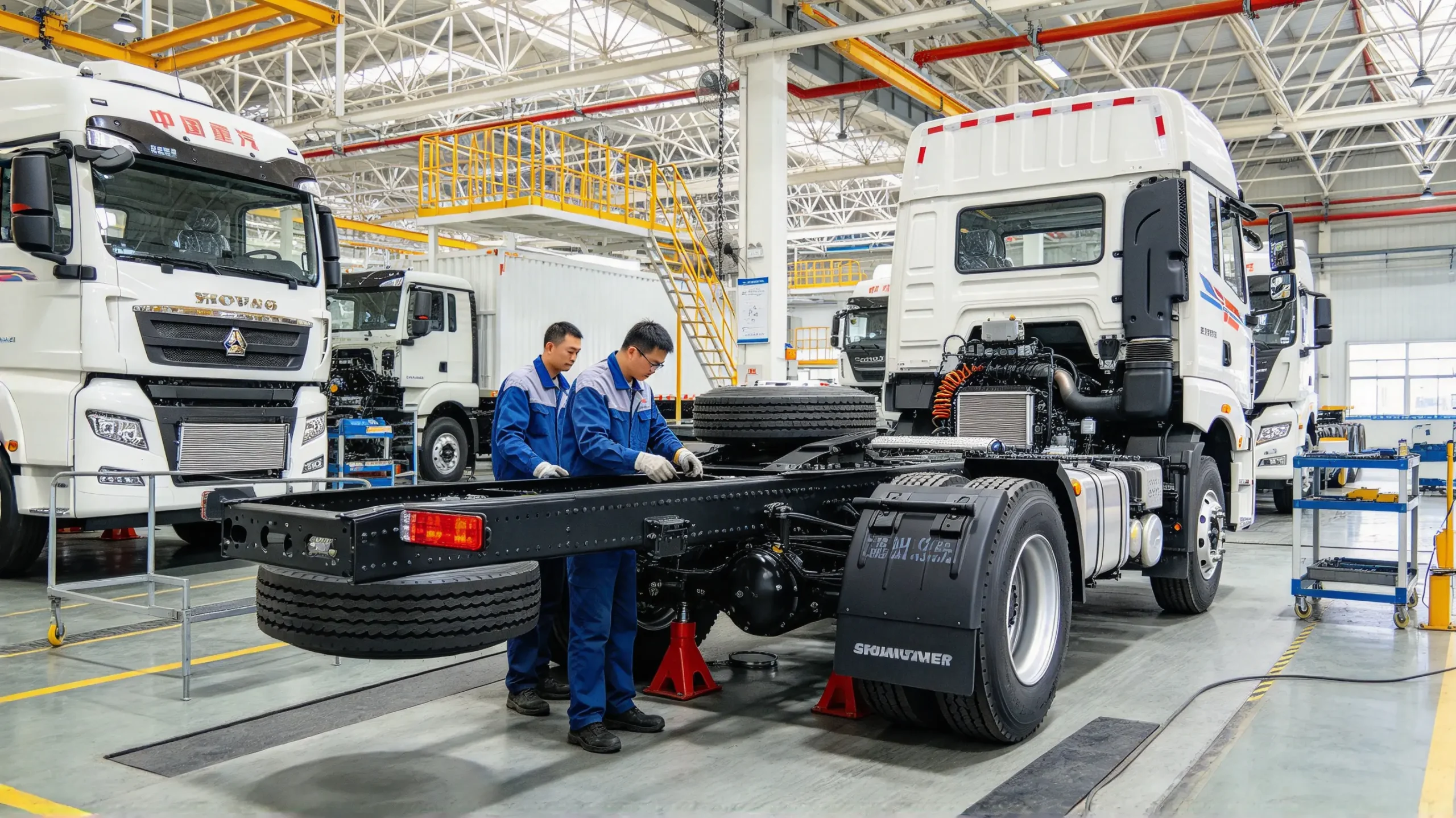
Standard commercial 4×2 trucks adopt a classic two-axle layout. The front axle undertakes steering tasks only, while the rear axle provides all power output and main load-bearing support.
Most mainstream 4×2 truck models are equipped with high-efficiency inline engines and matched mechanical gearboxes. The power system tuning focuses on stability and fuel economy rather than extreme horsepower.
In addition, the chassis suspension of 4×2 trucks is optimized for flat road conditions. The suspension hardness and shock absorption parameters are suitable for highway and urban road driving, ensuring both driving stability and cargo safety.
1.2 Main Classification of 4×2 Trucks by Body Type
To adapt to different cargo types and operation scenarios, 4×2 trucks are divided into multiple mainstream body types. Each version has exclusive functional advantages.
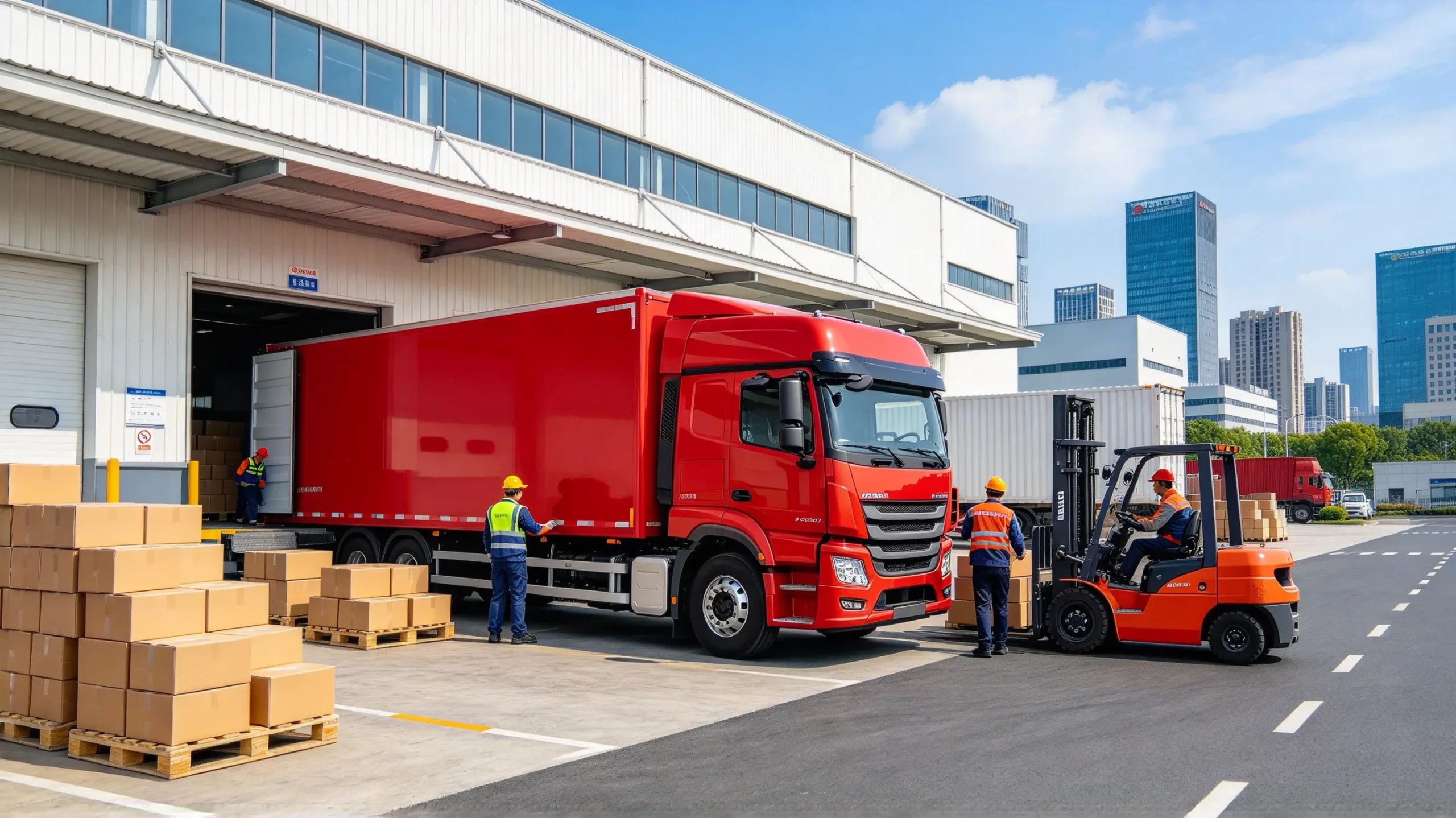
First, 4×2 cargo box trucks. This is the most universal model, suitable for general dry cargo, daily necessities, and industrial parts transportation. The enclosed cargo box effectively protects goods from sun exposure and rain erosion.
Second, 4×2 flatbed trucks. Flatbed models are widely used for bulk building materials, steel products, and mechanical equipment transportation. The open design facilitates fast loading and unloading.
Third, 4×2 van trucks. Fully sealed van bodies are ideal for high-value goods, electronic products, and fragile cargo transportation, with excellent anti-theft and dustproof performance.
Fourth, 4×2 light dump trucks. Small dump models are used for construction waste cleaning, sand and gravel short-distance transportation, and municipal renovation projects.
You can browse full 4×2 truck series and customized body solutions to quickly match the body type that fits your business.
Chapter 2: Core Advantages of Choosing a 4×2 Truck for Commercial Use
Most fleet operators prefer 4×2 trucks for light and medium commercial transportation because of their comprehensive cost-performance advantages. Compared with 6×4 and 8×4 heavy trucks, 4×2 models have obvious practical value in daily commercial scenarios.
2.1 Outstanding Fuel Economy for Long-Term Cost Savings
Fuel cost accounts for the largest proportion of truck fleet daily operating expenses. 4×2 trucks have lighter chassis weight and fewer running parts, which effectively reduces engine load during driving.
Under the same road conditions and cargo weight, 4×2 trucks save 15% to 25% fuel compared with 6×4 heavy trucks. For logistics fleets with hundreds of daily trips, this fuel-saving advantage creates huge profit margins every year.
In addition, most mainstream 4×2 truck engines are tuned for economic speed sections. They maintain low fuel consumption during constant-speed highway cruising, fully adapting to medium-distance trunk transportation needs.
2.2 Flexible Maneuverability for Complex Urban Roads
Urban logistics and municipal operations often involve narrow streets, crowded community roads, and limited warehouse parking spaces. Large multi-axle trucks are difficult to turn and reverse in these scenarios.
On the contrary, 4×2 trucks have a short wheelbase and small turning radius. They can flexibly pass through complex urban road sections and complete precise parking and loading operations.
This flexible feature greatly improves transportation efficiency, especially for last-mile distribution and urban short-distance replenishment businesses.
2.3 Low Purchase & Maintenance Costs
In terms of initial procurement cost, 4×2 trucks are much cheaper than heavy-duty multi-axle trucks. They require no redundant axle configurations and heavy-duty reinforced chassis, which greatly reduces factory manufacturing costs.
Meanwhile, the mechanical structure of 4×2 trucks is simpler. The wearing parts such as filters, brake pads, and axle accessories are universal and affordable.
Daily maintenance cycles are shorter and maintenance difficulty is lower. Ordinary maintenance personnel can complete routine inspections and repairs without professional high-tech equipment.
2.4 High Vehicle Utilization Rate
4×2 trucks are not limited to single transportation scenarios. They can switch freely between urban distribution, highway trunk transportation, and light construction auxiliary tasks.
For small fleets with mixed business types, 4×2 trucks can maintain high daily utilization rates. This avoids the idle waste of professional heavy trucks with single functions.
Chapter 3: Ideal Application Scenarios for 4×2 Trucks (Who Should Buy)
Although 4×2 trucks have comprehensive advantages, they are not suitable for all operation scenarios. Clear scenario matching is the core premise of correct selection. This chapter summarizes the most suitable application fields for 4×2 trucks.
3.1 Urban & Suburban Logistics Distribution
Urban express delivery, supermarket goods replenishment, and daily commodity distribution are the most mainstream scenarios for 4×2 trucks. The flexible body size meets urban traffic restrictions and height limits.
Besides, the moderate load capacity fully covers daily light and medium cargo demand. There is no need to bear the excess cost and fuel consumption of heavy trucks.
3.2 Medium-Distance Highway Transportation
For cross-city and cross-province medium-distance trunk transportation with cargo weight below 15 tons, 4×2 trucks are the best choice. The stable power system ensures long-distance continuous driving stability.
At the same time, the fuel-saving advantage can effectively control long-distance transportation costs and improve the overall profit of a single trip.
3.3 Municipal Engineering & Urban Renovation
Municipal road maintenance, greening construction, urban garbage cleaning, and pipeline renovation projects all require flexible light trucks.
4×2 dump trucks and flatbed trucks can quickly transport construction tools, auxiliary materials, and waste materials. Their flexible mobility adapts to frequent site switching needs.
3.4 Small-Scale Construction Auxiliary Transportation
For rural construction, small factory renovation, and low-intensity earthwork projects, 4×2 light dump trucks can meet the demand for short-distance transportation of sand, gravel, and construction waste.
Compared with large mining dump trucks, 4×2 models have lower rental and purchase costs, which is more in line with small project budget planning.
3.5 Scenarios Not Suitable for 4×2 Trucks
First, ultra-heavy cargo transportation over 20 tons. 4×2 chassis load-bearing capacity is limited, and overloading will cause chassis deformation and axle damage.
Second, long-term off-road mining and desert rough road operations. The single driving axle has insufficient grip and weak anti-skid ability, which is prone to slipping and power insufficiency.
Third, large-scale container terminal transportation with high load requirements. In these scenarios, 6×4 tractor heads are more professional and reliable.
Chapter 4: 4×2 Truck vs 6×4 Truck: Key Differences & Selection Standards
Most buyers hesitate between 4×2 and 6×4 trucks during procurement. These two configurations have completely different positioning and applicable scenarios. Clear comparison helps you eliminate selection confusion.
4.1 Load Capacity Difference
4×2 trucks are positioned for light and medium loads, with a conventional load range of 5 to 18 tons. They are suitable for daily commercial light cargo transportation.
6×4 trucks add one rear driving axle, with stronger chassis bearing capacity. The load range can reach 25 to 40 tons, which is oriented to heavy-duty industrial transportation and large-scale construction projects.
4.2 Fuel Consumption & Operating Cost Difference
4×2 trucks have fewer axles and lighter body weight, so the fuel consumption per kilometer is significantly lower. The daily tire wear and maintenance cost is also much lower.
6×4 heavy trucks have large body resistance and more wearing parts. Long-term operation will generate higher fuel costs and maintenance expenses.
4.3 Maneuverability & Road Adaptability
4×2 trucks have a short wheelbase and flexible steering, adapting to urban narrow roads and complex traffic environments.
6×4 trucks have a long wheelbase and large turning radius, with poor flexibility. They are more suitable for wide highways and professional freight routes, not for urban complex road conditions.
4.4 Purchase Price Difference
The overall price of 4×2 trucks is 30% to 50% lower than that of 6×4 trucks with the same brand. The initial investment pressure is small, which is friendly for individual drivers and small fleets.
6×4 heavy trucks have high configuration costs and are more suitable for large professional logistics companies with sufficient capital and heavy-load business demands.
4.5 Final Selection Suggestion
Choose 4×2 trucks if your business focuses on urban distribution, medium-distance light cargo transportation, and municipal auxiliary projects with limited budget.
Choose 6×4 trucks if you need long-term heavy-load transportation, large-scale construction material hauling, and high-intensity industrial operation.
Chapter 5: Top Chinese 4×2 Truck Brands & Reliable Models for Sale
Chinese 4×2 trucks occupy a major share of the global light and medium commercial vehicle market. Mainstream brands have stable quality, mature technology, and cost-effective pricing. This chapter sorts out the most reliable 4×2 truck brands and recommended models in 2026.
5.1 SINOTRUK HOWO 4×2 Series
SINOTRUK HOWO is one of the most recognized Chinese truck brands overseas. Its 4×2 series trucks focus on durability and comprehensive adaptability.
HOWO 4×2 cargo trucks and flatbed trucks adopt reinforced lightweight chassis. The chassis ensures load-bearing strength while controlling body weight, realizing higher effective load capacity.
Matched with self-developed high-efficiency engines, the power output is stable and fuel-saving. The whole vehicle is suitable for long-distance highway transportation and daily urban distribution.
In addition, HOWO 4×2 trucks support targeted export upgrades, including high-temperature heat dissipation, dust-proof sealing, and anti-corrosion treatment, adapting to Middle East and African harsh environments.
5.2 Foton Auman 4×2 Series
5.3 Shacman 4×2 Series
5.4 FAW 4×2 Series
Chapter 6: Key Parameter Checklist When Buying a 4×2 Truck
6.1 Engine Power & Torque Parameters
6.2 Wheelbase & Cargo Box Size
6.3 Chassis & Suspension Configuration
6.4 Tire Specification & Load-Bearing Grade
6.5 Transmission Gearbox Matching
Chapter 7: Customization Upgrades for 4×2 Export Trucks (GCC & Overseas Markets)
7.1 High-Temperature Heat Dissipation Upgrade
7.2 Multi-Stage Dust Prevention Upgrade
7.3 Chassis Anti-Corrosion Treatment
7.4 Standard GCC Certification Configuration